How to waterproof suede boots
Suede is unforgiving and most of the advice about it is wrong. The method itself is five minutes; the important part is what you must not put on it.
By Scooter M., Enthusiast. Published September 1, 2026.
We earn a commission if you buy through the links on this page, at no extra cost to you. It never changes a ranking, and we recommend products with no affiliate link behind them where those are the right answer. Full disclosure.
Never put wax, oil or grease on suede. This is not a preference and it is not us being cautious. Atsko, who make a beeswax dressing, publish that it is not recommended for suede and will darken it and flatten the nap. When a wax manufacturer tells you not to wax something, believe them.
Why suede behaves differently
Suede and nubuck are leather with the fiber ends raised into a nap. That nap is the entire look, and it works by standing up and catching light. Anything that coats it as a surface - wax, oil, thick cream - lays those fibers flat and darkens them, permanently. Water-based proofers avoid this by treating each fiber rather than the surface as a whole.
- 01
Brush the nap dry, first
Use a suede brush on dry boots and work in one direction to lift the nap. This removes surface dust and resets the fibers. Proofing over dust just fixes the dust in place under the repellent.
- 02
Lift any marks with the eraser block
Scuffs and shiny patches come out with the rubber block on a suede kit - rub gently, then brush again. Timberland’s own suede guidance follows the same order: dry brushing and gentle abrasion before anything wet.
- 03
Deal with salt separately, if there is any
White tide lines are salt, and they need their own treatment before you seal the boot up. See removing salt stains from suede. Proofing over salt traps it against the leather where it keeps drawing out moisture.
- 04
Spray from 6 inches, evenly
Nikwax publishes 6 inches, or 15 cm, and specifies clean, wet footwear. Grangers specifies freshly cleaned and damp. Even, light passes - the aim is uniform coverage, not a soaked boot. Do the tongue and the seams.
- 05
Wait 2 minutes, then remove the excess
This is the step everyone skips and it is the one that prevents patchiness. Nikwax publishes a 2-minute dwell followed by removing the excess; Grangers says wipe it off with a clean cloth. Product left to pool and dry on the nap is what causes dark blotches.
- 06
Dry naturally, then brush again
Nikwax says dry naturally - no radiator, no hair dryer. Once dry, a final brush lifts the nap back up and the boots look like they did before, only now water rolls off them.
Test a hidden patch first
Any liquid can mark a light nap. Do the inside of the heel or the tongue first, let it dry fully, and check the color before you commit to the whole boot. Nikwax makes the same recommendation for color run on its cleaning products.
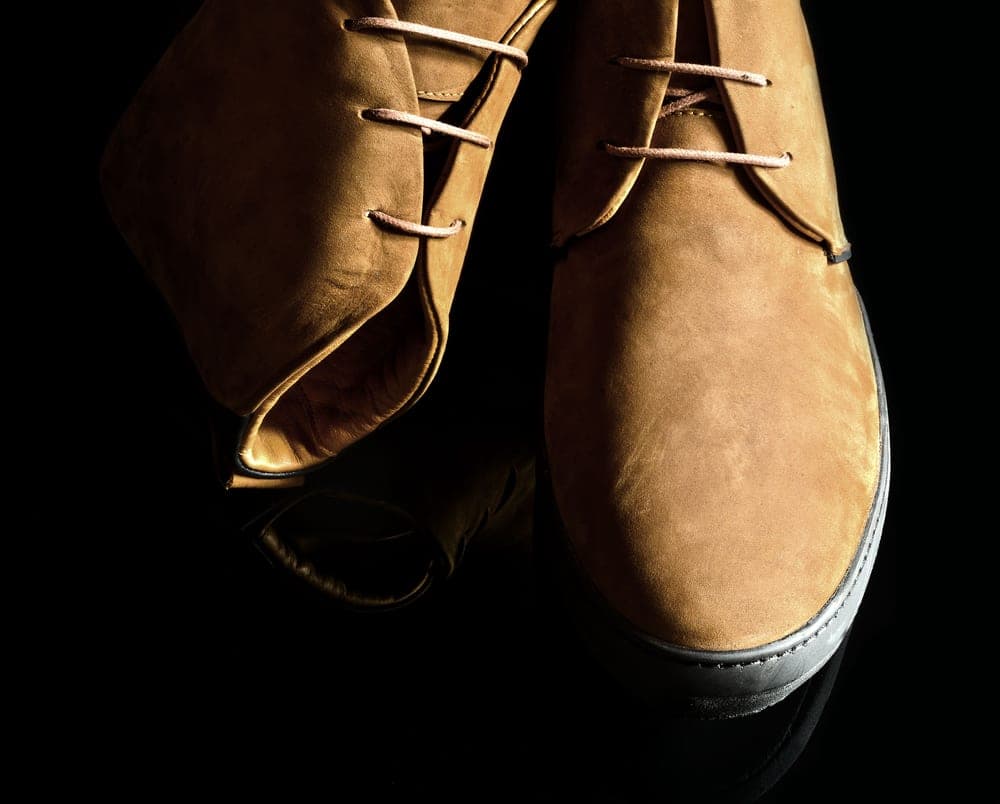
What to do when they get soaked anyway
Proofing buys you time, not immunity. If suede boots get genuinely wet, get them dry slowly and gently - stuffed with paper, away from heat - and brush the nap once they are dry. Forced heat is worse on suede than on smooth leather because there is no surface finish to protect the fibers. The full drying method is in how to dry boots without a boot dryer.
What we would buy for this
Chosen from the same registry as our roundups, on published specifications rather than on testing we have not done.
Nikwax
Nikwax Nubuck & Suede Proof
The only mainstream footwear proofer whose directions tell you to apply it to WET boots, which removes the step everybody skips.
Skip it if: Your boots are smooth full-grain leather - this is formulated for nubuck and suede, and Fabric & Leather Proof is the sibling you want.
#ad Price as of October 17, 2026, from Amazon. Prices change. How this site is funded.
Fiamme
Fiamme Suede and Nubuck Cleaning Kit
A crepe-rubber block and a brass-and-nylon brush - the only two tools that actually work on a salt-crusted suede boot.
Skip it if: Your boots are smooth leather - a brass bristle will scar the finish.
#ad Price as of October 17, 2026, from Amazon. Prices change. How this site is funded.
Grangers
Grangers Footwear Repel Plus
The largest bottle here with published damp-application directions - 275 ml against Nikwax's 125, for the same wet-boot workflow.
Skip it if: You only own one pair - you will not finish the bottle before it separates.
#ad Price as of October 17, 2026, from Amazon. Prices change. How this site is funded.
Frequently asked
Can you waterproof suede boots at home?
Yes. Brush the nap dry, lift any marks with a suede eraser, spray a water-based proofer made for suede from about 6 inches, wipe the excess after two minutes and let them dry naturally. Five minutes of work.
What happens if you put wax on suede?
The nap flattens and darkens and does not come back. Atsko publishes this warning about its own beeswax product. There is no reliable way to reverse it, which is why this is the one hard rule in suede care.
Should suede be wet or dry when you spray it?
Follow the bottle. Nikwax Nubuck & Suede Proof specifies clean, wet footwear; Grangers Footwear Repel Plus specifies freshly cleaned and damp. Both are water-based and are carried in by the moisture already there.
How do I fix a dark patch from over-spraying?
Let it dry completely first - a lot of apparent staining lifts as it dries. Then brush the nap firmly, and use the eraser block on what is left. Getting the excess off within two minutes next time is the real fix.