Name the symptom. Get the fix.
You do not have a boot-care product problem. You have a specific thing that has gone wrong with a specific pair of boots. Find it below and go straight to the answer.
By Scooter M., Enthusiast. Published September 1, 2026.
They are not four problems
Water gets into the boot. The damp lining feeds the bacteria that produce the smell. Winter streets add salt, which stays in the leather and keeps drawing moisture - and oils - out of it every time the boot dries. With the oils gone, the fibers stiffen and the crease across the toe cracks.
That is one sequence, and it always runs in that order. Which means fixing a link makes everything downstream easier, and skipping the first one guarantees you fight the other three all season. If you are not sure where you are in it, start at the top.
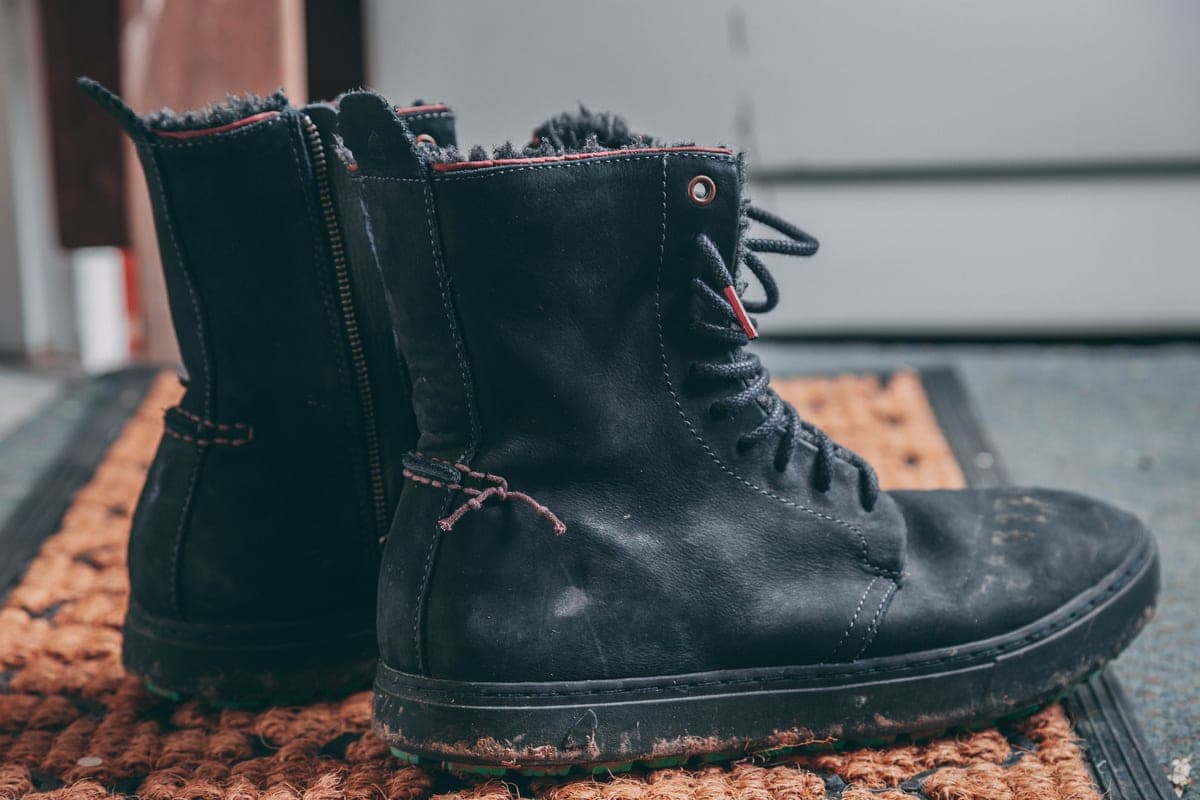
They are soaked and I need them tomorrow
“I stepped in a puddle at 4pm and I start at 6am.”
Do not put them near heat. Pull the insoles, loosen everything, and get moving air through them overnight. Heat is what turns one soaking into a permanently hardened boot.
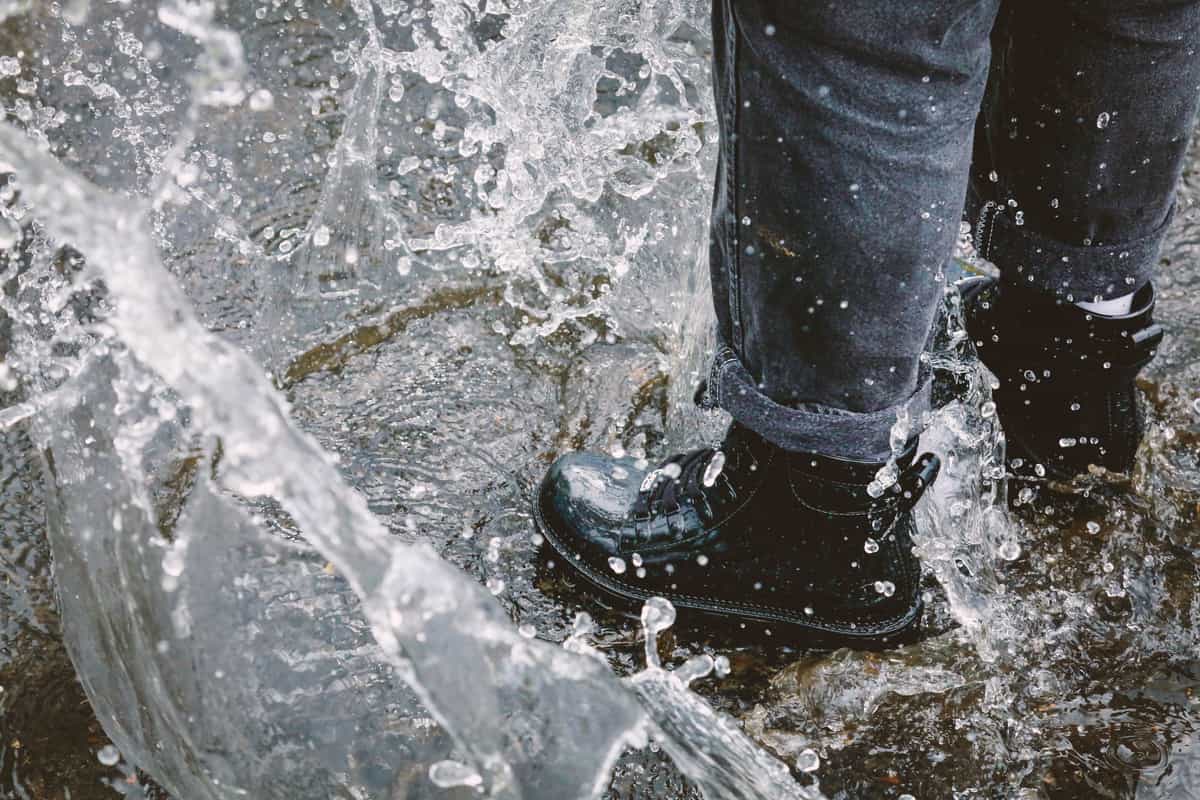
Water gets in every time I wear them
“My socks are wet within an hour and these are supposed to be waterproof.”
The treatment has worn off, most likely at the flex crease and the welt rather than the toe. Which product you need is decided by the material, not by the brand.

They smell, and it is getting worse
“I can smell them from across the room and a spray did nothing.”
Bacteria feeding on sweat in a warm, damp, dark boot. Moisture is the only one of those four conditions you control, which is why drying beats deodorizing.

There are white tide lines on them
“Chalky white marks appeared after walking on gritted sidewalks.”
Road salt, and it is still working. Get it off promptly - the visible ring is a marker, and the real damage is the oils it draws out of the leather every time it dries.
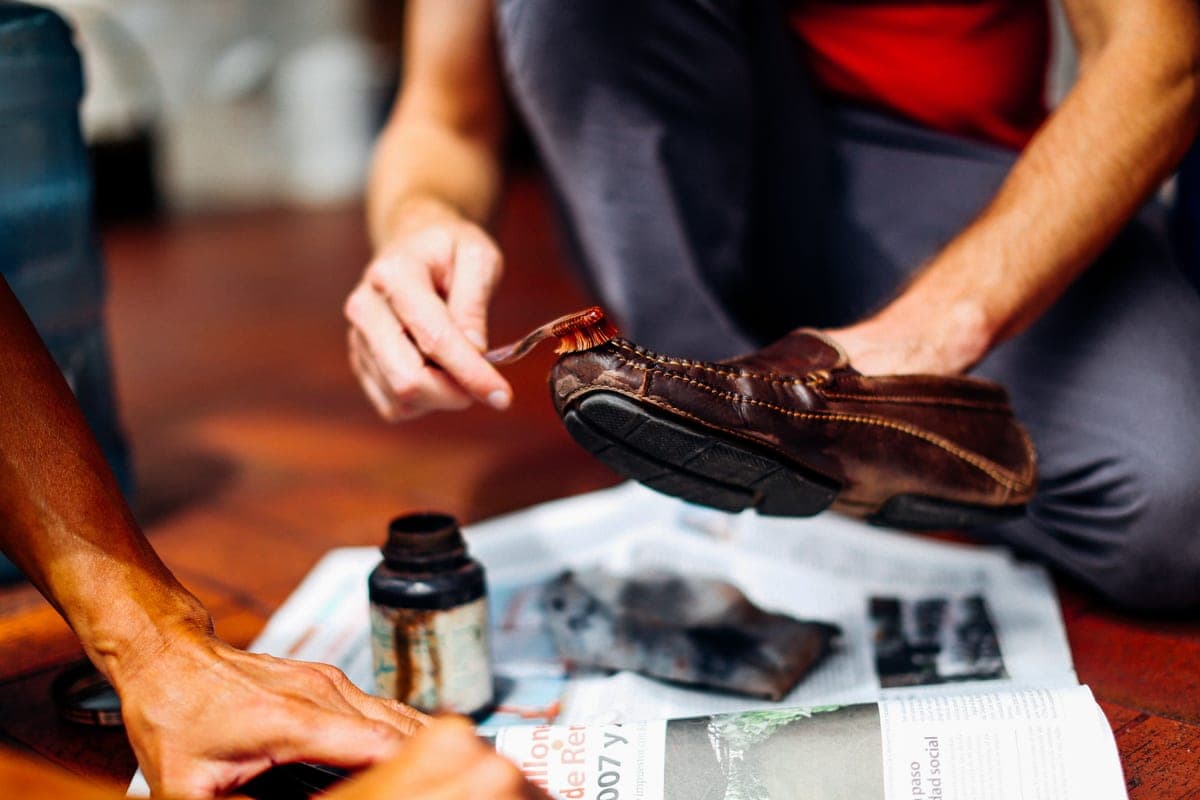
They look dry, dull or cracked
“The leather has gone stiff and there is a crease across the toe.”
The oils have gone. Condition them now - a crack at the flex point is permanent and no product closes it, so this is the one worth doing before it looks urgent.
If none of those fit
Two more that come up often enough to name. If the smell is chemical rather than sour - diesel, solvent, something from a workplace - that is a different problem with a different fix, and the first question is whether the boot is still safe to wear: fuel and chemical smells in boots.
And if you are trying to work out whether a dryer is worth it at all, the arithmetic is published rather than asserted: the boot dryer running-cost calculator takes a wattage and your own electricity rate and returns the cost per night and per season.
Frequently asked
What should I do first when my boots get soaked?
Take the insoles out, loosen the laces and pull the tongue forward, and get moving air through them at room temperature. Do not put them near a radiator, a wood stove or a hair dryer - force drying with heat causes leather to harden and shrink permanently.
Which boot problem should I fix first?
Drying, always. Wet, stinking, salt-stained and cracked are one chain in that order. Water gets in, the damp feeds the bacteria that cause the smell, salt strips the oils as the boot dries, and then the leather cracks. Fixing the first link makes the other three easier.
Can one product solve all four problems?
No. Cleaning removes material, conditioning adds oils, and proofing builds a barrier that blocks absorption - the third actively works against the second. They are separate products applied in sequence: clean, dry, condition, then proof.
Do I need a boot dryer or is airing them enough?
Airing is enough if the boots get a full day between wears. If they are worn daily, still air will not get a lined boot dry in the gap, and the moisture level ratchets up across the week. A 36-watt convection dryer costs about five cents a night to run.