What actually dries a boot
Evaporation needs three things: warmth, air movement and somewhere for the moisture to go. A radiator gives you a lot of the first and none of the other two, which is why it cooks the outside while the inside stays wet. Everything that works - a dryer, a fan, a warm room with the door open - is a trade between those three.
The category splits cleanly in two, and the split is the buying decision:
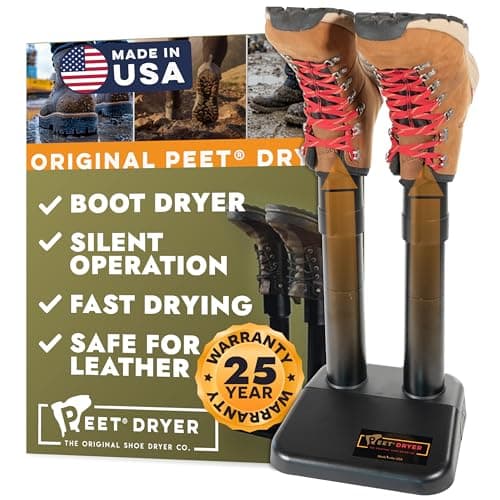
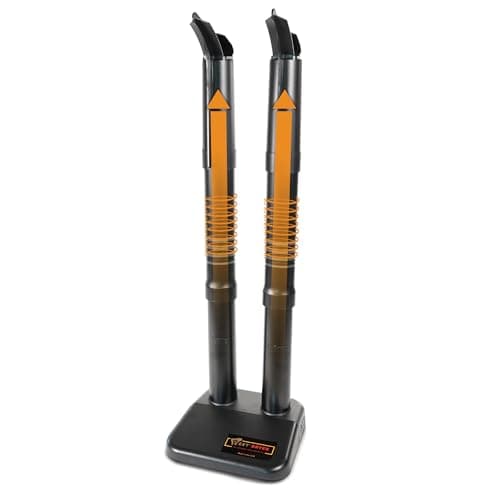
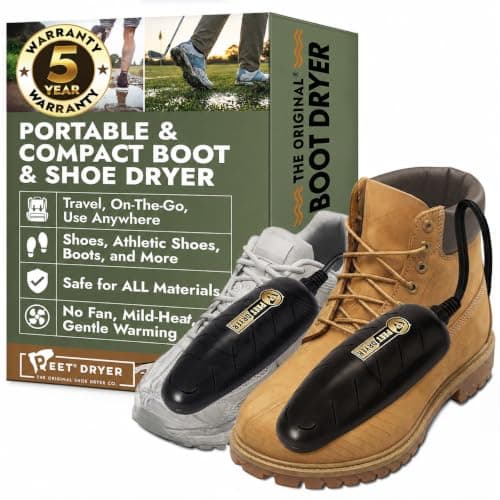
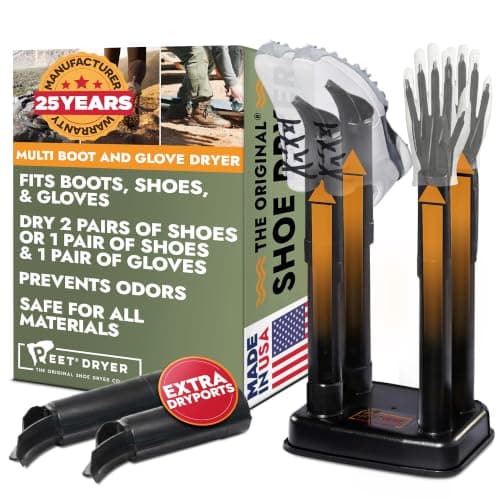
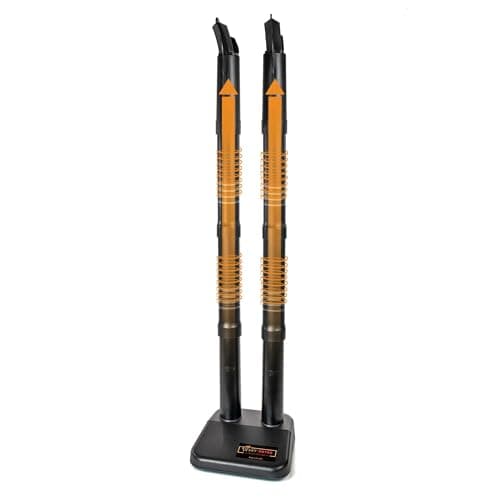
- Convection dryers warm the air gently and let it rise through the boot. No fan, no noise, nothing to wear out. PEET’s own FAQ puts these at four to eight hours, or overnight. The PEET Original runs on 36 watts.
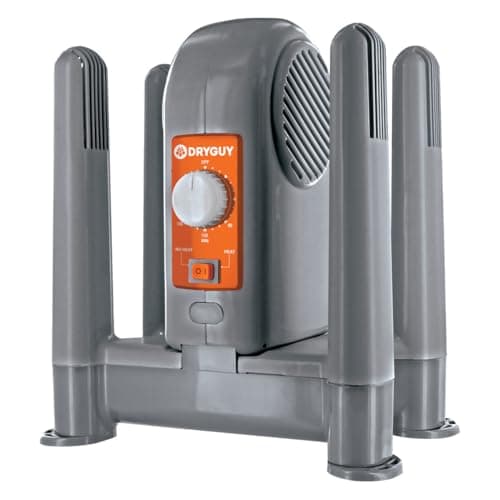
- Forced-air dryers push warmed air through with a fan and get it done in one to two hours by their makers’ published figures. They cost more to run, they make noise, and the heated setting is the one you have to be careful with on leather.
What it costs, which nobody else publishes
We checked eleven competitors during our research and not one of them publishes what a boot dryer costs to run. So we did the arithmetic ourselves, from each manufacturer’s own wattage figure and the EIA’s published US average residential rate.
The short version: a 36-watt convection dryer costs about five cents per eight-hour night, or $4.75 across a 90-night wet season. A 220-watt forced-air dryer on a two-hour cycle costs about eight cents a night. The running cost is not the reason to choose between them - the noise, the speed and the leather are. That is a genuinely useful conclusion, and you can only reach it by doing the sum. The full table, per model, with the working shown.
The part that costs nothing
Before you buy anything: pull the insoles and the laces out. Both hold more water than the boot shell does, and neither dries while it is still inside. Open the boot as wide as the lacing allows so air can actually reach the toe box. Those two steps take thirty seconds and do more than most of what you can buy.
Where this leads
Drying is the first link in the chain. A boot that never fully dries is a boot that will start to smell - bacteria need the warmth and moisture, and a damp boot supplies both. And leather that has been through a soak-and-dry cycle has lost oils it needs back, which is why conditioning after a soaking is not optional. If your boots are getting soaked in the first place, the finish has failed and it is time to re-proof them.