The only item in boot care that solves two problems with one object and no running cost. Here is which format fits which boot.
By Scooter M., Enthusiast. Published September 1, 2026.
We earn a commission if you buy through the links on this page, at no extra cost to you. It never changes a ranking, and we recommend products with no affiliate link behind them where those are the right answer. Full disclosure.
Quick picks
The shortlist, ranked
Ranked on published manufacturer specifications and, where a wattage figure exists, computed running cost. Tap any row for the full write-up, including who should skip it.
#
Product
Best for
Score
Price
01
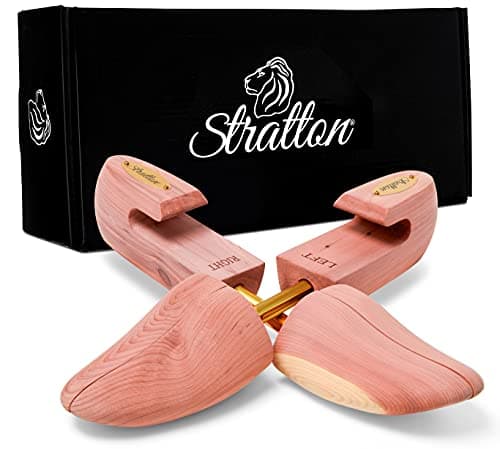
Stratton Adjustable Split-Toe Cedar Shoe TreeDress and casual leather boots between wears
Scores are ours and editorial. They are never published as review or rating markup, because we have not tested these products.
A cedar tree is the cheapest thing in boot care that does two useful jobs at once. Unfinished aromatic cedar absorbs residual moisture out of the lining, and the shaped form holds the boot so the flex creases across the vamp do not set into permanent cracks. No power, no consumable, no running cost.
The one thing they cannot do
A cedar tree will not dry a soaked boot. There is nothing moving air and nothing generating heat - it is absorption by contact, and a block of wood saturates quickly. Put a tree into a boot that has just come in from a downpour and you get damp cedar and a still-wet boot.
The correct sequence is dry first, then insert. If the boots are properly wet, get them dry overnight by whatever method you use, and put the trees in the next morning for storage. Atsko’s boot-care guidance is consistent with this: drying is its own step with its own timeline.
The shape half of the job: a tree holds the vamp flat so the flex crease does not set as a crack.
Which format for which boot
Format
Fits
Moisture
Shape
Split-toe cedar tree
Dress and casual leather boots, ankle height
Yes
Yes - the point of the split toe is tension
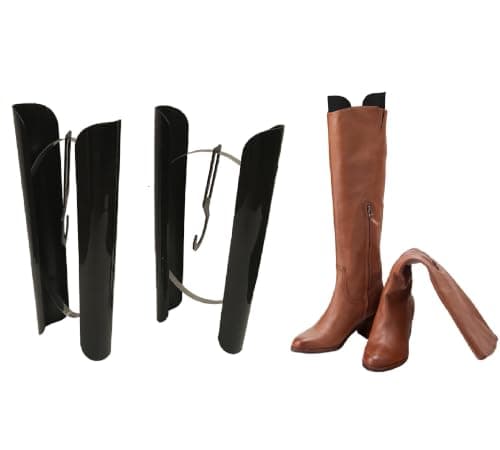
Boot shapers
Knee and mid-calf boots
Limited
Yes - keeps the shaft upright
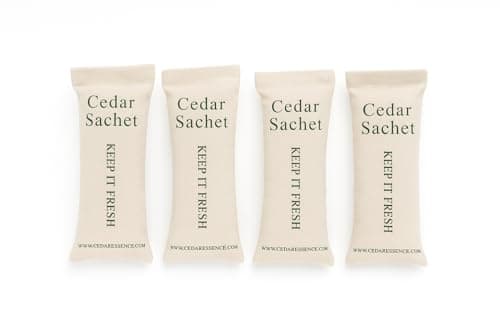
Cedar blocks
Work boots, rubber boots, odd shapes
Yes
No
Tall boots are their own problem, and it is a shape problem rather than a moisture one: stored flat or slumped, a knee boot creases hard across the ankle and the crease becomes permanent. Moneysworth & Best’s storage guidance is to keep tall boots upright, which is exactly what a shaper is for.
Keeping them working
Cedar stops smelling and stops absorbing once the surface is closed up with skin oils and dust. The fix is not a new set - it is sandpaper. A light pass with fine sandpaper once or twice a year opens the grain again and brings the aroma back. This is the entire maintenance routine.
Do not varnish or oil them
The absorbency depends on the wood being unfinished. Anything that seals the surface - varnish, wax, oil - turns a working cedar tree into a decorative wooden foot. Buy them unfinished and leave them that way.
The write-ups
Every pick, in full
01 / Best overall
Stratton
8.3 / 10
Stratton Adjustable Split-Toe Cedar Shoe Tree
Unfinished aromatic cedar absorbs moisture and holds the shape - two jobs at once, which is why every shoe-care list has them.
You want the boot to hold its shape - blocks do nothing structurally.
How it scores, by criterion
Documented use6.0
Moisture handling6.5
Shape retention3.0
Published composition6.0
Value per pair9.5
How these picks were chosen
Everyone in this category says they tested twenty dryers. We have not tested any, and we say so. What we did instead: read the manuals, compile the published specifications, compute the running cost from the manufacturer's own wattage figure, and show the arithmetic so you can check it.
For their two real jobs, yes: unfinished cedar absorbs residual moisture from a boot lining, and a shaped tree holds the vamp so flex creases do not set. What they cannot do is dry out a soaked boot - that needs airflow.
How long should you leave shoe trees in boots?
Between wears, indefinitely. They are a storage tool. The only time you take them out is when the boot is wet enough that it needs airflow first, in which case dry it and put the tree back in afterwards.
How do you refresh cedar shoe trees?
Sand them lightly with fine sandpaper once or twice a year. Skin oils and dust close the grain over time, which is what kills both the aroma and the absorbency. Never seal, varnish or oil them.
What can I use in tall boots instead?
Boot shapers. The problem with a knee boot is the shaft folding and creasing at the ankle, which a foot-shaped tree does not address. Moneysworth & Best’s own storage guidance is to keep tall boots upright.