Foot odor is bacteria eating sweat in a warm, dark, damp boot. Products that remove moisture or adsorb the compounds work. Products that add perfume do not. We sorted them that way.
By Scooter M., Enthusiast. Published September 1, 2026.
We earn a commission if you buy through the links on this page, at no extra cost to you. It never changes a ranking, and we recommend products with no affiliate link behind them where those are the right answer. Full disclosure.
Quick picks
The shortlist, ranked
Ranked on published manufacturer specifications and, where a wattage figure exists, computed running cost. Tap any row for the full write-up, including who should skip it.
#
Product
Best for
Score
Price
01
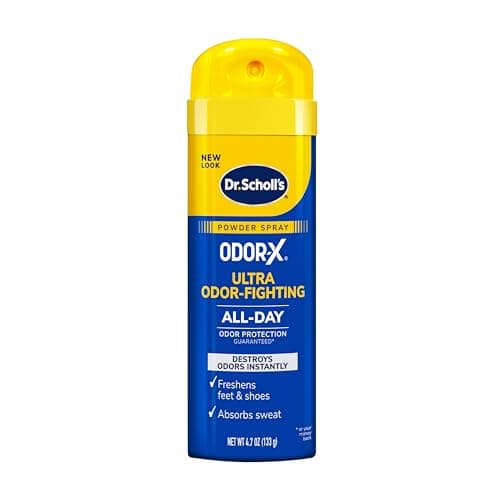
Dr. Scholl's Odor-X Odor Fighting Spray PowderWork boots worn every day by feet that sweat
Scores are ours and editorial. They are never published as review or rating markup, because we have not tested these products.
Buy a drying powder, not a scent. And understand before you spend anything that a deodorizer is the second-best tool for this problem. The best one is a dryer, because the moisture is what the bacteria need. We say that on a page where we make money from deodorizers, which should tell you how confident we are about it.
The mechanism is the whole ranking
The Cleveland Clinic describes the cause plainly: bacteria living on skin feed on sweat, and they thrive in warm, moist, dark conditions. A boot is the best version of that environment anyone has ever built. So there are exactly three useful interventions, and one useless one:
Mechanism
What it does
Products here
Works?
Remove moisture
Takes away the condition the bacteria need
Drying powders; a boot dryer
Yes - at the cause
Adsorb the compounds
Traps odor molecules on activated carbon
Zorpads
Yes - at the symptom
Antibacterial action
Reduces the population directly
Sprays making this claim
Partly, and temporarily
Add fragrance
Puts a smell on top of a smell
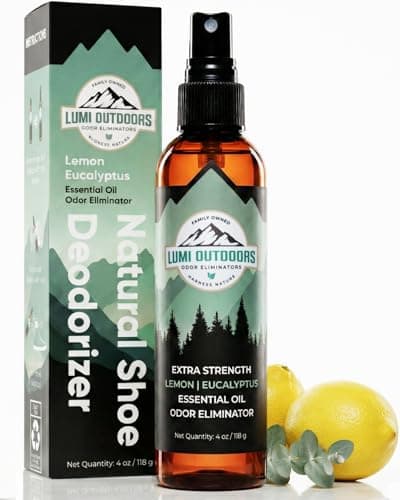
Scented balls and perfumed sprays
No
Why powder beats liquid in a boot
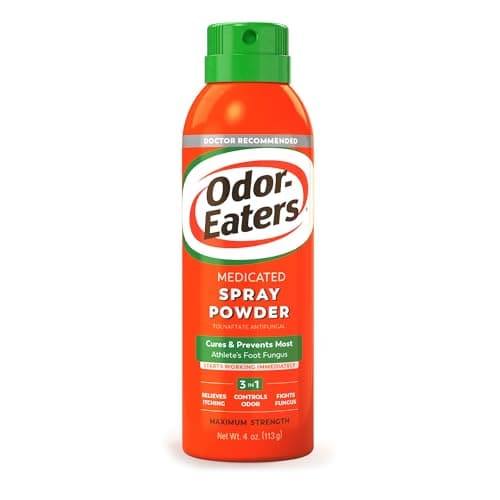
This is the single most useful thing on the page. A liquid spray adds moisture to the inside of a boot. Moisture is what the bacteria were short of. A powder absorbs moisture instead, which is why Dr. Scholl’s Odor-X takes the top spot here - it is a spray powder rather than a spray liquid, and in a deep boot that distinction decides the outcome.
It is also why every liquid product on this page carries the same warning on its card: do not use it on damp boots. Spraying liquid into a wet boot is adding to the problem the smell came from.
Free, and more effective than most of what is on this page: get air through them between wears.
Activated carbon: the one for boots you cannot treat
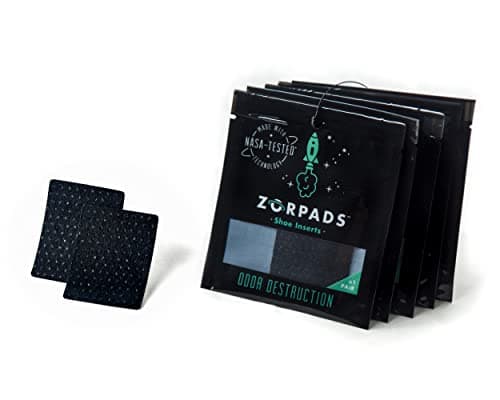
Zorpads are thin adhesive pads that sit on the footbed and adsorb odor compounds onto activated carbon rather than masking them. They earn second place because they solve a specific real problem: some boots - insulated winter boots, waders, anything with a bonded liner - cannot take a powder or a spray without ruining the interior. A pad you stick down and forget works there.
The limitation is physical and worth knowing: carbon that is saturated with water cannot adsorb anything else. In a boot that is still damp, a carbon pad is doing nothing. Dry first, then deploy.
What we will not tell you
We have not measured how much odor any of these removes, and nobody publishes a figure we could compare. So this ranking is by mechanism and by what each maker documents about form and use - not by a test we did not run. If a page tells you one deodorizer is “73% more effective,” ask where that number came from.
The honest order of operations
Get the boots dry between wears. This is most of the fix.
Pull the insoles out so the footbed dries too - it holds the most sweat.
Rotate pairs if you can, so each gets a full day to dry.
Then use a drying powder or a carbon pad to handle what is left.
If you do the first three and skip the fourth, most boots stop smelling. If you do the fourth and skip the first three, you have bought perfume. The full comparison is in dryers vs deodorizers for boot smell.
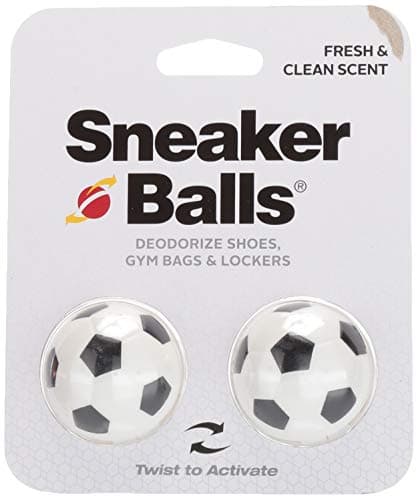
One format sits slightly outside this ranking: passive activated charcoal, which works on the cupboard and the boot between wears rather than on the smell in front of you. What it does, what it cannot do, and the one product here whose maker publishes coverage and a renewal schedule are in the charcoal deodorizer roundup. The scented format that sits at the other end of the scale - cheap, effortless and purely cosmetic - gets its own honest assessment in are sneaker balls worth it.
The write-ups
Every pick, in full
01 / Best overall
Dr. Scholl's
7.8 / 10
Dr. Scholl's Odor-X Odor Fighting Spray Powder
A powder rather than a liquid, which matters: powder absorbs the moisture the bacteria need instead of adding more.
−Occupies the boot, so it cannot share the space with a dryer
−Scent is not to everyone's taste
Skip this one if
The smell is established. Balls scent a space; they do not remove what is producing it.
How it scores, by criterion
Documented use5.0
Addresses the cause3.0
Ease of use10.0
Published composition4.0
Value per treatment8.5
How these picks were chosen
Everyone in this category says they tested twenty dryers. We have not tested any, and we say so. What we did instead: read the manuals, compile the published specifications, compute the running cost from the manufacturer's own wattage figure, and show the arithmetic so you can check it.
What is the best thing to put in boots to stop them smelling?
A drying powder, or an activated-carbon insert if the boot cannot take powder. Both address the cause or trap the compounds. Scented inserts only add a second smell on top of the first.
Why do boot deodorizer sprays stop working?
Because most of them treat the symptom while the condition stays in place. Bacteria need warmth, darkness and moisture, and a boot that never dries out supplies all three continuously. Remove the moisture and the smell stops coming back.
Is powder or spray better for boot odor?
Powder, in a boot. A liquid spray adds moisture to exactly the environment that was already too moist. Powders absorb it instead. This matters far more in a deep boot than in a low sneaker, where airflow does more of the work.
Do cedar shoe trees work for smell?
Yes, and they do two jobs at once - unfinished aromatic cedar absorbs moisture and holds the boot in shape. They will not rescue a saturated boot, though. Dry it first, then insert. See the cedar shoe tree roundup.
Can I spray deodorizer in wet boots?
No - it is counterproductive with liquids and pointless with carbon. Dry the boots first. Everything in this category works better, or only works at all, on a dry boot.