Charcoal is the one deodorizing format with a mechanism you can describe in a sentence. It is also the one that does nothing about why your boots smell, and we are going to be clear about both.
By Scooter M., Enthusiast. Published September 6, 2026.
We earn a commission if you buy through the links on this page, at no extra cost to you. It never changes a ranking, and we recommend products with no affiliate link behind them where those are the right answer. Full disclosure.
Quick picks
The shortlist, ranked
Ranked on published manufacturer specifications and, where a wattage figure exists, computed running cost. Tap any row for the full write-up, including who should skip it.
#
Product
Best for
Score
Price
01
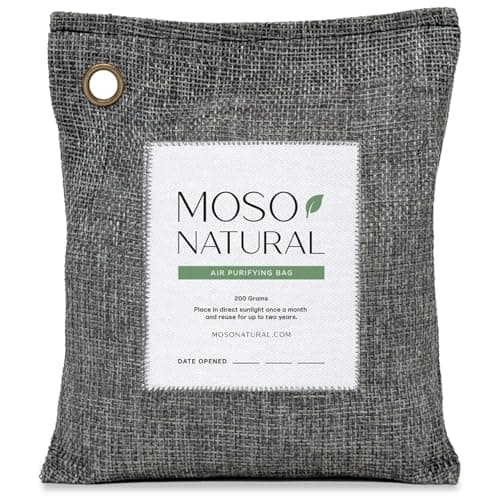
Moso Natural Air Purifying Bag, 200 gA boot cupboard, a locker or a gear bin rather than a single boot
Scores are ours and editorial. They are never published as review or rating markup, because we have not tested these products.
Activated charcoal works by adsorption: odor molecules stick to an enormous internal pore surface and stop being in the air. That is a real mechanism, it is unscented, and it is a genuine step above the perfumed inserts that sit next to it on the shelf. It is also, unavoidably, a treatment for the output rather than the cause.
The cause is moisture. The Cleveland Clinic’s description of why feet smell is bacteria in a warm, dark, damp environment, and a charcoal bag does not change the temperature, the darkness or - beyond a small amount - the damp. So the honest way to buy in this category is: charcoal is maintenance for boots that are already dry, and the reason your boots need maintenance is covered in dryers vs deodorizers. We publish that on a page that earns from charcoal, because the arithmetic is not close.
What we ranked on
This is one of the least-documented product categories on this site, so the first criterion does most of the work.
Does the maker publish anything checkable? Charcoal weight, coverage, a renewal procedure, a service life. One product here publishes all four. The rest publish none, and their scores say so.
Does it fit where the smell is? A 200-gram bag sized for a cupboard cannot go down a boot shaft. That is not a defect - it is a different job - but it decides which one you want.
Does it handle moisture as well as odor? Adsorbents that take up water are doing something about the cause rather than only the symptom. That is the criterion that puts cedar on a charcoal page.
What does keeping it working actually involve? Charcoal saturates. Every product here needs renewing, and only one of them tells you how.
A cupboard bag treats the cupboard. A boot insert treats the boot. They are different purchases and people buy the wrong one constantly.
Four checkable figures is not a small thing on a shelf where most packets tell you nothing at all. It is the reason this is first even though it is the one product here that cannot go inside a boot.
The cons are real and they are on the card. It is 6 by 6.5 by 2 inches - a cupboard object. The monthly trip outside is a genuine maintenance task that people stop doing by December, and a saturated bag is an ornament. And, like everything on this page, it adsorbs what is already in the air rather than addressing what is producing it.
The generic shoe bags, and why they are second anyway
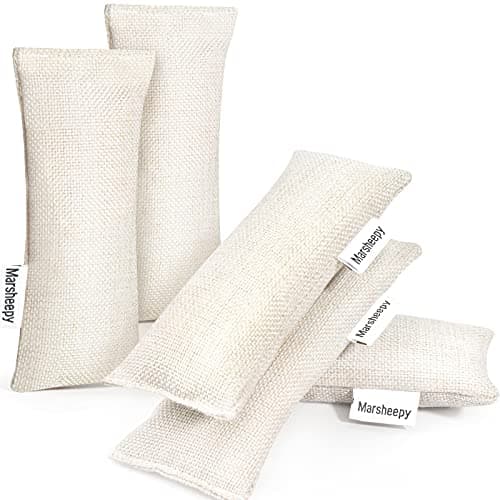
The same adsorbent, in pouches shaped to sit down the shaft of a boot. On documentation they are much worse: almost nobody in this segment publishes charcoal weight, coverage or service life, and the renewal instruction is usually a vague line about sunlight with no interval attached.
They are second regardless, because in a boot the shape beats the spec sheet. A documented bag that lives on a shelf three feet from the problem is doing less than an undocumented pouch sitting in the toe box where the air is stillest. That is the honest trade, and we would rather state it than rank on paperwork alone.
One thing to plan around: a charcoal pouch occupies the boot. So does a cedar tree, and so does the tube of a boot dryer. You cannot run all three, and if you are choosing, the dryer is the one that addresses the cause.
Charcoal in a damp boot does nothing
This is the single most common way to waste money in this category. Activated carbon works by having empty pore space available. Fill that space with water and there is no capacity left for odor compounds - which is why the con on every carbon product on this site reads some version of “useless in a damp boot”.
Order of operations: get the boot dry first, then put the charcoal in. The drying is not the step before the deodorizing - it is most of the deodorizing. See why wet boots start to smell.
Zorpads: carbon, in the one place it is actually needed
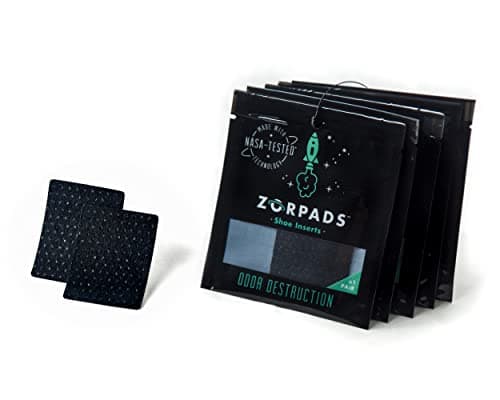
Thin activated-carbon pads with an adhesive back that stick to the footbed. The logic is sound - the footbed is where the sweat lands, so that is where the adsorbent should be - and because they are flat they do not change the fit or compete for space with a shoe tree.
They are third rather than higher for two honest reasons. They are consumed rather than renewed, so the cost per wear is the highest on this page. And the maker publishes no composition, carbon weight or rated life, so there is nothing to check. If you own boots you genuinely cannot get a spray into without ruining the lining, though, they are the right answer and the price stops being the point.
Cedar is on a charcoal page for a reason
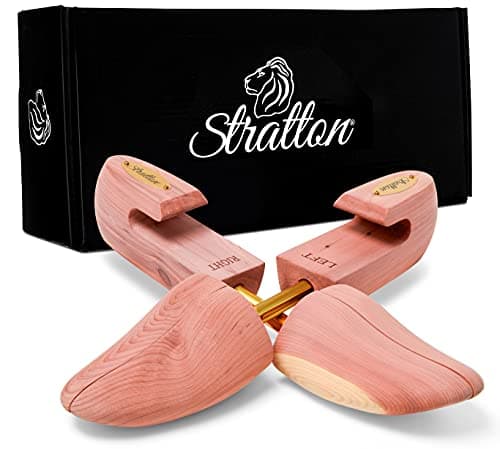
Unfinished aromatic cedar is not activated carbon and does not work the same way, but it does the two things this page is actually about: it takes up residual moisture, and it holds the boot’s shape while doing it. Against a charcoal pouch, which does one of those, that is a better use of the same space inside the boot.
Its limit is the same as everything else here: it cannot move meaningful water out of a saturated boot. Dry the boot, then insert. Sanding the trees lightly once a year restores the aroma and the absorbency. Which format fits which boot is in the cedar shoe tree roundup.
How much charcoal a boot cupboard actually needs
Moso publishes coverage of 90 square feet for the 200-gram bag. A boot cupboard or a hall closet is nowhere near that - a generous one is perhaps 10 to 15 square feet of floor. So a single 200-gram bag is comfortably enough for the space, and the larger sizes sold for basements and living rooms are more than you need.
What that arithmetic does not tell you is the thing most people get wrong, which is placement. Adsorption happens where the air actually contacts the charcoal, so a bag sitting on a high shelf above a rack of boots is doing less than the same bag sitting on the floor among them. Odor-laden air is not being circulated past it by anything; it has to arrive by diffusion.
Two bags low down beat one bag high up, and a bag inside a closed gear bin beats both, because the volume is small and sealed. If you have a boot bin that lives in a garage, that is the highest-value place on this list to put one.
Charcoal or a spray: which problem is which
These get treated as competing products and they are not. A spray puts something into the boot that acts on what is already there - a drying powder pulls moisture out, a scented spray covers the smell. Charcoal takes odor compounds out of the air passively, over hours, and does nothing on contact.
So the split is about timing. If you need the boots usable in an hour, charcoal is the wrong tool and a drying powder is the right one. If the problem is a cupboard that smells and boots you wear twice a week, charcoal is doing exactly what it is for and a spray is a temporary cosmetic. Running both is entirely reasonable and they do not interfere with each other, though a scented spray does rather waste an unscented adsorbent sitting next to it.
The format comparison across the whole category is in spray vs powder vs inserts, which ranks the mechanisms against each other rather than the brands.
Renewal is the step everyone abandons
Charcoal does not consume odor - it holds it. Once the pore surface is occupied, the bag is inert, and from the outside it looks exactly the same as it did on day one. There is no indicator, no color change, nothing.
Moso’s published instruction is an hour outside in direct sunlight every month, on which the bag lasts up to two years. That is a genuinely small task and almost nobody does it past November, which is precisely when boots start needing it. If you buy one, put the monthly hour in a calendar the same day - a bag that is never renewed is a decoration by February.
The generic shoe pouches are worse here, not because the charcoal is different but because sellers rarely publish an interval at all. Without a stated schedule most people never renew them, and the product quietly stops working while sitting exactly where it was.
Baking soda absorbs moisture, which is a real mechanism, but the practical problem is getting it back out of a textile lining afterwards. We say the same thing about it on the work boot odor guide and we are not going to change the answer here because charcoal is the topic. A purpose-made drying powder does the same job with less mess.
What none of this fixes
A boot that is damp every morning will out-produce any adsorbent you put in it. Charcoal has a finite capacity, it fills up, and if the moisture keeps arriving it fills up faster than a monthly hour of sunlight can clear it.
So the honest recommendation on a charcoal page is a sequence rather than a product: pull the insoles every evening, get the boot dry between wears, and then use charcoal to handle what is left. If you only do one of those, do the drying. The formats are ranked against each other in spray vs powder vs inserts, and the wider product field is in the deodorizer roundup.
The write-ups
Every pick, in full
01 / Best documented
Moso Natural
8.2 / 10
Moso Natural Air Purifying Bag, 200 g
The only charcoal odor product here whose maker publishes contents, coverage, a renewal procedure and a service life - four figures more than the rest of this shelf offers.
+Sanding them lightly once a year restores the aroma
+No power, no consumables
What it does not
−Useless on a genuinely wet boot
−Varnished trees do nothing - they must be unfinished
−One pair per pair of boots gets expensive
Skip this one if
The boots are soaking. A tree cannot move enough water out of a saturated boot; dry it first, then insert.
How it scores, by criterion
Documented use6.5
Moisture handling7.0
Shape retention9.5
Published composition6.0
Value per pair8.0
How these picks were chosen
Everyone in this category says they tested twenty dryers. We have not tested any, and we say so. What we did instead: read the manuals, compile the published specifications, compute the running cost from the manufacturer's own wattage figure, and show the arithmetic so you can check it.
They adsorb odor compounds out of the air rather than masking them with fragrance, which is a real mechanism and better than a scented insert. What they do not do is address the bacteria producing the odor, which need moisture to thrive. Charcoal is maintenance for a dry boot, not a fix for a damp one.
How do you recharge a charcoal deodorizer bag?
Moso Natural publishes the clearest instruction: set the bag outside in direct sunlight for one hour each month, and it lasts up to two years on that routine. Generic bamboo charcoal pouches usually say “sunlight” without an interval, which is one of the reasons they rank lower here.
How long do bamboo charcoal bags last?
Moso Natural publishes up to two years with monthly renewal in direct sunlight. No generic seller we could source publishes a service life at all, so treat unbranded pouches as unknown and replace them when they stop making a difference.
Is charcoal or cedar better for boots?
Cedar, in most cases, because it does two jobs in the same space: it takes up residual moisture and holds the boot’s shape. Charcoal adsorbs odor compounds but does nothing structural. Both are useless in a boot that is still wet.
Can you put a charcoal bag inside a boot?
Only the small pouches sold for footwear. The Moso Natural 200-gram bag is 6 by 6.5 by 2 inches - sized for a cupboard, a locker or a gear bin rather than a boot shaft. Buy the shape that fits where the smell actually is.
Does charcoal work in wet boots?
No. Activated carbon adsorbs by having empty pore space available, and water fills that space first. In a damp boot the charcoal saturates and stops doing anything. Dry the boot, then add the charcoal.