The top pick here is distilled white vinegar, which you may already own. We rank it first because it works, and because a boot-care site telling you to buy something is not always the useful answer.
By Scooter M., Enthusiast. Published September 1, 2026.
We earn a commission if you buy through the links on this page, at no extra cost to you. It never changes a ranking, and we recommend products with no affiliate link behind them where those are the right answer. Full disclosure.
Quick picks
The shortlist, ranked
Ranked on published manufacturer specifications and, where a wattage figure exists, computed running cost. Tap any row for the full write-up, including who should skip it.
#
Product
Best for
Score
Price
01
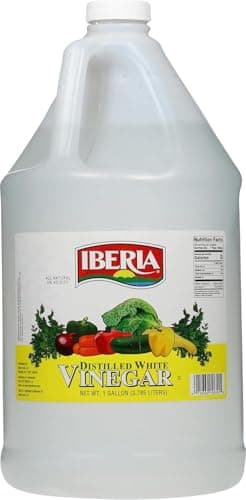
Iberia Distilled White Vinegar, 1 gallonFresh salt tidelines on leather or suede
Scores are ours and editorial. They are never published as review or rating markup, because we have not tested these products.
Try the vinegar first. It is one part vinegar to two parts water. That ratio is not folklore - it is what Timberland publishes in its own stain guidance, and on a fresh tideline it usually finishes the job for the cost of a splash out of a bottle you already have.
We rank a pantry item above the paid products on this page because it is the right answer, and because you should be able to tell when a site is recommending something for you and when it is recommending something for itself.
The mechanism is worth two sentences. De-icing salt dissolves in slush and soaks into the leather with the water. The water then evaporates and the salt does not - it crystallizes in the fibers and stays hygroscopic, so it keeps pulling moisture through the leather and keeps drawing the oils out with it. The tideline you can see is the marker; the oil loss is the damage.
The source. Getting it off the same day is worth more than any product on this page.
The four options, and when each is right
Option
Use when
Materials
Published method
Distilled white vinegar
Fresh, light tidelines
Leather and suede
1:2 vinegar to water, per Timberland
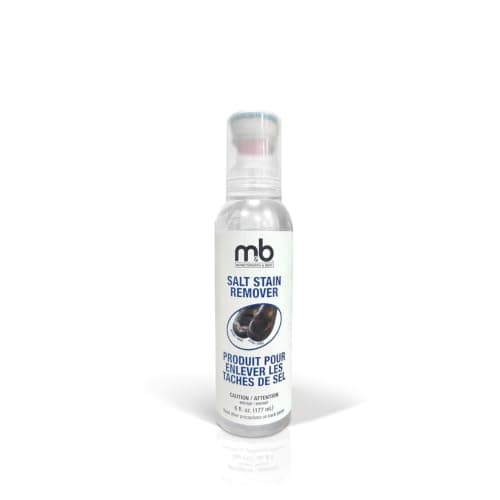
Moneysworth & Best Salt Stain Remover
Rings vinegar has not shifted
Natural and patent leather, suede, nubuck, canvas
Aerosol 14220 / liquid 14201
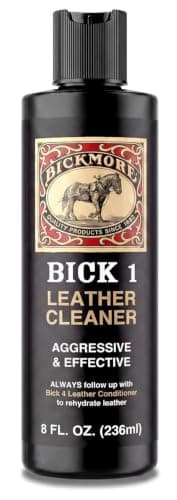
Bickmore Bick 1
Salt plus old dressing build-up
Finished leather
Water-based cleaner
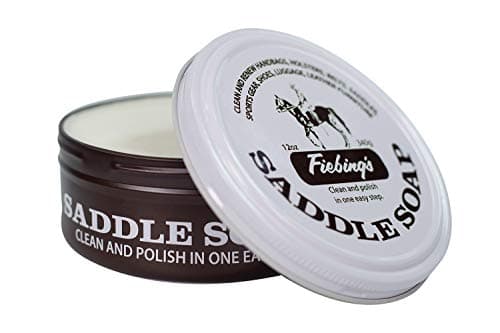
Fiebing’s Saddle Soap
A full clean after the salt is off
Smooth leather only - not suede
Glycerine soap, cleans and conditions
The Moneysworth & Best product earns second place on documentation as much as anything: it is one of the few products in North America sold specifically for road-salt tidelines, it lists its materials, and the maker publishes a winter care procedure to go with it. That is more than most of this category offers.
One thing to check before you start
If the leather is already dry and cracked, do not go straight in with an acid. Vinegar on damaged leather makes the damage worse. Condition it first, let it absorb, and then clean - the sequence is in conditioning boots after they get wet.
Always condition afterwards
Every option here removes oils along with the salt - the soap most, the vinegar least, but all of them. Cleaning a salted boot and stopping there leaves the leather drier than the salt already made it. Clean, dry fully, condition. That third step is not optional in winter, and it is the one people skip.
The write-ups
Every pick, in full
01 / Best first attempt
Iberia
8.6 / 10
Iberia Distilled White Vinegar, 1 gallon
The cheapest thing on this site and the first thing to try - Timberland's own stain guidance is one part vinegar to two parts water.
The boots are suede or nubuck - soap mats the nap.
How it scores, by criterion
Documented use7.5
Material range6.0
Speed6.5
Published composition6.5
Value per treatment9.5
How these picks were chosen
Everyone in this category says they tested twenty dryers. We have not tested any, and we say so. What we did instead: read the manuals, compile the published specifications, compute the running cost from the manufacturer's own wattage figure, and show the arithmetic so you can check it.
Start with distilled white vinegar diluted one part to two parts water - Timberland publishes that ratio, and it clears most fresh tidelines. If the ring persists, a dedicated product such as Moneysworth & Best Salt Stain Remover is the next step.
Does vinegar damage leather boots?
Diluted properly and wiped off, no - Timberland publishes a 1:2 vinegar and water solution for exactly this. Undiluted vinegar, or vinegar on leather that is already dry and cracked, is a different matter. Condition damaged leather before cleaning it.
How quickly do I need to remove salt from boots?
Promptly - Moneysworth & Best warn that salt can eat away at leather if it is left. A damp cloth over the boots the same evening prevents the problem entirely and takes about fifteen seconds.
Can I use saddle soap on salt stains?
Yes, on smooth leather, and it lifts salt and grime together. Not on suede or nubuck - soap mats the nap. Follow it with a conditioner, because saddle soap takes oils out along with the salt.
Why do salt stains come back after cleaning?
Because salt that has soaked deep into the leather migrates back to the surface as the boot dries. A single surface wipe removes what you can see, not what is inside. Repeat the clean after the boot has dried fully, and expect two passes on a bad ring.