How to remove salt stains from leather boots
Six steps, one of them free, and one that everybody skips. The whole job takes about ten minutes plus an overnight dry.
By Scooter M., Enthusiast. Published September 1, 2026.
We earn a commission if you buy through the links on this page, at no extra cost to you. It never changes a ranking, and we recommend products with no affiliate link behind them where those are the right answer. Full disclosure.
Do it sooner rather than better. Moneysworth & Best warn that salt can eat away at leather if it is not removed promptly, so a quick wipe tonight beats a thorough job in March. The method below is the thorough one, for when a ring has already formed.
- 01
Let them dry, and brush the loose salt off
Work on dry boots. Wet salt smears into the grain; dry salt brushes off. Timberland’s published method starts here too - brush off the loose salt before anything wet touches the boot. A horsehair brush or a dry cloth is enough.
- 02
Mix one part vinegar to two parts water
Distilled white vinegar, diluted 1:2, which is the ratio Timberland publishes. Mix more than you think you need - you want a fresh cloth face several times rather than working salt back in with a dirty one.
- 03
Wipe the tideline, do not soak it
Dampen the cloth and work along the tideline rather than scrubbing at a spot. You are dissolving crystals so they can be lifted. Saturating the leather drives salt deeper in, which is the opposite of the goal.
- 04
Wipe the residue off with clean water
This is the step people skip, and it is why boots come out looking patchy. Timberland specifies wiping the residue off with a clean damp cloth. Leaving dissolved salt and vinegar on the surface to dry just redeposits the ring.
- 05
Dry overnight, well ventilated, no heat
Timberland says to dry overnight in a well-ventilated place. Not on a radiator: Atsko states force drying with heat causes leather to harden and shrink, and Blundstone says never to use an artificial heat source. Salt-cleaned leather is already short of oils.
- 06
Condition, once they are completely dry
Non-negotiable. The salt stripped oils, and so did the cleaning. Work a conditioner in and let it absorb. If you want the boots to stay the color they are, use a conditioner sold on not darkening leather.
If the ring comes back in a week
That is normal on a bad stain and it does not mean you did it wrong. Salt that soaked deep into the leather migrates back to the surface as the boot dries out fully. Repeat the whole process once the boots are properly dry. Two passes on two different days beats one aggressive pass.
When to skip the vinegar
If the leather is already dry, stiff or visibly cracked, do not start with an acid. Condition it first, give the oils a day to work in, and clean after that. Vinegar on damaged leather makes the damage worse, and salt-damaged leather is exactly the case where people reach for the strongest option.
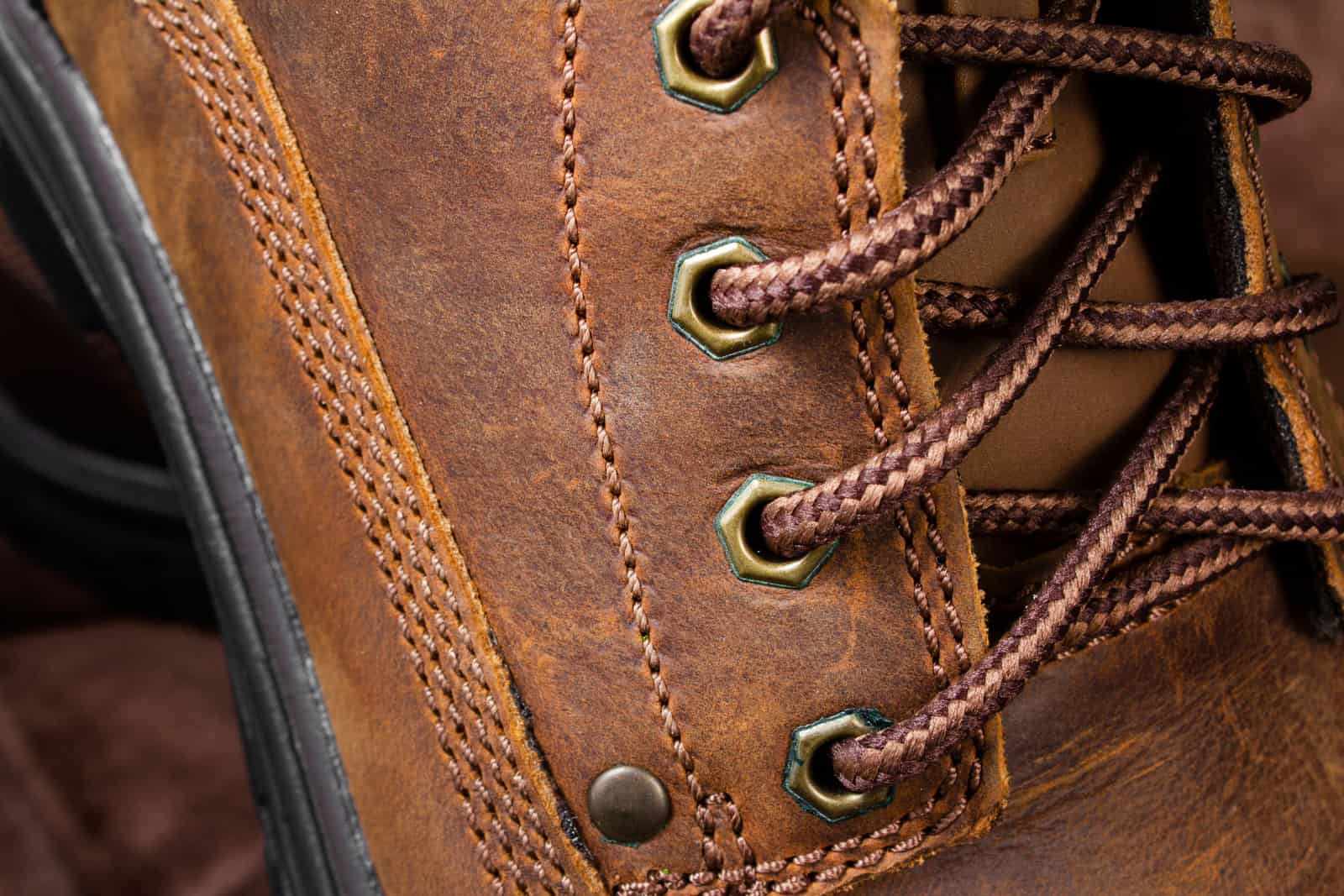
Do not forget the welt
Salt collects in the seam where the upper meets the sole, and it stays there after the visible tideline is gone - quietly working on the stitching. Get a brush into the welt while you are doing the rest. It takes an extra minute and the stitching is the part of a good boot you cannot easily replace.
Then stop it happening again
The whole of this page is remediation. Fifteen seconds with a damp cloth when you come in each evening prevents the tideline forming at all, and a proofed boot sheds most of the salt solution before it soaks in. That routine is in how to prevent salt stains.
One thing worth checking before you reach for the vinegar: a white, crusty, slightly raised line is salt, and this page is the right page. A soft-edged line that is simply darker than the leather around it is not salt at all - it is a water mark, and re-wetting it with plain water is the fix rather than the mistake. Water stains on leather boots has the difference and the method.
What we would buy for this
Chosen from the same registry as our roundups, on published specifications rather than on testing we have not done.
Iberia
Iberia Distilled White Vinegar, 1 gallon
The cheapest thing on this site and the first thing to try - Timberland's own stain guidance is one part vinegar to two parts water.
Skip it if: The leather is already dry and cracked. Acid on damaged leather makes the damage worse; condition first.
#ad Price as of October 17, 2026, from Amazon. Prices change. How this site is funded.
Moneysworth & Best
Moneysworth & Best Salt Stain Remover
One of the few products in North America sold specifically for road-salt tidelines, from a maker that publishes a winter care procedure to go with it.
Skip it if: The stain is fresh and light. A 1:2 vinegar-and-water wipe costs nothing and usually works.
#ad Price as of October 17, 2026, from Amazon. Prices change. How this site is funded.
Lexol
Lexol Leather Conditioner
A thin liquid conditioner that soaks in rather than sitting on top, with the reapplication interval published on the label.
Skip it if: You are conditioning suede. Liquid conditioners flatten and stain a napped surface.
#ad Price as of October 17, 2026, from Amazon. Prices change. How this site is funded.
Frequently asked
How do you get salt stains off leather boots?
Let them dry, brush the loose salt off, wipe the tideline with one part white vinegar to two parts water, wipe the residue away with a clean damp cloth, dry overnight somewhere well ventilated, then condition. That sequence follows Timberland’s published guidance.
Should boots be wet or dry when removing salt?
Dry. Wet salt smears into the grain and dry salt brushes off, so you remove a good proportion of it mechanically before any liquid is involved.
Can salt permanently damage leather boots?
Yes. Moneysworth & Best warn that salt can eat away at leather if it is not removed promptly, and the repeated oil-stripping causes cracking over a season. Prompt removal and conditioning prevent nearly all of it.
Do I have to condition after removing salt stains?
Yes, and it is the step most often skipped. The salt removed oils and the cleaning removed more. Leaving the boots clean but dry is how you get cracking in spring.
Why are my boots patchy after cleaning off salt?
Usually because the residue was left to dry on the surface. Wiping the boot with a clean damp cloth after the vinegar pass, then drying slowly and evenly, fixes it. Conditioning afterwards also evens out the appearance.
Where the figures on this page came from
- Timberland - How to remove stains from leather or suede boots (1:2 vinegar solution, method, drying)
- Moneysworth & Best - winter shoe cleaning and storing tips (salt stain remover, product codes, salt warning)
- Atsko - Boot Care (force drying causes leather to harden and shrink)
- Blundstone - Boot Care (salt, drying, artificial heat sources)
- Lexol - Leather Conditioner product page