Obenauf's Heavy Duty LP review
We have not tested it. We have read what Obenauf's publishes about it, done the arithmetic on a jar, and been specific about the boots it will darken or simply not suit.
By Scooter M., Enthusiast. Published September 17, 2026.
We earn a commission if you buy through the links on this page, at no extra cost to you. It never changes a ranking, and we recommend products with no affiliate link behind them where those are the right answer. Full disclosure.
The short version: buy it for leather work boots that get wet, muddy and scuffed, put it on by hand at room temperature, and accept before you open the jar that the boots will come out darker. Obenauf’s own pages back every part of that sentence, including the last one.
This is not a test. We do not have a jar on a bench, and a review that pretended otherwise would be the least trustworthy thing on this page. What we did instead was read what Obenauf’s publishes about Heavy Duty LP - the product page, the application guide, the FAQ and its background pages - work out what a jar actually treats from the maker’s own coverage figure, and be specific about where it is the wrong buy. The method is in how we research.
What Obenauf’s publishes
| Specification | Published detail |
|---|---|
| Form | A paste that melts when applied by hand |
| Ingredients | Natural oils, beeswax and propolis |
| Contains no | Petroleum, solvents, paraffin or mink oil |
| Leathers | Full grain, top grain and nubuck; not recommended for suede |
| Method | By hand, at room temperature, on clean, dry boots |
| Between coats | 1 hour, then buff off the excess |
| Coverage | About 1 oz per application on tall boots |
| Interval | Every 6 to 8 weeks |
| Heat | Over 100 degrees may harm leather; never in an oven or near a fire |
| Sizes | 4 oz, 8 oz and a 128 oz bucket |
Every row comes from Obenauf’s product page, its application guide and its FAQ. Two things it does not publish, and this review does not fill in: which oils, and in what proportion. “Natural oils” is as specific as the label gets.
Where it came from, and why that explains the formula
Obenauf’s says the formula was built for wildland firefighting. Its own account is that Marv Obenauf, a firefighter for 34 years, saw boots working in “steam, heat, wet ashes (lye) and caustic fire retardants which were literally baking the boots”, and that the leather treatments he could buy were not up to it.
A profile in Craftsmanship Magazine fills in the rest: he tested 43 different plant oils along with various natural waxes, and settled on two kinds of beeswax, extra propolis and “several different refined plant and animal oils”, first mixed in a 55-gallon drum in his garage. Two practical things follow. The oils are not all plant oils, which matters if you avoid animal products. And the product was designed around leather that gets abused and soaked, not leather that gets admired - which is the quickest way to decide whether it suits your boots.
What it claims to do, and what we can check
The mechanism Obenauf’s describes is a slow release. Its FAQ calls Heavy Duty LP “a time release formula wherein the natural oils are suspended in the wax and Propolis and gradually seep out over a long period”. The beeswax sits in the surface, which the maker says works by “keeping the oils in while keeping the dirt and water out”, and the oil keeps the fibers flexible. Propolis is the tree resin honeybees collect to waterproof and disinfect their hives, and Obenauf’s describes it as anti-bacterial.
The product page lists what that is meant to buy you. It “repels water, acids, petroleum, salt, and chemicals”, restores “dried & sun-faded leather”, and resists “scuffing, abrasion, stitch tear, and premature cracking in flex areas”. It also says the dressing “allows leather to breathe”, which becomes important further down this page.
The lab claim, and why we are only reporting it
Obenauf’s says Heavy Duty LP was “tested and proven by the Leather Research Laboratory” to resist water penetration, scuffing, caustic chemicals, manure acids, salt, cracking, perspiration and stitch tear, and that the laboratory rated its LP “#1 Overall”. We have not been able to read the underlying report - the maker quotes the result, not the data - so it is reported here as the maker’s claim and nothing on this page is scored on it.
What a jar actually treats
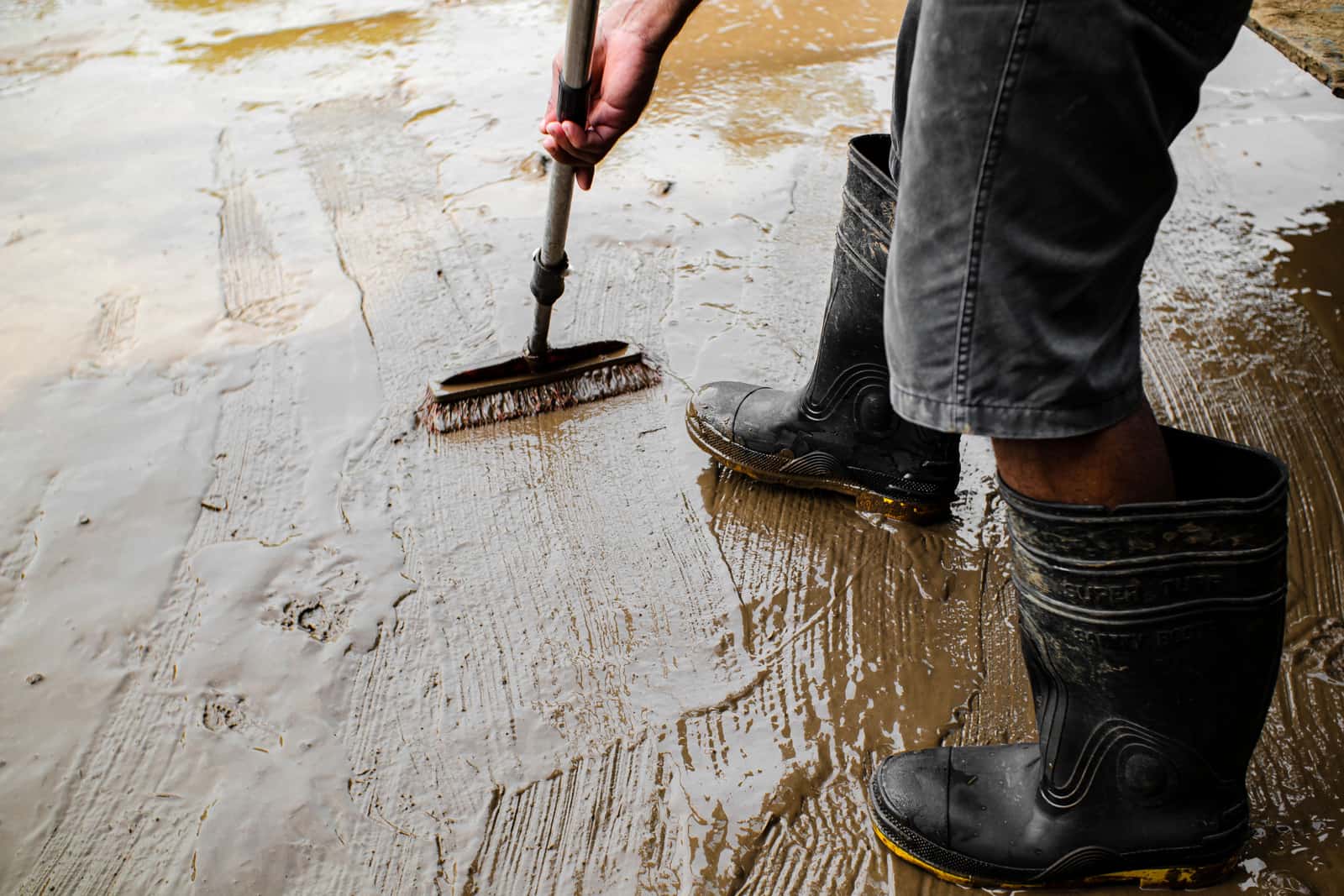
This is the number most reviews skip, and Obenauf’s publishes it: about one ounce per application on tall boots. An 8 oz jar is therefore roughly eight applications on tall boots, and more on a six-inch work boot, which simply has less leather to cover.
How long that lasts depends on which of the maker’s own schedules you follow, because it publishes more than one:
- Every six to eight weeks, from the product page, is 6.5 to 8.7 applications a year. On tall boots an 8 oz jar lasts about a year.
- At least once a month for “hard daily use, wet or dry”, from the FAQ, is twelve a year. The same jar lasts about eight months.
- Every six months in a temperate climate, also from the FAQ, is two a year. The jar lasts about four years.
So “a jar lasts forever” is true for weekend boots and false for boots worn on a farm every day. The FAQ is candid that frequency “depends on many factors, like thickness, quality, tanning process, animal it’s from, and age of leather”. Treat six to eight weeks as a starting point and let the boots tell you: when water soaks into the flex crease instead of beading, it is due. The five-second beading test is the reliable version of that check.
How to apply it, by the maker’s method
- 01
Start with clean, dry boots
Obenauf’s says to apply it to clean, dry boots. Mud and salt worked in under a wax dressing stay there. If they need a proper clean first, clean the leather and let it dry naturally.
- 02
Test a hidden spot
The maker’s own advice if color change is a concern. Its FAQ adds that in some quality leather “it takes 7 days for complete fiber migration and true color to show”, so the tongue you test tonight is not the final answer tomorrow.
- 03
Work it in by hand, at room temperature
By hand, because “body temperature helps melt LP into the leather”. Spend the time on the flex crease, the welt and the seams rather than the toe cap.
- 04
Wait an hour, then buff
Allow one hour between treatments and buff off the excess. Obenauf’s says “two applications will last much longer in severely wet conditions”, so a second coat is for boots that live wet, not a default.
- 05
Repeat on a schedule, then check with water
Six to eight weeks is the product-page figure. Let the beading test move it earlier or later for your boots.
Do not heat it the way you would heat Sno-Seal
This is where two beeswax dressings part company. Atsko tells you to preheat boots for Sno-Seal, with a ceiling of 120 F. Obenauf’s method is room temperature and warm hands. Its care guidelines do suggest melting the preservative for easier application, without saying how, and in the same list warn: “Temperatures over 100 degrees may harm leather. Never heat in an oven or near a fire.” Follow the instructions for the jar in your hand, and if you own both, do not carry the Sno-Seal habit over.
Heavy Duty LP or Leather Oil?
Obenauf’s makes two leather preservatives, and the FAQ explains the difference in a line each. Both are “a blend of Natural Oils, Propolis, and Beeswax”. Leather Oil is “a liquid version with the same ingredients but, a different ratio of beeswax and Propolis to oil”. Heavy Duty LP is the cream, with the oil held in the wax and released slowly.
| Published detail | Heavy Duty LP | Leather Oil |
|---|---|---|
| Form | Paste, applied by hand | Liquid, applied with the dauber supplied |
| Positioned for | Industrial-strength preservative | Moderately wet and dry conditions |
| Interval | Every 6 to 8 weeks | Every 3 to 6 months |
| Directions | 1 hour between coats, buff off excess | Do not saturate; up to 1 hour to absorb, buff off excess |
| Color | Darkens leather | Darkens leather; final shade can take 7 days |
| Sizes | 4 oz, 8 oz, 128 oz | 8, 16, 64 and 128 oz |
The Leather Oil column is from its product page and the application guide. The practical reading: boots that are wet, muddy and abraded most working days want the paste, because the wax is the part that stays in the surface. Boots in drier or only occasionally wet conditions - the maker’s “moderately wet and dry” - suit the Oil, and a liquid is easier to spread over a large item such as a jacket or a saddle. Both darken, and neither goes on suede.
Where it is the wrong buy
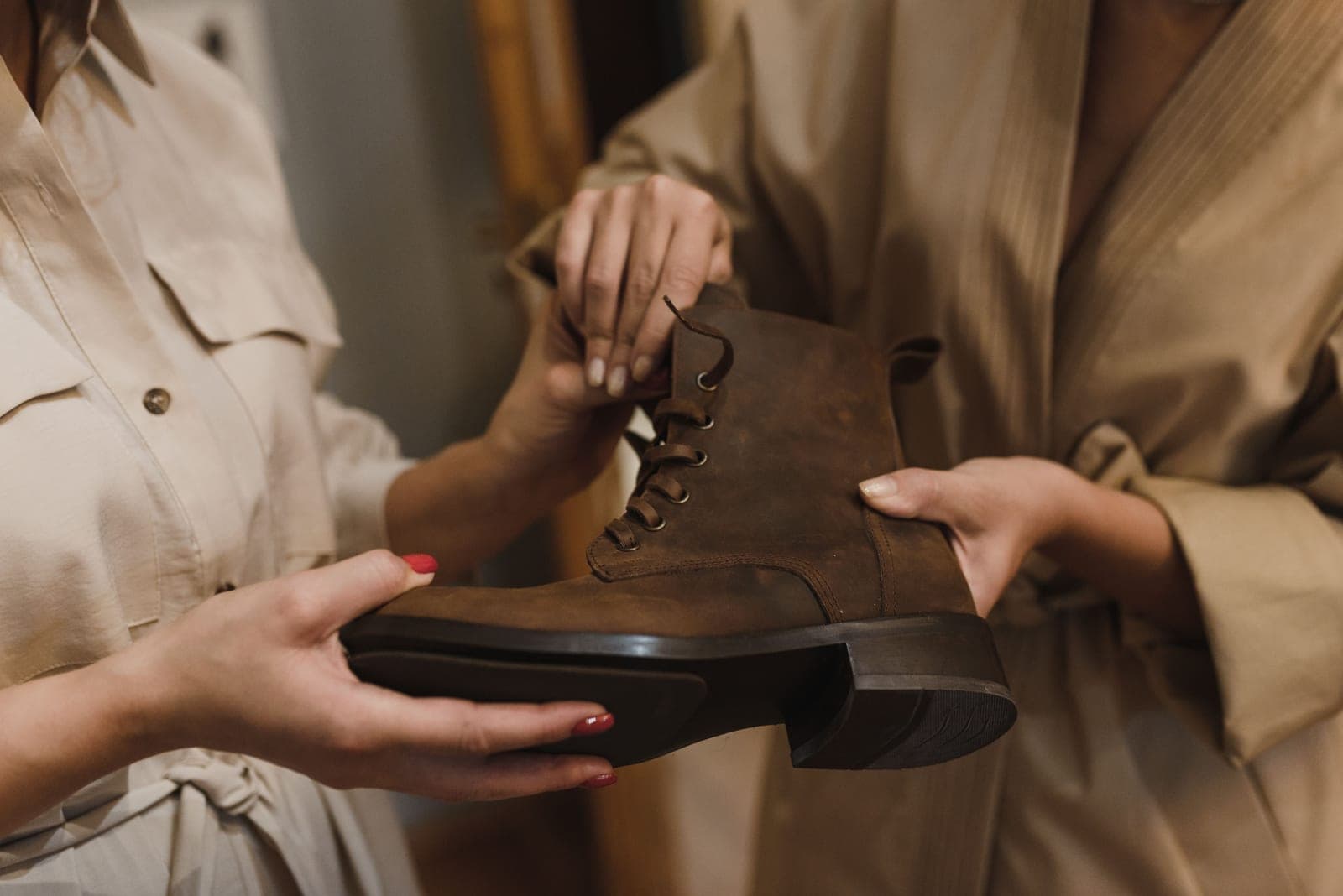
If the color matters. Obenauf’s answers its own FAQ question about darkening with a plain “Yes, almost anything that restores the natural oils will darken it”, and warns that the effect is more significant on leather that has been “bleached blonde or dyed a light color”. On tan boots you want to stay tan, use a conditioner sold on not darkening, such as Bickmore Bick 4 - compared in Lexol vs Bick 4 - and accept that you are giving up the wax barrier to keep the color.
If the boots are suede. Not recommended, by the maker, whose FAQ says suede “does not require oils for protection” and points to a spray instead. How to waterproof suede boots covers what does work. Nubuck is where we part company with the label. Obenauf’s lists nubuck among the leathers it suits; our general advice across this site is to keep wax off napped leather, because it darkens and flattens the nap. If you go ahead, test on the tongue and wait the week.
If the boots are membrane-lined. Obenauf’s addresses this directly. Its FAQ notes that, according to the manufacturer, a waterproof liner “may be compromised when the leather is sealed off and cannot breathe”, and says that “when applied correctly” its LP “will not seal leather”. We cannot test that, and elsewhere on this site we advise keeping heavy wax off membrane-lined boots. The warranty on the liner belongs to the boot maker, so check its care instructions first, and if they name a water-based proofer, use that.
If you do not know what the stitching is. A detail most makers never mention: the FAQ says synthetic stitching should come to no harm, but organic-fiber stitching may break down “with general use and exposure to moisture & some conditioners”. On an older or heritage pair where you are not sure what the thread is, ask the boot maker before you work a dressing into the welt.
If the boots carry a safety rating you rely on. We could not source a statement from any boot or dressing maker about whether oil and wax treatments affect slip, electrical hazard or puncture ratings, so ask the boot manufacturer. The wider picture for jobsite boots is in the work boot waterproofing roundup, where Heavy Duty LP is the rank-one pick.
How it compares to Sno-Seal
Sno-Seal is the dressing Obenauf’s most often gets weighed against, and on paper they are close relatives: both beeswax-based, both darken, neither is for suede. The differences that decide it:
- Method. Sno-Seal wants preheated boots, up to 120 F. Obenauf’s wants room temperature and warm hands, which is the easier job to fit into an evening.
- What else is in it. Atsko describes Sno-Seal as a natural wax that lubricates leather and protects against drying. Obenauf’s adds oils and propolis, and sells the result as a conditioner and preservative in one pass.
- Documentation. Atsko publishes the more specific method, including its temperature ceiling. Obenauf’s publishes a coverage figure and a reapplication interval.
Where the goal is a wax barrier on smooth full-grain leather and you are happy to do the preheat, Sno-Seal ranks first in the leather boot waterproofing roundup. Where the boots also need conditioning and the job has to fit into a weeknight, Obenauf’s is the easier recommendation. The two waxes against a water-based proofer are in Nikwax vs Sno-Seal.
Who should buy it
Anyone with smooth or full-grain leather work boots that get wet, muddy, salted or scuffed most working days, who wants one product that conditions and proofs, and who has decided the boots are tools rather than ornaments. It is also the easier heavy dressing to live with: no preheating, an hour between coats, and a published amount per application, so you know roughly when the jar will run out.
Who should not: owners of light-colored leather they want to keep light, anyone treating suede, anyone whose boot maker rules out heavy dressings on a waterproof liner, and anyone who wants a figure from independent testing rather than from the manufacturer - because nobody has published one we can read.
What we would buy for this
Chosen from the same registry as our roundups, on published specifications rather than on testing we have not done.
Obenauf's
Obenauf's Heavy Duty LP
A thick beeswax-and-oil paste built for boots that live in mud and abrasion rather than boots that live on a shoe rack.
Skip it if: You care how they look. A heavy paste dressing darkens leather and dulls any polish under it.
#ad Price as of September 17, 2026, from Amazon. Prices change. How this site is funded.
Obenauf's
Obenauf's Leather Oil
The liquid version of Heavy Duty LP - the same oils, beeswax and propolis at a higher ratio of oil, pitched by its maker at moderately wet and dry conditions rather than mud.
Skip it if: The color matters. Obenauf's says Leather Oil will darken leather, and the final shade can take seven days to show.
#ad Price as of September 17, 2026, from Amazon. Prices change. How this site is funded.
Atsko
Atsko Sno-Seal Original Beeswax
A beeswax dressing with the most specific instructions in the category - including a hard 120 F ceiling on preheating that almost nobody reads.
Skip it if: Your boots are suede. Atsko says outright it is not recommended for suede, and will darken and flatten the nap.
#ad Price as of September 17, 2026, from Amazon. Prices change. How this site is funded.
Bickmore
Bickmore Bick 4 Leather Conditioner
The default conditioner for boots you want to stay the color they already are - it is sold specifically on not darkening leather.
Skip it if: You want a waterproof barrier - a conditioner feeds leather, it does not seal it.
#ad Price as of September 17, 2026, from Amazon. Prices change. How this site is funded.
Frequently asked
What is Obenauf's Heavy Duty LP made of?
Obenauf’s lists natural oils, beeswax and propolis, and says it contains no petroleum, solvents, paraffin or mink oil. It does not name the oils. A Craftsmanship Magazine profile of the founder describes them as several refined plant and animal oils, alongside two kinds of beeswax.
Does Obenauf's darken leather?
Yes. Obenauf’s own FAQ says almost anything that restores the natural oils will darken leather, more so on bleached or light-colored leather, and that in some leather the true color takes seven days to show. Test a hidden spot and wait a week if the shade matters.
Is Obenauf's waterproof?
Obenauf’s says Heavy Duty LP waterproofs leather while still letting it breathe, and lists it as repelling water, salt and chemicals. It treats the leather, not the boot: seams, eyelets and construction still decide whether the boot keeps water out, so a treated upper on a boot that was not built waterproof does not become a waterproof boot.
How often should you apply Obenauf's Heavy Duty LP?
The product page says every six to eight weeks. The FAQ widens that: at least monthly under hard daily use, every three months in hot, dry climates, and every six months may be enough in temperate ones. The beading test on the flex crease tells you which applies to your boots.
What is the difference between Obenauf's Heavy Duty LP and Leather Oil?
The same ingredients at a different ratio. Heavy Duty LP is a paste with the oils suspended in wax for a slow release, sold as the industrial-strength option; Leather Oil is the liquid version for moderately wet and dry conditions, applied every three to six months. Both darken leather and neither is for suede.
Should you heat Obenauf's before applying it?
Not the boots. Obenauf’s says to apply it at room temperature and by hand, so body heat melts the paste into the leather, and warns that temperatures over 100 degrees may harm leather and never to heat it in an oven or near a fire. That is different from Sno-Seal, whose maker tells you to preheat boots to no more than 120 F.
Can you use Obenauf's on Gore-Tex boots?
Obenauf’s says that when applied correctly its LP will not seal leather, which is the concern with membrane-lined boots. We cannot verify that, so check the boot maker’s care instructions first - the warranty on the liner is theirs, not Obenauf’s.
Where the figures on this page came from
- Obenauf's - Heavy Duty LP product page (ingredients, leathers, method, coverage, interval, sizes)
- Obenauf's - how to apply (by hand at room temperature, 100-degree heat warning)
- Obenauf's - FAQ (darkening, LP vs Leather Oil, reapplication, membranes, stitching)
- Obenauf's - Leather Oil product page
- Obenauf's - Heavy Duty LP overview (the maker's Leather Research Laboratory claim)
- Obenauf's - why choose LP (propolis, time release, laboratory rating)
- Obenauf's - firefighter boot care (origin of the formula)
- Craftsmanship Magazine - Marv Obenauf, former wilderness firefighter turned master of leather care
- Atsko - Sno-Seal application tips and instructions (120 F ceiling, method)