A jobsite boot is wet, abraded and back on your feet twelve hours later. That rules out half of this category, and it changes which of the rest is worth buying.
By Scooter M., Enthusiast. Published September 6, 2026.
We earn a commission if you buy through the links on this page, at no extra cost to you. It never changes a ranking, and we recommend products with no affiliate link behind them where those are the right answer. Full disclosure.
Quick picks
The shortlist, ranked
Ranked on published manufacturer specifications and, where a wattage figure exists, computed running cost. Tap any row for the full write-up, including who should skip it.
#
Product
Best for
Score
Price
01
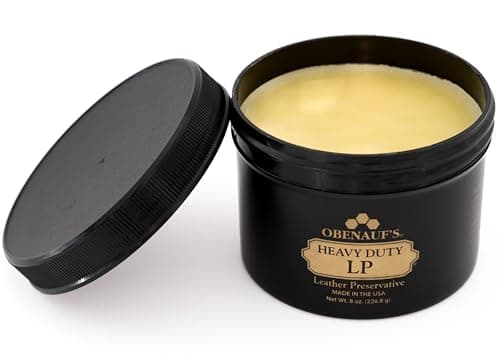
Obenauf's Heavy Duty LPWork boots that get destroyed rather than worn
Scores are ours and editorial. They are never published as review or rating markup, because we have not tested these products.
A work boot is a different waterproofing problem from a hiking boot, and the difference is not the leather. It is the schedule. A hiker gets treated in October, walks twelve days, and goes back in the cupboard. A work boot gets treated in October and then takes ten hours of concrete, mud, ladder rungs and hose water every single day until March. Any treatment that relies on sitting undisturbed on the surface is gone in a fortnight.
That single fact does most of the sorting on this page. Heavy paste dressings win, sprays mostly lose, and the honest cost of winning is that your boots get darker and duller. If that matters to you, this is the wrong page and the general leather waterproofing roundup is the right one.
What we ranked on
We have not tested any of these. What we did was read what each maker publishes and score it against four jobsite realities - and where a maker publishes nothing, we say so and mark it down rather than guessing.
How long it survives abrasion. A thick paste that has been worked into the leather lasts through conditions that strip a surface film in days. This is the criterion that puts pastes at the top.
Reapplication burden. A treatment you have to redo every week does not get redone. Something you do twice a season does.
Published composition. Three of the five publish an ingredient list or a full method. Two do not, and their scores reflect it.
What it does to the boot cosmetically. Every heavy dressing here darkens leather. We say by how much in prose rather than pretending it is a non-issue.
The five, and the jobs they suit
Product
Type
Best jobsite case
Published detail
Obenauf’s Heavy Duty LP
Beeswax and oil paste
Mud, abrasion, boots that get destroyed
Ingredients, method, coverage, interval
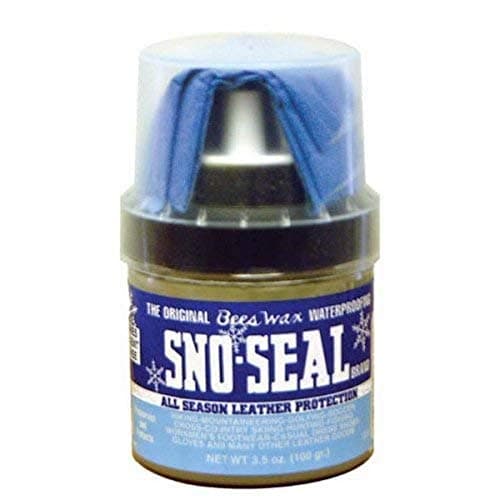
Atsko Sno-Seal
Beeswax dressing
Smooth full-grain leather, applied with heat
Full method plus a 120 F ceiling
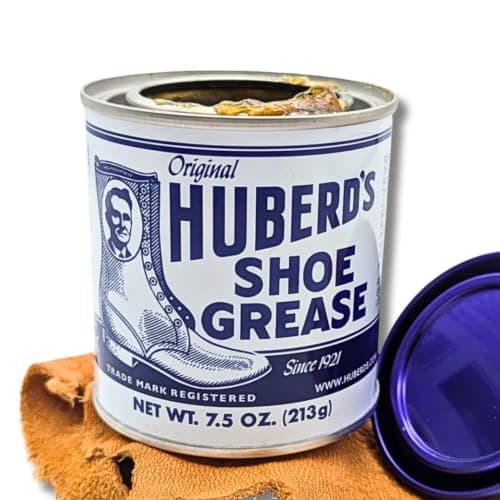
Huberd’s Shoe Grease
Pine tar and beeswax
Boots wet more days than they are dry
No spec sheet published
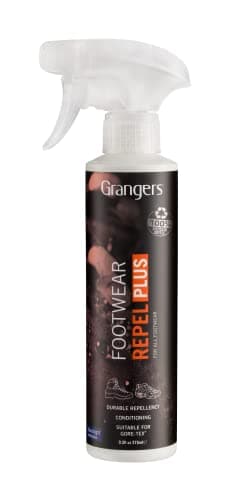
Grangers Footwear Repel Plus
Water-based spray
Composite and fabric safety boots
Materials, size, method, PFC-free
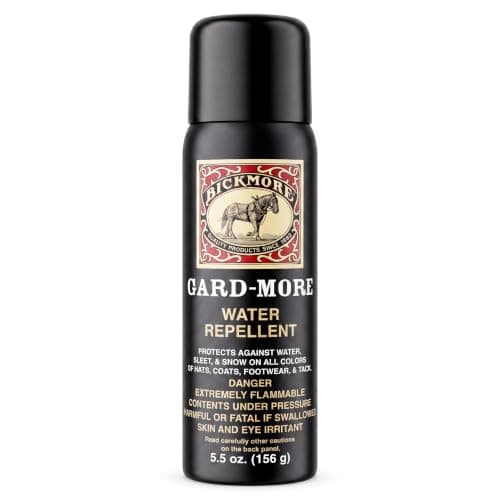
Bickmore Gard-More
Aerosol repellent
A mixed rack from one can
No spec sheet published
This is the condition the top two picks are formulated for. A surface film does not survive it; a worked-in paste does.
Why Obenauf’s takes the top spot
It is a thick beeswax-and-oil paste built for boots that get destroyed rather than worn, and it conditions and proofs in the same pass - which on a work boot is not a convenience, it is the difference between one job and two. By the maker’s own coverage figure, an 8 oz jar is about eight applications on tall boots.
The honest cons are substantial and they are on the card. It darkens leather noticeably and permanently. It dulls any polish underneath it, so it is the wrong product for a boot you also wear somewhere smart. And Obenauf’s names its ingredients only in outline - natural oils, beeswax and propolis, without saying which oils - which is why it scores 7 out of 10 on published composition in our own metric breakdown, below a maker that prints the full list. We are ranking it first on fitness for the job, not on documentation, and it is worth being explicit that those are two different things. What a jar treats, the maker’s method and how it differs from Obenauf’s Leather Oil are in our Obenauf’s Heavy Duty LP review.
That published ceiling is the reason it is second rather than fourth. Beeswax melts at around 146 F by Atsko’s own figure, and the instinct is to get the boot hot enough to help the wax flow - which is precisely the instinct that hardens and shrinks the leather. A manufacturer that writes down the limit is giving you the thing most of this category leaves you to guess.
Its cons: it darkens all leather, which Atsko says plainly, it is never for suede, and the preheat step makes it a thirty-minute job rather than a three-minute one. On a Sunday afternoon that is fine. On a Tuesday night it is the reason it does not get done.
Huberd’s, if the boots are basically never dry
Pine tar and beeswax, in production since 1921, and the barrier is heavy. This is the pick for the boot that is wet more days than it is dry - dairy work, wet concrete, anything involving a hose.
It has the strongest cons of anything here and they are not subtle. The pine-tar smell is unmistakable and it stays for a while. It darkens leather. And there is no published composition. If you share a mudroom with someone who has opinions about smells, buy the Sno-Seal.
Two things this page will not tell you
Whether a dressing affects a safety rating. We could not source a manufacturer statement, from any boot maker or any dressing maker, about whether oil or wax treatments affect a boot’s slip, electrical hazard or puncture-resistance certification. So we are not going to imply either way. If your boots are certified for a hazard you rely on, ask the boot manufacturer before you put a heavy oil dressing on them.
How long any of it lasts. Only one maker on this page publishes a reapplication interval: Obenauf’s, at every six to eight weeks, while its own FAQ says hard daily use may need it monthly. Treat any calendar figure as a starting point and use the beading test on the flex crease and the welt, which is where a work boot fails first - the method is here.
When the boot is not leather
A growing share of safety footwear is composite-toe with fabric or synthetic uppers, and none of the three pastes above are the right product for that. Grangers Footwear Repel Plus is fourth here for exactly that case: it publishes coverage for Gore-Tex and eVent, suede, nubuck, leather and fabric, comes in a 275 ml bottle, and goes on damp so it fits into the end of a shift rather than a weekend.
Its limitation on a work boot is the same one every spray has: it repels rather than seals, and it will not survive daily abrasion the way a worked-in paste does. On a fabric boot that is fine, because there is no other option. On smooth leather it is a compromise. Nikwax makes an equivalent, and the two are compared in Nikwax vs Grangers.
The one-can option, and its honest limits
Bickmore Gard-More covers suede, nubuck and smooth leather from a single aerosol, and an aerosol reaches the welt seam and the lace channels in a way a cloth does not. For a household with a mixed rack it is a reasonable single purchase.
It is fifth because Bickmore publishes no composition, no dwell time and no coverage figure, and because sprays generally need renewing far more often than a wax. On a work boot specifically, that renewal burden is the thing that eventually beats you.
Where a work boot actually fails
Not the toe. People treat the toe cap because it is the part they can see, and then get wet feet anyway. A work boot lets water in at three places, and all three are places a spray reaches badly and a worked-in paste reaches well.
The flex crease across the vamp. The fold that forms where your foot bends opens and closes thousands of times a shift. Any surface film there is being mechanically worked off from the first hour. This is the first place to check and the first place to re-treat.
The welt. The seam where the upper meets the sole sits in every puddle you stand in and collects grit that abrades whatever you put on it. It also holds water against the stitching, which is the failure that ends a boot rather than ruining a day.
The lace channels and eyelets. Water runs down the laces and in. A paste worked around the eyelet stays; an aerosol mist mostly does not get in there at all.
This is the strongest practical argument for the pastes at the top of this page. You are not applying them to a surface, you are working them into three specific places that a spray struggles to reach and that abrade the fastest.
Insulated and membrane-lined work boots
A growing share of cold-weather work boots are membrane-lined, and a heavy wax dressing works against what you paid for there. The membrane keeps water out while letting vapor from your foot escape; sealing the outer leather with wax closes the exit route, and the moisture that used to leave now condenses inside the boot. Cold feet follow, and so does the smell.
On those boots the water-based sprays are the correct tool rather than the compromise, for the same reason they suit hiking boots. If you are not sure whether your boots are membrane-lined, the label inside the shaft usually says so, and it is worth checking before you put a tub of grease on them.
The heat question, and the number that matters
Wax dressings flow better warm, which is why every application guide tells you to warm the boot - and why this is the step where people damage leather trying to protect it. The useful figures are both published by Atsko: beeswax melts at about 146 F, and the instruction is to preheat clean, dry boots without exceeding a comfortable handling temperature of 120 F.
Read those together and the logic is clear. You are not trying to melt the wax on the boot; you are warming the leather enough to accept it. If the boot is too hot to hold comfortably, it is too hot - and at that point you are doing the exact thing Atsko warns about elsewhere, which is force drying leather with heat until it hardens and shrinks. A warm room and twenty minutes beats a heat gun and two.
Clean first, or none of this works
Every product on this page needs the boot clean before it goes on, and on a work boot that is a real job rather than a wipe. Dry mud brushes off; wet mud smears into the grain and then gets sealed under the dressing. The full method is in how to clean leather boots, and the short version is: let the mud dry, brush it off, then clean, then dry fully, then treat.
The drying step matters more on a work boot than anywhere else on this site, because a work boot does not get a rest day to dry in. Blundstone tells you to dry boots naturally at room temperature and never by an artificial heat source, which on a twelve-hour turnaround means moving air rather than patience. That is what the work boot dryer roundup is for.
What we would actually buy
Leather work boots, mud and abrasion, cosmetics irrelevant: Obenauf’s LP. Leather boots where you want published instructions and a temperature limit you can follow: Sno-Seal. Boots that are never dry and a tolerance for pine tar: Huberd’s. Composite or fabric safety boots: Grangers. A mixed rack and one purchase: Bickmore Gard-More, accepting you will redo it more often.
The pine tar option gets a full write-up of its own - what Huberd’s publishes, the method, and the two things to accept before you open the can - in our Huberd’s Shoe Grease review.
And whichever you pick, condition the leather too. A waterproofer stops water entering; it does not replace the oils a wet-dry cycle takes out. That sequence is in conditioning boots after they get wet.
Proofing over dirt seals the dirt in, and on a working boot the dirt is often chemically active rather than inert - cement dust is alkaline, road salt keeps pulling moisture out of the leather, and spilled diesel soaks in rather than sitting on top. How to clean work boots takes them one at a time and puts the steps in the right order.
The write-ups
Every pick, in full
01 / Best for mud and abrasion
Obenauf's
8.0 / 10
Obenauf's Heavy Duty LP
A thick beeswax-and-oil paste built for boots that live in mud and abrasion rather than boots that live on a shoe rack.
−Sprays generally need more frequent renewal than a wax
Skip this one if
You want published composition or a dwell time - Bickmore does not publish a spec sheet for it.
How it scores, by criterion
Documented use5.0
Material range9.0
Reapplication burden7.0
Published composition4.0
Coverage per can8.0
How these picks were chosen
Everyone in this category says they tested twenty dryers. We have not tested any, and we say so. What we did instead: read the manuals, compile the published specifications, compute the running cost from the manufacturer's own wattage figure, and show the arithmetic so you can check it.
For leather work boots in mud and abrasion, a heavy beeswax-and-oil paste such as Obenauf’s Heavy Duty LP - it conditions and proofs in one pass and survives conditions that strip a spray in days. Expect it to darken the leather permanently. For composite or fabric safety boots, a water-based spray such as Grangers Footwear Repel Plus is the appropriate choice.
How often should you waterproof work boots?
Only Obenauf’s publishes one - every six to eight weeks, or at least monthly under hard daily use according to its FAQ. For the rest, test the flex crease and the welt with a few drops of water: if it soaks in rather than beading, redo it. Work boots fail at those two places long before the toe cap.
Does waterproofing darken work boots?
The heavy dressings do, and permanently. Atsko says outright that Sno-Seal darkens leather, and both Obenauf’s LP and Huberd’s Shoe Grease darken substantially. Water-based sprays darken far less. If color matters, that is the trade you are making against durability.
Can you use mink oil on work boots?
You can, but understand what it does: mink oil softens leather structure and darkens it permanently. On a rigid old work boot you want supple again, that is the point. On a boot you rely on for ankle support, softening the structure is a real downside. The comparison is in mink oil vs leather conditioner.
Will waterproofing affect my safety boots' certification?
We could not source a published statement from any boot maker or dressing maker either way, so we will not guess. If your boots carry a slip, electrical hazard or puncture-resistance rating you depend on, ask the boot manufacturer before applying a heavy oil or wax dressing.