How to clean UGG boots
Sheepskin is the least forgiving material this site covers, and almost every shortcut people try on it is permanent. The manufacturer publishes a full method - here it is, with the products it actually requires.
By Scooter M., Enthusiast. Published September 14, 2026.
We earn a commission if you buy through the links on this page, at no extra cost to you. It never changes a ranking, and we recommend products with no affiliate link behind them where those are the right answer. Full disclosure.
Cold water, never hot. The whole boot, not the stain. A cleaner diluted fifty-fifty and never applied neat. And under no circumstances a washing machine. Those four rules come from UGG’s own published cleaning and care instructions, and between them they prevent almost every way people wreck a pair.
Sheepskin is the least forgiving material covered anywhere on this site. It is a napped surface on one side and wool on the other, it takes water marks the way paper does, and heat shrinks it. There is no version of this job you can rush, and the difference between a good result and a ruined boot is mostly a matter of not taking shortcuts.
A note before the method: we have no relationship with UGG and this page is not endorsed by them. We rank their cleaner first because their own instructions are written around it, and we name cheaper alternatives for two of the other steps further down.
Why sheepskin is different from ordinary suede
Most of what this site says about suede applies here, with three complications that make sheepskin harder.
- It is two materials joined together. A napped outer and a wool lining, and they respond to water differently. That is why the published method wets the entire outer surface evenly rather than treating a patch - a damp spot on one panel dries as a visible tide line.
- It shrinks with heat. Not stiffens, like leather - shrinks. A radiator or a tumble dryer will change the size and shape of the boot, and there is nothing to be done about it afterwards.
- The nap has a direction. Once dry, sheepskin has to be brushed one way to look right. Brushing back and forth leaves a patchy, scrubbed appearance that reads as damage even when the boot is clean.
If your boots are ordinary suede rather than sheepskin-lined, the routine is simpler and mostly dry - how to clean suede boots covers that case, and it is the better page for a plain suede chukka.
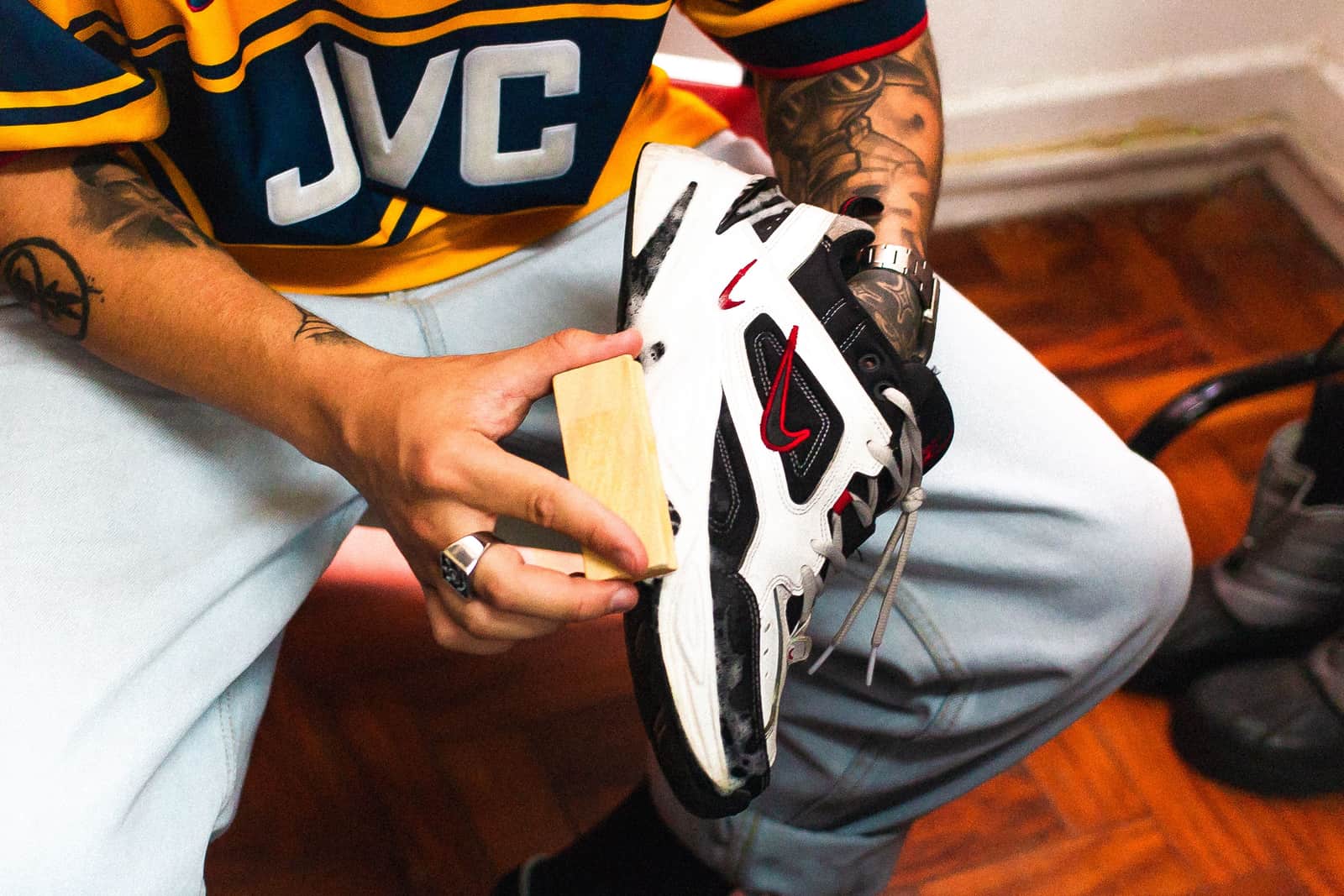
The method UGG publishes
- 01
Brush the dry dirt off first
Anything loose comes off before water arrives, because wet dirt drives into the nap instead of lifting out of it. Use the soft side of a suede brush, gently. This step costs thirty seconds and saves most of the effort later.
- 02
Moisten the whole outer surface with cold water
UGG’s instruction is to “moisten the entire surface of sheepskin footwear with clean, cold water”. The whole surface, not the mark - this is the single most counter-intuitive step and it is the one that prevents tide lines. Cold, because warm water is the start of shrinkage.
- 03
Dilute the cleaner fifty-fifty
The maker is explicit: “dilute Cleaner & Conditioner with equal proportions water and Cleaner and Conditioner, and do not apply cleaner and conditioner directly onto sheepskin footwear”. Neat cleaner on sheepskin is a stain, not a clean.
- 04
Apply with a wet sponge, gently
A small amount on a clean, wet sponge, worked over the whole area. UGG’s warning is worth repeating in full: “sheepskin has a delicate surface which can be damaged if scrubbed aggressively”. Pressure is not what gets sheepskin clean; even coverage is.
- 05
Rinse in clean cold water
Cleaner left in the nap dries stiff and attracts dirt. Rinse with clean, cold water until nothing more lifts out, keeping the coverage as even as it was going on.
- 06
Stuff with paper and dry slowly
The published instruction is to “lightly stuff with paper to hold shape and allow footwear to dry naturally and slowly”, and explicitly “do not dry in direct heat or sunlight”. Expect a full day, possibly two. Change the paper once it is soaked.
- 07
Brush the nap in one direction
Once completely dry, use the soft side of the suede brush to lightly brush the nap in one direction only. This is what turns a clean boot back into a boot that looks cared for, and it takes about a minute per boot.
The four shortcuts that ruin sheepskin
The washing machine. UGG says hand wash only and not to use one. A machine cycle saturates the wool lining, agitates the nap into a matted mess and frequently separates the sole. This is the most common way a pair dies.
Heat drying. Radiators, hair dryers, boot dryers on a heat setting, sun on a windowsill. Sheepskin shrinks. Atsko says force drying with heat hardens and shrinks leather generally; on sheepskin the shrinkage is the headline, not a side effect.
Spot-cleaning one mark. Treating a patch leaves a ring where the wet area met the dry one. It is why the published method wets everything.
Neat cleaner, or a household detergent. The maker specifies a 1:1 dilution and says not to apply it directly. Dish soap and laundry detergent are formulated to strip oils and will leave the nap dry and pale.
What we ranked the products on
We have not tested these. Every claim below is either the manufacturer’s own published statement or an honest observation about what the product is - the method is in how we research. Four questions decided the order.
- Does the maker publish a method for it? On a material this unforgiving, a documented dilution and procedure is worth more than a longer ingredient list. One product here has that; the rest are general-purpose.
- Is it cleared for sheepskin specifically? Not suede in general - sheepskin. Several perfectly good suede products do not name it.
- What does it cost against the alternative that does the same job? Two of the five steps here have much cheaper equivalents, and we say so rather than pretending the branded version is the only option.
- Does it prevent or repair? Sheepskin stains permanently, so a protector applied before the first wear is worth more than any cleaner applied after.
Why the UGG cleaner is first, and where to save money instead
The Cleaner & Conditioner is first for one reason: the published method is written around it, dilution ratio included. When the material punishes mistakes this hard, following a procedure the manufacturer actually wrote down is worth the premium. It also conditions as it cleans, which matters because sheepskin stiffens as it dries.
Its honest problems are on the card. It costs several times what a general suede cleaner does, UGG publishes no ingredient list for it, and the method it belongs to wets the whole boot - there is no quick version.
Where we would not spend the money is the brush. The method needs a suede brush and the branded kit includes one, but a generic brass-and-nylon brush with a crepe eraser block does the identical job for a fraction of the price, and the eraser block is genuinely useful on scuffs that a brush alone will not lift.
The same goes for the protector, up to a point. UGG’s own is cleared for sheepskin and is the safe choice. A water-based suede proofer that names nubuck and suede in its own directions will also protect these boots and usually costs less - the trade is that it does not name sheepskin specifically. Our wider ranking of those is in the suede protector roundup.
Protect them before the first wear, not after the first stain
The most valuable sentence in UGG’s guidance is easy to skim past: treat sheepskin and suede footwear with a water and stain repellent prior to wearing, to avoid any initial staining.
That ordering matters more on sheepskin than on any other material this site covers, because the marks it picks up are frequently permanent. A salt splash or a coffee drip on untreated sheepskin is not a cleaning problem you solve later - it is a shade change you live with. Twenty minutes on a new pair, before they ever go outside, is the highest-value thing on this page.
Reapply after each deep clean, since the cleaning takes the repellent with it. Neither UGG nor any proofer maker on this site publishes a reapplication interval, so the honest test is the same one we use everywhere: drop water on the toe and see whether it beads or soaks in.
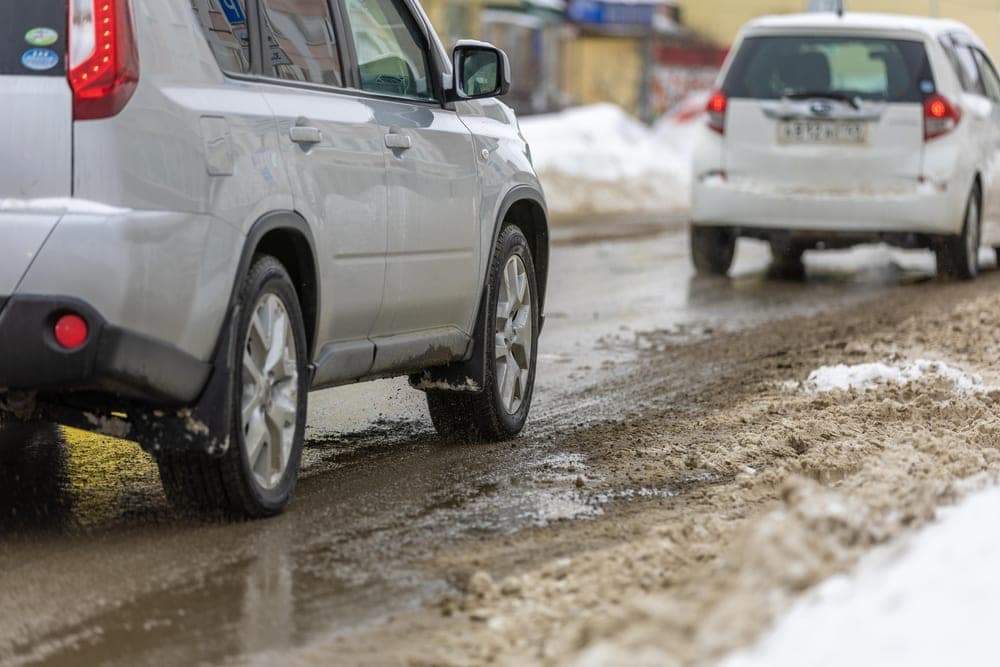
Salt, which is the real enemy
These boots are worn in exactly the conditions that produce white tidelines, and sheepskin shows salt worse than smooth leather does because the nap holds the crystals.
The mechanism is the one covered across our salt hub: de-icing salt dissolves in slush, soaks in with the water, and stays behind when the water evaporates - hygroscopic, pulling moisture through the material for as long as it sits there. On suede and sheepskin the removal is mostly mechanical and the biggest risk is being too enthusiastic with liquid. That method is in removing salt stains from suede boots.
One thing worth knowing before winter: a lot of the salt you meet went down as brine before the snow arrived, which is why boots pick up marks on dry days in November. That is covered in rock salt vs brine vs magnesium chloride.
The smell, which cleaning does not fix
Sheepskin boots are usually worn without socks, are lined with wool, and have no ventilation. That is a near-perfect environment for odor, and washing the outside does nothing about it - the smell lives in the lining.
What actually helps is drying between wears and an unscented adsorbent in the boot afterwards, rather than a fragrance sprayed over the top. Do not put these on a heated boot dryer for the shrinkage reason above; moving air at room temperature is the right approach. Options are ranked in the charcoal deodorizer roundup, and why the damp is what produces the smell in the first place is in why wet boots start to smell.
What about the counterfeits and the lookalikes?
A large share of sheepskin-style boots sold are not made by UGG, and some are not sheepskin at all - synthetic uppers with faux-shearling linings are common at the lower end.
This matters practically rather than snobbishly. A synthetic upper does not have a nap to restore and will not take a suede conditioner usefully; it wants a damp cloth and mild soap, and it will not shrink the way real sheepskin does. If you are not sure which you own, the tell is the lining: real sheepskin is attached to the hide, so the wool cannot be peeled away from the backing in a sheet.
The method on this page is for real sheepskin and suede. Applying it to a synthetic boot will not damage anything, but you will be paying for a cleaner that is doing less than a cloth would.
How often to do all this
A full wet clean is not a routine - it is what you do when the boots genuinely need it, perhaps once or twice a season, because every wet clean is a small risk on a material that does not forgive water marks.
What should be routine is the cheap half: brush the nap after wearing, deal with salt the same day rather than the weekend, keep them out of heat, and re-proof after any deep clean. That routine costs almost nothing and it is what keeps the wet cleans rare.
What we would buy for this
Chosen from the same registry as our roundups, on published specifications rather than on testing we have not done.
UGG
UGG Cleaner & Conditioner
The product UGG's own cleaning instructions are written around, which on a material this unforgiving is worth more than it usually would be.
Skip it if: You want to spot-clean one mark. UGG's method wets the whole boot, so this is a whole-boot job or nothing.
#ad Price as of September 14, 2026, from Amazon. Prices change. How this site is funded.
UGG
UGG Protector
The step UGG tells you to do before the boots are ever worn - and the one that decides whether the first winter leaves a mark you cannot remove.
Skip it if: The boots are already stained. A repellent stops marks arriving; it does nothing about the ones already there.
#ad Price as of September 14, 2026, from Amazon. Prices change. How this site is funded.
UGG
UGG Care Kit
Cleaner, protector and the suede brush the method actually requires, boxed together - convenient, and the most expensive way to buy all three.
Skip it if: You already own a suede brush. Buying the cleaner and protector separately costs meaningfully less.
#ad Price as of September 14, 2026, from Amazon. Prices change. How this site is funded.
Fiamme
Fiamme Suede and Nubuck Cleaning Kit
A crepe-rubber block and a brass-and-nylon brush - the only two tools that actually work on a salt-crusted suede boot.
Skip it if: Your boots are smooth leather - a brass bristle will scar the finish.
#ad Price as of September 14, 2026, from Amazon. Prices change. How this site is funded.
Nikwax
Nikwax Nubuck & Suede Proof
The only mainstream footwear proofer whose directions tell you to apply it to WET boots, which removes the step everybody skips.
Skip it if: Your boots are smooth full-grain leather - this is formulated for nubuck and suede, and Fabric & Leather Proof is the sibling you want.
#ad Price as of September 14, 2026, from Amazon. Prices change. How this site is funded.
Frequently asked
How do you clean UGG boots at home?
Brush off dry dirt, moisten the entire outer surface with clean cold water, apply Cleaner & Conditioner diluted fifty-fifty with water on a wet sponge, scrub gently, rinse in cold water, stuff with paper and let them dry naturally away from heat and sunlight, then brush the nap in one direction once dry.
Can you put UGG boots in the washing machine?
No. UGG publishes hand wash only and explicitly says not to use a washing machine. A machine cycle saturates the wool lining, mats the nap and frequently separates the sole - it is the most common way a pair is ruined.
Why do you have to wet the whole boot?
Because sheepskin dries with a visible tide line wherever a wet area met a dry one. UGG’s instruction is to moisten the entire surface with cold water before cleaning, which is what stops a spot-clean turning into a permanent ring.
Can you dry UGG boots with a boot dryer or a radiator?
Not with heat. UGG says to dry naturally and slowly and not in direct heat or sunlight, because sheepskin shrinks. Stuff them with paper and leave them in moving air at room temperature, which usually takes a full day or more.
Do you need the UGG cleaner, or will any suede cleaner do?
A general suede cleaner will clean them, and costs less. What the UGG product gives you is a method the manufacturer actually published, dilution ratio included, on a material where mistakes are permanent. On the brush and the protector we would happily buy the cheaper equivalents.
How do you protect UGG boots from stains?
Treat them with a water and stain repellent before the first wear - UGG names that step explicitly. Sheepskin marks permanently, so prevention is worth far more than any cleaner used afterwards. Reapply after every deep clean, since cleaning removes the repellent.
How do you get salt stains off sheepskin boots?
Mostly mechanically, and carefully - the nap holds salt crystals and too much liquid is the bigger risk. Brush what you can off dry first, then follow the suede method rather than the smooth-leather one, and condition or re-proof afterwards.
Where the figures on this page came from
- UGG - Sheepskin cleaning and care instructions (cold water, 1:1 dilution, hand wash only, no direct heat or sunlight, brush the nap one direction, protect before first wear)
- Atsko - Boot Care (force drying causes leather to harden and shrink)
- Blundstone - Boot Care (drying, artificial heat sources)
- Nikwax - Nubuck & Suede Proof directions (cleared for all nubuck and suede footwear; wet application; water-based)