The purchase price is the number everyone compares and the smaller half of the cost. Here is the value tier ranked on both - what you pay once, and what you pay every night for a decade.
By Scooter M., Enthusiast. Published September 13, 2026.
We earn a commission if you buy through the links on this page, at no extra cost to you. It never changes a ranking, and we recommend products with no affiliate link behind them where those are the right answer. Full disclosure.
Quick picks
The shortlist, ranked
Ranked on published manufacturer specifications and, where a wattage figure exists, computed running cost. Tap any row for the full write-up, including who should skip it.
#
Product
Best for
Score
Price
01
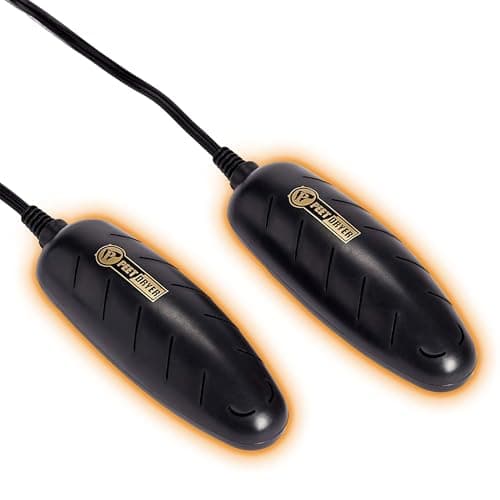
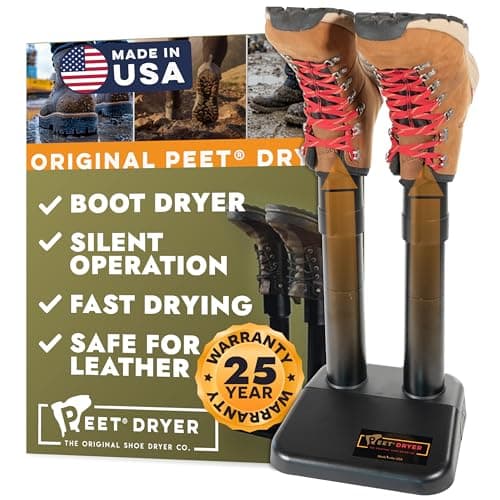
PEET Original 2-Shoe DryerOne pair, every night, all winter
Scores are ours and editorial. They are never published as review or rating markup, because we have not tested these products.
A boot dryer has two prices: the one on the box, and the one that arrives on your electricity bill every night for as long as you own it. Almost every budget list in this category compares the first and ignores the second, which is how a cheap dryer ends up being the expensive one.
So this page ranks on both, and it can only do that honestly for the units whose makers publish a wattage. Where a maker publishes none, we say so and mark it down rather than guessing - which turns out to be most of the budget end of this category.
What we ranked on
Purchase price, live from the retailer. Every price on this page comes from a live lookup and is stamped with the date it was taken. We do not print remembered numbers, and if a figure goes stale it disappears rather than misleading you.
Warranty. On a budget purchase this matters more, not less. A unit that fails in its third winter was not cheap.
Whether it can actually dry your boots. A very cheap dryer that cannot reach the footbed is not a bargain, it is an ornament.
Two prices, not one. The cheaper box frequently loses on the second.
The value tier, side by side
Option
Published power
Season cost
Warranty
PEET Original
36 W
$4.75
25 years
DryGuy Simple Dry
Not published
Cannot be computed
None stated
PEET Power Cell
12 W
$1.58
5 years
DryGuy Force Dry
Not published
Cannot be computed
1 year
Cedar shoe trees
None
$0.00
n/a
Season cost is ninety nights at eight hours. The two blanks are not an oversight on our part - DryGuy publishes no wattage for either unit, so there is no honest figure to print.
Why the Original wins a budget page it is not the cheapest on
Because over any realistic ownership period it is the cheapest thing here. At 36 watts it costs $4.75 a season to run, and PEET warrants it for twenty-five years with registration inside ten days. Spread the purchase over even ten of those years and the annual cost of owning it is a couple of dollars plus the electricity.
Its cons are real and they are the same ones on every page we write about it: one pair at a time, overnight rather than same-evening, and 22 inches of reach that will not serve a knee boot. If any of those three is a dealbreaker, the money you save here is not a saving. The full write-up is in our PEET Original review.
The cheapest stand, and what you give up for it
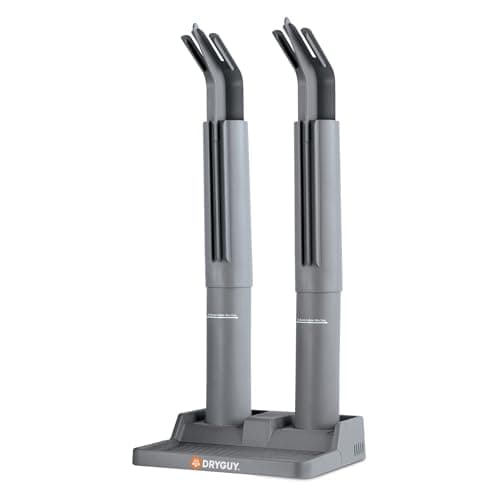
The DryGuy Simple Dry is a silent thermal-convection stand with a small footprint, and it is usually the cheapest full-size option on the shelf. DryGuy publishes a drying time of eight hours or less, which is the same ballpark as the Original.
What you give up is everything you would use to check the purchase. No published wattage, so its running cost is unknowable from the maker’s own data. No warranty stated on the product page at all. If the sticker price is genuinely the constraint this week, it is a real product and it will dry your boots. It is second rather than first because on a page about long-run cost, a unit that will not tell you its long-run cost cannot come top.
Two false economies in this category
The very cheap forced-air unit. A fan and a heating element for under thirty dollars is a fan and a heating element built to a price, and it is the configuration most likely to cook leather. Atsko states force drying with heat hardens and shrinks leather. If the budget only reaches a no-name heated blower, buy an unheated stand instead - or nothing, and use the method below.
Buying on wattage alone. Twelve watts is cheaper to run than thirty-six, but it moves proportionally less moisture. The Power Cell is a genuinely excellent travel dryer and a poor main dryer for soaked boots. Cheap per night is not the same as adequate.
What “budget” should mean in this category
Boot dryers are not an expensive class of object. The whole shortlist on this page costs less than a pair of the boots it is drying, and the gap between the cheapest and the dearest here is smaller than the gap between two brands of waterproofing spray.
That changes what you are optimizing for. On a category where the spread is narrow, the money you save by going cheaper is small and the thing you give up - published specifications, a warranty, enough reach for your boots - is not. Buying the cheapest dryer in a category this affordable is usually a false economy rather than a saving.
Where being price-led genuinely makes sense: as a second dryer for a garage or a truck, as a first dryer to find out whether you will actually use one, or when the boots being dried are cheap rubber ones that will be replaced before the dryer is.
Two cheap dryers, or one good one?
A fair question if you have two pairs to dry, and the arithmetic is worth doing because the intuitive answer is wrong.
Two 36-watt convection units draw 72 watts between them - exactly the same as one four-port Multi, which is 0.576 kWh a night and $9.51 across a ninety-night season either way. There is no electricity saving in either direction. What differs is that two separate units need two outlets and two patches of floor, while one four-port unit needs one of each and is 13.25 inches wide.
So the honest answer is: buy whichever is cheaper on the day, because the running cost is identical. The one real argument for two separate units is redundancy - if one fails in January you still have a dryer.
On used and unbranded dryers
We do not rank either, and the reason is the same in both cases: you cannot check anything. A second-hand dryer has an unknown history on a heating element that is designed to run unattended overnight, and no warranty. An unbranded one typically publishes no wattage, no temperature ceiling and no warranty at all.
That is not a claim that they are dangerous - it is a claim that we have no basis on which to recommend one, and this site does not rank products on specifications that do not exist. If the budget genuinely will not stretch to a unit with published figures, the free method at the bottom of this page is a better use of your evening than a gamble on an element you know nothing about.
The travel-priced option
The PEET Power Cell is usually the cheapest thing here that plugs in, and at 12 watts it is under two cents a night - $1.58 across a season. One pound, and PEET publishes dimensions small enough to pack inside the boot.
Be clear about its ceiling, which is on the card: damp boots, not soaked ones, and PEET’s five-year warranty rather than twenty-five reflects that. It is frequently scarce, too. As a second dryer for a truck or a locker it is superb. As the only dryer in a wet house it will disappoint you. More in the portable dryer roundup.
If you need speed on a budget
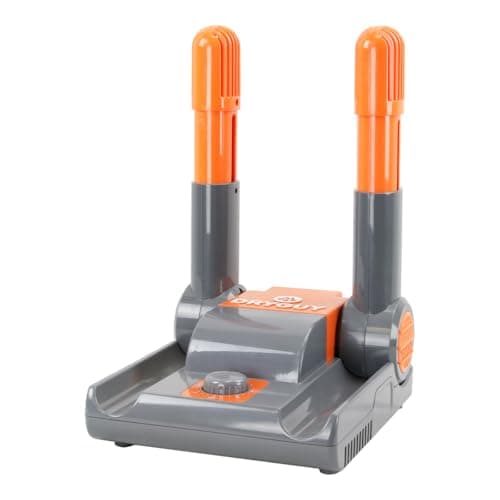
The DryGuy Force Dry is the cheapest forced-air unit we would list: two garments, a published 105 F temperature cap and a three-hour auto shut-off, with a one-to-two-hour drying claim. That published temperature ceiling is the reason it qualifies where a no-name heated blower does not - it is a manufacturer accepting a limit in writing.
Same caveat as its sibling: no published wattage, and a one-year warranty. On a page about total cost of ownership, a one-year warranty on a device with a moving part is the thing to think hardest about.
The free option, which is not a joke
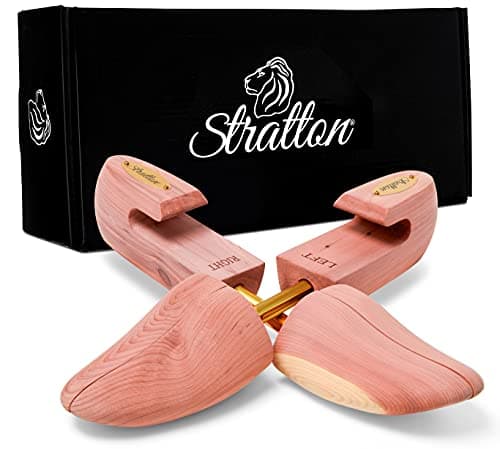
Pull the insoles out every evening, unlace the boots fully, fold the tongues back, and stand them where air is moving. Unfinished cedar trees then take the residual moisture and hold the shape while they do it. That costs nothing to run and, for a boot that is damp rather than soaked, gets you most of the way there.
It is fifth on a dryer page because it genuinely cannot move the water out of a saturated boot overnight, and pretending otherwise would be the kind of advice this site exists to avoid. But if the budget this month is zero, the routine in drying boots without a dryer is free and it works.
The hidden cost nobody prices in
There is a third cost beyond purchase and electricity, and on a budget purchase it is usually the biggest one: what it costs you when boots are not dry.
A damp boot the next morning is the start of the smell, because the bacteria that produce foot odor need exactly that warm, dark, damp environment. It is also the start of the leather problem, because every wet-dry cycle that does not complete leaves moisture sitting against the lining. Neither of those shows up in a price comparison, and both cost more to fix later than the gap between the cheapest dryer and a better one.
So the question to ask about a budget dryer is not “is it cheap” but “will it actually finish the job overnight on my boots”. A unit that does not reach the footbed, or that is under-powered for a genuinely soaked work boot, fails that test no matter what it cost. Why the damp is what produces the smell is in why wet boots start to smell.
Where to spend the extra, if you can
If the budget stretches slightly past the cheapest option, the two upgrades worth paying for in this category are reach and warranty - in that order.
Reach, because it is the one specification that can make a dryer not work at all rather than merely work slowly. Warranty, because a dryer runs unattended for thousands of hours over its life and the difference between one year and twenty-five is a genuine statement about what the maker expects. Neither of those is what the budget shelf competes on, which is exactly why they are where the value is.
What we would actually buy
If you can stretch to it, the Original - because $4.75 a season and twenty-five years makes it the cheapest dryer here on any horizon longer than one winter. If you cannot, the Simple Dry, accepting that you are buying a product that will not tell you what it costs to run. If you need speed, the Force Dry and its published 105 F cap. And if the answer is none of them this month, cedar trees and moving air, which is what everybody did before this category existed.
The write-ups
Every pick, in full
01 / Best value overall
PEET
9.1 / 10
PEET Original 2-Shoe Dryer
The convection dryer the rest of the category gets measured against: 36 watts, no fan, no noise, and a 25-year warranty behind it.
+Sanding them lightly once a year restores the aroma
+No power, no consumables
What it does not
−Useless on a genuinely wet boot
−Varnished trees do nothing - they must be unfinished
−One pair per pair of boots gets expensive
Skip this one if
The boots are soaking. A tree cannot move enough water out of a saturated boot; dry it first, then insert.
How it scores, by criterion
Documented use6.5
Moisture handling7.0
Shape retention9.5
Published composition6.0
Value per pair8.0
How these picks were chosen
Everyone in this category says they tested twenty dryers. We have not tested any, and we say so. What we did instead: read the manuals, compile the published specifications, compute the running cost from the manufacturer's own wattage figure, and show the arithmetic so you can check it.
On sticker price, the DryGuy Simple Dry is usually the cheapest full-size stand. On total cost of ownership the PEET Original wins, because its published 36 watts works out at about $4.75 for a ninety-night season and it carries a twenty-five-year warranty. Check today’s live prices on the cards above.
Do cheap boot dryers cost more to run?
Frequently, and you usually cannot tell, because most budget makers publish no wattage at all. Of the units here only PEET publishes a figure: 36 W for the Original and 12 W for the Power Cell. Where there is no published wattage there is no honest running-cost figure, and we will not invent one.
Are cheap forced-air boot dryers safe for leather?
Only if the maker publishes a temperature ceiling. DryGuy publishes 105 F on its forced-air units, which is barely above a warm room. An unbranded heated blower with no published limit is the configuration most likely to harden leather - Atsko is explicit that force drying with heat causes leather to harden and shrink.
Is a boot dryer expensive to run?
No. A 36-watt convection dryer run eight hours a night for ninety nights uses 25.92 kWh, which at the EIA average US residential rate is about $4.75 for the whole season. Running cost should not decide this purchase; reach, capacity and warranty should.
What can I use instead of buying a boot dryer?
Pull the insoles, unlace fully, fold the tongues back and stand the boots in moving air, then use unfinished cedar trees for the residual moisture. It costs nothing and works on damp boots. It will not rescue a soaked pair overnight.