How to waterproof leather boots
Six steps, one temperature rule, and a note on what this does to the color. It takes about twenty minutes of hands-on time and lasts most of a season.
By Scooter M., Enthusiast. Published September 1, 2026.
We earn a commission if you buy through the links on this page, at no extra cost to you. It never changes a ranking, and we recommend products with no affiliate link behind them where those are the right answer. Full disclosure.
This method is for smooth full-grain leather with no waterproof membrane. If your boots are suede or nubuck, stop here and read how to waterproof suede boots instead - wax will flatten the nap and there is no way back from that.
What you need
- A beeswax dressing or leather preservative
- A cloth, and a brush for the welt
- Somewhere warm that is not a heat source - see the rule below
- Time: about 20 minutes of work, plus drying
The rule that decides whether this works
Never take the leather past a comfortable handling temperature - Atsko publishes 120 F as the ceiling. If you cannot hold the boot in a bare hand, it is too hot. Beeswax melts at about 146 F, which is what tempts people into an oven or a heat gun, but the leather gives out long before the wax needs to. Atsko states that force drying with heat causes leather to harden and shrink, and Blundstone says never to dry boots by an artificial heat source.
- 01
Clean them first, properly
Wax over dirt seals the dirt in permanently. Knock off the loose mud, then clean the leather with a proper footwear cleaner or saddle soap and let it dry. Pay attention to the welt - the seam where the upper meets the sole is where water gets in and where grit collects.
- 02
Dry them completely
Wax cannot get into leather that is full of water. Dry them at room temperature or on a convection dryer overnight. Do not use a radiator, a wood stove or a hair dryer - that is the same heat mistake as step four, arriving early.
- 03
Warm the leather gently
Warm leather takes wax; cold leather does not. A warm room, or a spell on a convection boot dryer, is enough. The target is warm to the touch and comfortable to hold - never above 120 F.
- 04
Work the wax in, liberally
Atsko’s instruction is to rub it in liberally and apply as much as the leather will absorb. Use your fingers - hand heat helps - and push it into the welt, the seams and the flex creases across the vamp, which is where the leather cracks first.
- 05
Let it soak, then buff off the excess
Leave it somewhere warm so the wax keeps absorbing. Then buff the surplus off with a cloth. Wax left sitting on the surface attracts grit and does nothing useful - the wax that counts is the wax that went in.
- 06
Give it time before wearing
Otter Wax is the only maker here publishing a figure - it recommends 24 hours before use. Atsko does not publish one. Either way, wear them once the surface is dry and buffed rather than tacky.
What this does to the color
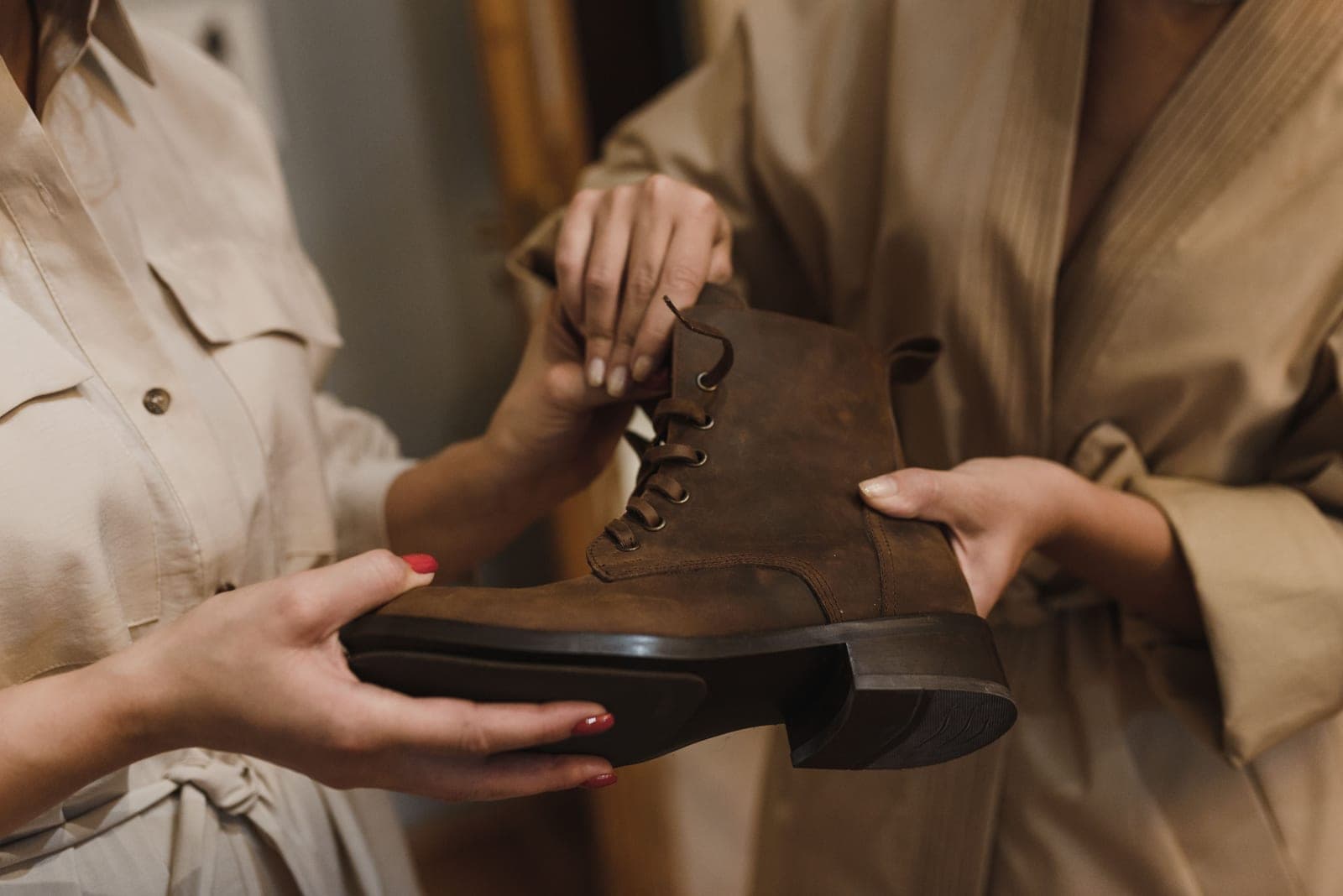
It darkens them, and you should treat that as permanent. On mid-brown and black boots the change reads as a richer tone. On light tan it is dramatic. Thirty seconds testing a patch at the back of the heel settles it before you commit to the whole boot.
The three heat sources that ruin boots
- The oven. Even on its lowest setting, an oven runs far past 120 F. This is the most common way people destroy a good pair while trying to look after them.
- The wood stove or radiator. The surface against the metal cooks while the rest stays cold. Blundstone specifically warns against drying by an artificial heat source.
- The hair dryer or heat gun. Fast, local, and far too hot. If you need speed, use a forced-air boot dryer on its no-heat setting - covered in how to dry wet boots fast.
Then do the next thing in the chain
Waterproofing is the front end. If these boots are going out on salted winter streets, the salt will pull oils back out of the leather every time it dries - so plan on conditioning them mid-season too. That sequence is in how to prevent salt stains.
What we would buy for this
Chosen from the same registry as our roundups, on published specifications rather than on testing we have not done.
Atsko
Atsko Sno-Seal Original Beeswax
A beeswax dressing with the most specific instructions in the category - including a hard 120 F ceiling on preheating that almost nobody reads.
Skip it if: Your boots are suede. Atsko says outright it is not recommended for suede, and will darken and flatten the nap.
#ad Price as of October 17, 2026, from Amazon. Prices change. How this site is funded.
Obenauf's
Obenauf's Heavy Duty LP
A thick beeswax-and-oil paste built for boots that live in mud and abrasion rather than boots that live on a shoe rack.
Skip it if: You care how they look. A heavy paste dressing darkens leather and dulls any polish under it.
#ad Price as of October 17, 2026, from Amazon. Prices change. How this site is funded.
Nikwax
Nikwax Fabric & Leather Proof
The mixed-material answer: one water-based treatment for boots that are part leather and part textile, which is most modern hiking boots.
Skip it if: You want a wax finish that visibly darkens and armors the leather - that is Sno-Seal's job, not this.
#ad Price as of October 17, 2026, from Amazon. Prices change. How this site is funded.
Frequently asked
How do you waterproof leather boots at home?
Clean them, dry them completely, warm the leather to no more than a comfortable 120 F, work a beeswax dressing in liberally, let it absorb, then buff off the excess. The two steps people skip are cleaning first and staying under the temperature ceiling.
Can you use a hair dryer to warm boots before waxing?
It is risky - a hair dryer applies a lot of heat to a small area very quickly, and leather hardens and shrinks when it is force-dried with heat. A warm room or a convection boot dryer gets you to the same place without the failure mode.
How long does waterproofing last on leather boots?
No maker publishes a figure in wears, so we will not invent one. Use the behavioral test: when water stops beading on the toe and starts darkening the leather, reapply. Daily winter wear usually means once or twice a season.
Should I condition or waterproof first?
Condition first, proof second. The waterproof layer is designed to stop liquid getting into the leather, so anything you want absorbed has to go in before it.
Will waxing my boots make them too hot to wear?
Wax does reduce breathability - that is how it works. On a winter work boot most people never notice. On a summer hiking boot, or anything with a Gore-Tex lining, use a water-based proofer instead so the boot can still pass vapor.