Skip to content
Boot & Brush
Roundup

The best ski and snowboard boot dryers

A ski boot is a waterproof plastic shell around a sponge. That is a drying problem no other footwear has, and it changes which dryer you should buy.

By Scooter M., Enthusiast. Published September 1, 2026.

We earn a commission if you buy through the links on this page, at no extra cost to you. It never changes a ranking, and we recommend products with no affiliate link behind them where those are the right answer. Full disclosure.

Quick picks

The shortlist, ranked

Ranked on published manufacturer specifications and, where a wattage figure exists, computed running cost. Tap any row for the full write-up, including who should skip it.

#ProductBest forScorePrice
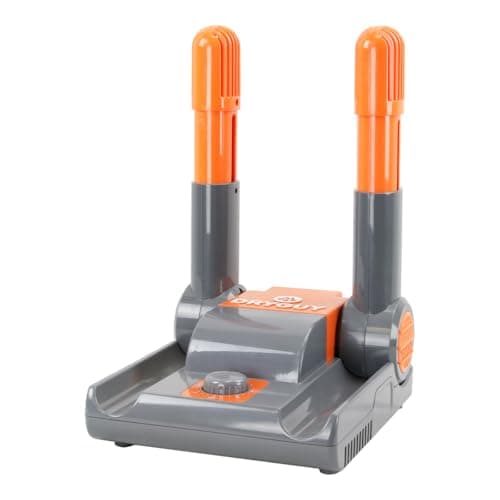
01An electric footwear dryer of the type described - a stand-in for the DryGuy Force Dry DX, not a photograph of this modelDryGuy Force Dry DXSki and snowboard boots that must be dry by morningBest overall for liners8.0Check price on Amazon
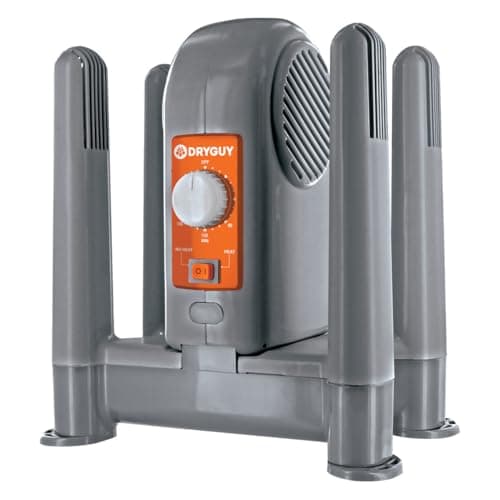
02An electric footwear dryer of the type described - a stand-in for the PEET Advantage Plus 4-Shoe Dryer, not a photograph of this modelPEET Advantage Plus 4-Shoe DryerSame-evening turnaround before a 6 am startBest documented8.8Check price on Amazon
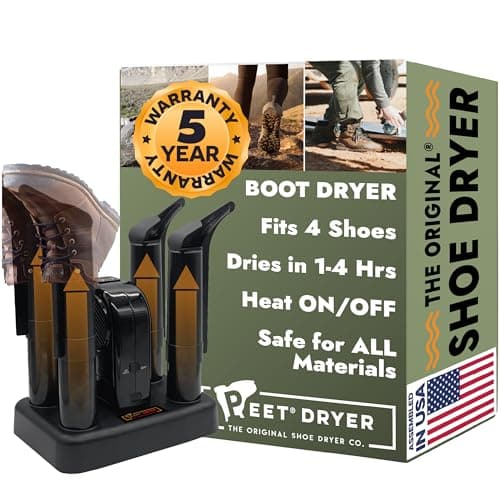
03An electric footwear dryer of the type described - a stand-in for the DryGuy Force Dry, not a photograph of this modelDryGuy Force DryOne pair, dried fast, in a small spaceBest for one pair7.5Check price on Amazon
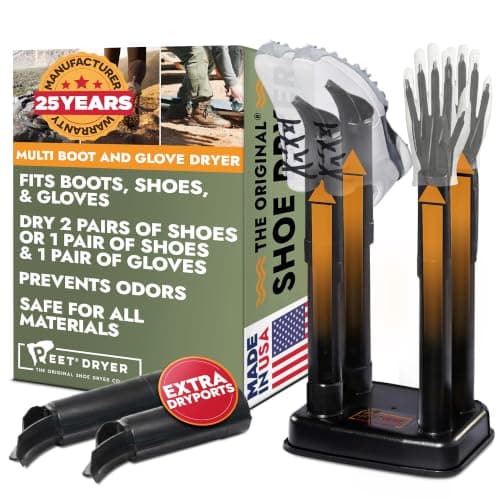
04An electric footwear dryer of the type described - a stand-in for the PEET Multi Shoe & Glove Dryer, not a photograph of this modelPEET Multi Shoe & Glove DryerA household drying two pairs at onceBest silent option8.6Check price on Amazon

Scores are ours and editorial. They are never published as review or rating markup, because we have not tested these products.

Buy a forced-air dryer for ski boots, and pull the liner out of the shell before you use it. A ski boot shell is deliberately waterproof, which means the moisture your foot puts into the liner has nowhere to go. Convection - warm air rising gently through a boot - relies on that air escaping, and a plastic shell is the one piece of footwear designed to stop it.

Why ski boots break the usual advice

Everywhere else on this site the recommendation leans toward gentle convection and away from fans, because the material at risk is leather. A ski boot has almost no leather in it. What it has is:

  • A sealed plastic shell that will not pass water vapor at all.
  • A thick foam liner that absorbs a remarkable volume of sweat over a day and holds it against the foam cells.
  • A single overnight window between one day on the hill and the next, with no possibility of a rest day.

That combination wants moving air and a defined cycle, which is exactly what a forced-air dryer publishes: DryGuy states most garments dry in 1 to 2 hours on the Force Dry range, with a 3-hour timer and a temperature cap of 105 °F. PEET publishes 1 to 4 hours for the Advantage Plus.

The temperature cap matters more here, not less

Ski boot liners are heat-moldable, and several are custom-fitted to your foot by a bootfitter with a heat gun. That fit is a thermal state you paid for. A dryer that caps at a published 105 °F is nowhere near remolding temperature and is safe; a hairdryer, a hotel radiator or a car heater vent are none of those things and can genuinely alter a molded liner.

This is one of the few places where the published temperature figure on a dryer’s spec page is a buying criterion rather than trivia.

Take the liner out. Every time.

Almost every ski boot liner is removable, and drying it inside the shell is drying a sponge inside a sealed bag. Out of the shell, on a dryer port, it dries in a fraction of the time - and the shell, which holds almost no water, dries on its own.

Capacity, because ski gear comes in sets

Boots, gloves and a helmet liner all come off wet at the same time. The four-port units - the DryGuy Force Dry DX and the PEET Advantage Plus and Multi - handle a boot pair plus gloves in one cycle. A two-port unit means two cycles, which on a 1-to-2-hour published cycle time is a whole evening.

What it costs on a trip

Almost nothing, which is worth saying because rental-condo electricity is one of the things people worry about unnecessarily. The PEET Advantage Plus at a published 220 watts, run two hours a night for a seven-night trip, uses 3.08 kWh - about 56 cents for the week at the EIA average rate. The full arithmetic is here.

If the liners have started to smell rather than just being wet, the drying is still the fix - a deodorizer is what you add afterwards, not instead.

The write-ups

Every pick, in full

01 / Best overall for linersAn electric footwear dryer of the type described - a stand-in for the DryGuy Force Dry DX, not a photograph of this model

DryGuy

8.0 / 10

DryGuy Force Dry DX

Forced air capped at 105 F with a 3-hour timer - the fast choice, except DryGuy publishes no wattage, so nobody can cost it honestly.

Check price on Amazon

#ad We hold no verified live price for this product, so we show none. How this site is funded.

Published specifications for the DryGuy Force Dry DX
SpecificationValueSource
Max temperature105 F / 40.5 CDryGuy published specifications
Timer3 hoursDryGuy published specifications
Drying timeMost garments in 1-2 hoursDryGuy published specifications
Dimensions15.08 x 7.6 x 12.44 inDryGuy published specifications
Warranty1 yearDryGuy published specifications
PowerNot published by the manufacturerDryGuy published specifications

What it does well

  • Published 1-2 hour drying time
  • Temperature capped at 105 F, gentler than an unregulated heat source
  • Four garments at once, with extension tubes for taller boots

What it does not

  • No published wattage, so its running cost cannot be computed from the maker's own data
  • 1-year warranty against PEET's 25
  • Fan noise

Skip this one if

You want to know what it costs to run. The maker publishes temperature, timer and dimensions but not watts or amps, and we will not print a number we cannot source.

How it scores, by criterion

Running cost5.0
Capacity9.0
Boot-height reach8.0
Speed9.5
Warranty4.0
Published documentation5.0
02 / Best documentedAn electric footwear dryer of the type described - a stand-in for the PEET Advantage Plus 4-Shoe Dryer, not a photograph of this model

PEET

8.8 / 10

PEET Advantage Plus 4-Shoe Dryer

The fast one: 220 watts of forced heated air that PEET publishes as a 1-to-4-hour job, with a no-heat mode that drops to a third of an amp.

Check price on Amazon

#ad We hold no verified live price for this product, so we show none. How this site is funded.

Published specifications for the PEET Advantage Plus 4-Shoe Dryer
SpecificationValueSource
Power (heat)220 WPEET Dryer published specifications
Current draw1.833 A heat / 0.33 A no heat, at 120 VPEET Dryer published specifications
Drying time1 to 4 hoursPEET Dryer published specifications
Dimensions8.5 x 13.5 x 18.5 inPEET Dryer published specifications
Weight5.25 lbPEET Dryer published specifications
Warranty5 yearsPEET Dryer published specifications

What it costs to run

About 8 cents for a 2-hour heated cycle, or 32 cents left on all night.

220 W = 0.22 kW. Two-hour cycle: 0.22 x 2 = 0.44 kWh x $0.1834 = $0.081. Eight hours: 1.76 kWh x $0.1834 = $0.323. Ninety 2-hour cycles: 39.6 kWh x $0.1834 = $7.26.

What it does well

  • Published 1-4 hour drying time against 4-8 for convection
  • A documented no-heat mode at 0.33 A - use it on leather
  • Four ports

What it does not

  • 220 W with heat on, six times the Original
  • 5-year warranty, not 25
  • It has a fan, so it makes noise

Skip this one if

Your boots are leather and you planned to run the heat setting nightly. Atsko is explicit that force drying with heat hardens and shrinks leather.

How it scores, by criterion

Running cost6.5
Capacity9.0
Boot-height reach7.5
Speed9.5
Warranty7.5
Published documentation9.5
03 / Best for one pairAn electric footwear dryer of the type described - a stand-in for the DryGuy Force Dry, not a photograph of this model

DryGuy

7.5 / 10

DryGuy Force Dry

The DX's smaller sibling: the same 105 F cap and 3-hour auto shut-off, two garments instead of four.

Check price on Amazon

#ad We hold no verified live price for this product, so we show none. How this site is funded.

Published specifications for the DryGuy Force Dry
SpecificationValueSource
Max temperature105 F / 40.5 CDryGuy published specifications
Timer3-hour auto shut-offDryGuy published specifications
Drying timeMost items in 1-2 hoursDryGuy published specifications
Cord6 ftDryGuy published specifications
Warranty1 yearDryGuy published specifications
PowerNot published by the manufacturerDryGuy published specifications

What it does well

  • Compact
  • Auto shut-off
  • Same published 1-2 hour dry time as the DX

What it does not

  • Two garments only
  • No published wattage
  • 1-year warranty

Skip this one if

You dry more than one pair a night, or you want a published wattage figure.

How it scores, by criterion

Running cost5.0
Capacity6.0
Boot-height reach6.0
Speed9.0
Warranty4.0
Published documentation5.0
04 / Best silent optionAn electric footwear dryer of the type described - a stand-in for the PEET Multi Shoe & Glove Dryer, not a photograph of this model

PEET

8.6 / 10

PEET Multi Shoe & Glove Dryer

Four ports on 72 watts - two pairs of boots, or a pair plus gloves, for about eleven cents a night.

Check price on Amazon

#ad We hold no verified live price for this product, so we show none. How this site is funded.

Published specifications for the PEET Multi Shoe & Glove Dryer
SpecificationValueSource
Power72 WPEET Dryer published specifications
Current draw0.6 A at 120 VPEET Dryer published specifications
Height25 inPEET Dryer published specifications
Weight5 lbPEET Dryer published specifications
Warranty25 yearsPEET Dryer published specifications

What it costs to run

About 11 cents per 8-hour night, or $9.51 across a 90-night season - for two pairs.

72 W = 0.072 kW. 0.072 x 8 h = 0.576 kWh x $0.1834 = $0.106 a night; x 90 = $9.51. Per pair that is $4.75, identical to running one Original.

What it does well

  • Four ports - two pairs, or boots plus gloves
  • Still silent, still no moving parts
  • 25-year warranty

What it does not

  • Double the wattage for double the ports - no efficiency gain per pair
  • 13.25 in wide, so it needs real shelf space
  • Overnight only

Skip this one if

You need one pair dry fast. Four ports on a convection element is still an overnight job.

How it scores, by criterion

Running cost8.6
Capacity9.0
Boot-height reach8.0
Speed6.0
Warranty10.0
Published documentation9.5

How these picks were chosen

Everyone in this category says they tested twenty dryers. We have not tested any, and we say so. What we did instead: read the manuals, compile the published specifications, compute the running cost from the manufacturer's own wattage figure, and show the arithmetic so you can check it.

The full method, including what we refuse to claim.
Questions

Frequently asked

Should I take the liner out of my ski boots to dry them?

Yes, every time. The shell is waterproof by design, so moisture in the liner has nowhere to escape while it is inside. Out of the shell, a liner dries in a fraction of the time and the shell dries on its own.

Will a boot dryer damage a heat-molded ski boot liner?

Not at the temperatures boot dryers publish. DryGuy caps the Force Dry range at 105 F, which is far below remolding temperature. Hair dryers, radiators and car heater vents are uncontrolled and can affect a custom fit.

How long do ski boots take to dry?

With the liner out and a forced-air dryer, manufacturers publish 1 to 2 hours (DryGuy) and 1 to 4 hours (PEET Advantage Plus). Left inside the shell with no airflow, a liner can still be damp the next morning.

Is a convection dryer any good for ski boots?

It works if you remove the liner and give it time, and it is silent. Inside a sealed plastic shell it is the wrong tool, because convection depends on warm air rising out of the boot and a shell prevents exactly that.

Sources

Where the figures on this page came from

  1. DryGuy - Force Dry DX specifications (temperature, timer, dry time)
  2. DryGuy - Force Dry specifications
  3. PEET Dryer - Advantage Plus specifications
  4. US Energy Information Administration, Electric Power Monthly, Table 5.3 - average residential price of electricity
Read next