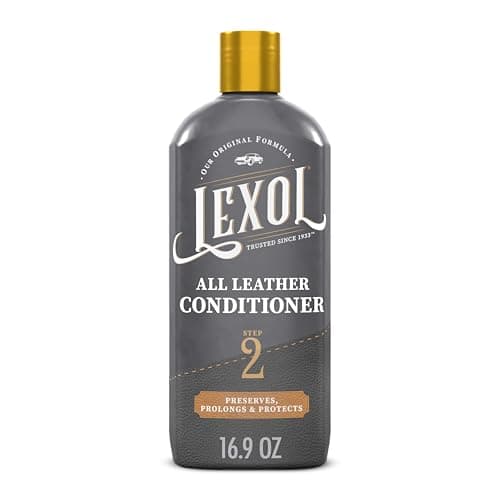
Conditioners are hard to compare because almost nobody publishes anything measurable. One maker publishes a reapplication interval, which is why it wins.
By Scooter M., Enthusiast. Published September 1, 2026.
We earn a commission if you buy through the links on this page, at no extra cost to you. It never changes a ranking, and we recommend products with no affiliate link behind them where those are the right answer. Full disclosure.
Quick picks
The shortlist, ranked
Ranked on published manufacturer specifications and, where a wattage figure exists, computed running cost. Tap any row for the full write-up, including who should skip it.
#
Product
Best for
Score
Price
01
Lexol Leather ConditionerBoots that have dried out and gone stiff
Scores are ours and editorial. They are never published as review or rating markup, because we have not tested these products.
Buy the thin liquid one that soaks in, and buy the one that does not change the color unless you want the color changed. Those two sentences cover most of this category. The rest of this page is why the ranking looks the way it does, and it comes down to one thing: which makers publish anything you can actually check.
Why this category is hard to rank honestly
Waterproofers publish application temperatures, dwell times and material lists. Dryers publish wattage. Conditioners publish almost nothing measurable - no absorption figures, no oil content, no durability claims you could compare across brands. So a page claiming to have ranked conditioners by performance is either testing them properly or making it up, and we are not doing the first.
What we ranked on instead: the form the product takes, whether the maker documents how often to reapply, what it does to the color, and what it does to the structure of the leather. Those are all published or plainly observable facts, and they turn out to decide which one you want.
Product
Form
Darkens?
Published interval
Lexol Leather Conditioner
Thin liquid
Minimally
Yes - every 6 months
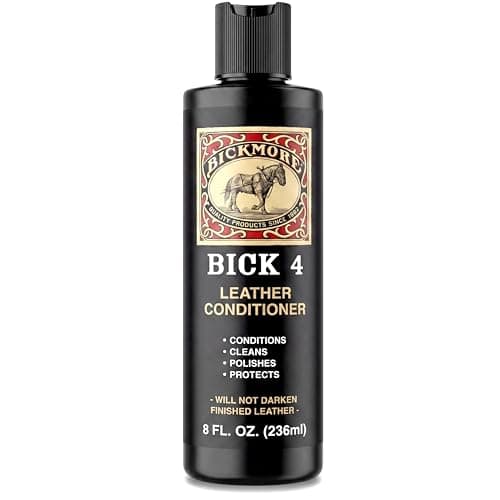
Bickmore Bick 4
Cream
Sold on not darkening
Not published
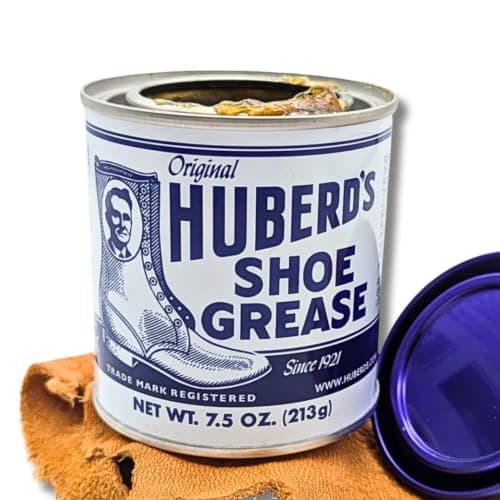
Huberd’s Shoe Grease
Heavy pine-tar and beeswax grease
Yes, considerably
Not published
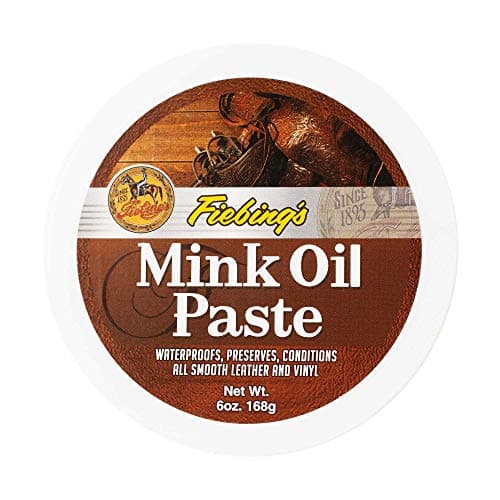
Fiebing’s Mink Oil Paste
Paste
Yes, permanently
Not published
Why Lexol takes the top spot
Two reasons, and the second is the one that decides it.
It is a thin liquid rather than a paste, so it soaks into the fiber structure instead of sitting on the surface as a coating - and Lexol states it works without greasy residue or silicones. Silicones are worth avoiding on boots you intend to keep, because they build up a surface film that later treatments have to get through.
And it publishes a reapplication interval: use every 6 months for ongoing care. That is the only maker-published maintenance interval we found in this entire category. Every other brand leaves you to guess, and every other site fills the gap with a number it invented. A published interval you can plan around is worth more than a marketing claim you cannot check.
Leather is fibers held flexible by oils. Conditioner replaces what water, salt and time take out.
When you want one of the others
Bickmore Bick 4 is the pick when color matters. It is sold specifically on not darkening leather, which is exactly what you want on light tan boots or anything you chose for its shade. In a salted winter you will be conditioning repeatedly, and a product that shifts the tone a little each time compounds into a boot you did not choose.
Huberd’s Shoe Grease is pine tar and beeswax, in production since 1921, and it is a heavy barrier rather than a light feed. For boots that are wet more days than they are dry it is the right kind of excessive. Two honest warnings, both on its card: the smell is unmistakable and it will darken the leather.
Fiebing’s Mink Oil Paste is last, and not because it is bad - it is because most people buying it do not want what it does. It softens leather structure and darkens it permanently. On rock-hard old work boots you want supple again, that is the point. On a boot that needs to hold its shape and support an ankle, it is the wrong product. Full comparison in mink oil vs leather conditioner.
Never condition suede
Every product on this page is for smooth leather. Liquid and paste conditioners flatten and stain a napped surface, and there is no way back from it. Suede is maintained by brushing, and cleaned with tools made for it - see how to clean suede boots.
Clean first, always
Conditioner applied over dirt drives the dirt into the leather with the oils. Clean, let the boots dry completely, then condition. And if the boots have been through road salt, deal with that before either - salt is still working while it sits there.
Most people end up choosing between the top two here, and the split is cleaner than the ranking suggests: one publishes a reapplication interval, the other is sold on not darkening leather. Lexol vs Bickmore Bick 4 takes that head to head, and how often to condition boots covers the schedule to use once you have picked one.
Cleaning comes before any of this, and all three makers with a cleaner and a conditioner in their range say so in writing - the leather boot cleaner ranking covers that first step, including whether a 2-in-1 is worth buying.
Two of these products now have full reviews of their own: Bick 4, on the will-not-darken and wax-free claims, and Saphir Renovateur if you want the premium cream that publishes its ingredients.
Two kinds of boot are outside this ranking entirely. Ostrich, caiman and snakeskin need a conditioner formulated for scaled and quilled skins - exotic leather boot care covers those - and suede and nubuck need no conditioner at all.
One conditioner outside this ranking publishes more than either of them: Leather Honey states both a coverage figure and a six-month interval, which is why we gave it a page of its own - the Leather Honey review, and Leather Honey vs Bick 4 if the color of your boots is the deciding factor. For leather that has gone genuinely hard rather than merely dry, the stronger treatments are in the boot oil roundup.
The two silicone-free liquids in this field are the ones people most often ask us to separate, because they publish the same six-month interval and behave completely differently on the boot - Lexol vs Leather Honey is the head-to-head, and the deciding row is darkening.
And if the boots in question were made by Blundstone, its own Renovating Cream is the only conditioner any maker describes as formulated for those leathers - with an explicit list of its own materials it must not touch. How to clean Blundstone boots covers the cream, the shades and the three-month reproofing interval.
The write-ups
Every pick, in full
01 / Best overall
Lexol
8.6 / 10
Lexol Leather Conditioner
A thin liquid conditioner that soaks in rather than sitting on top, with the reapplication interval published on the label.
The boots need to hold their shape or their color. Mink oil softens structure and darkens leather permanently.
How it scores, by criterion
Documented use7.0
Material range5.5
Ease of use8.0
Published composition6.0
Value per treatment9.5
How these picks were chosen
Everyone in this category says they tested twenty dryers. We have not tested any, and we say so. What we did instead: read the manuals, compile the published specifications, compute the running cost from the manufacturer's own wattage figure, and show the arithmetic so you can check it.
Lexol publishes every 6 months for ongoing care, which is the only maker-stated interval we found in the category. In a salted winter, or on boots that get soaked regularly, monthly is more realistic - salt and repeated wetting strip oils continuously rather than on a schedule.
What is the best leather conditioner for work boots?
For general upkeep, a thin liquid conditioner that soaks in rather than sitting on the surface. For boots that are wet more often than dry, a heavy grease such as Huberd’s is the right kind of excessive - accepting that it darkens the leather and has a strong smell.
Does leather conditioner make boots waterproof?
No. Conditioner replaces oils so the leather stays flexible. Some products bead a little as a side effect, but if you want water kept out you need a wax or a proofer as a separate step, applied after conditioning.
Will conditioner darken my boots?
It depends on the product. Pastes, greases and mink oil darken noticeably and permanently. Bickmore Bick 4 is sold specifically on not darkening leather, and thin liquid conditioners change the tone least. Test a hidden patch if the color matters.
Can you condition boots too often?
You can over-apply, yes. Leather absorbs a finite amount, and the surplus sits on the surface attracting grit and, with heavier products, leaving the boot tacky. Apply thinly, let it absorb, and buff off what has not gone in.