Cleaning is the step that decides whether the conditioner does anything. These five are ranked on what their makers publish, including the ones that tell you plainly that a conditioner has to follow.
By Scooter M., Enthusiast. Published September 26, 2026.
We earn a commission if you buy through the links on this page, at no extra cost to you. It never changes a ranking, and we recommend products with no affiliate link behind them where those are the right answer. Full disclosure.
Quick picks
The shortlist, ranked
Ranked on published manufacturer specifications and, where a wattage figure exists, computed running cost. Tap any row for the full write-up, including who should skip it.
#
Product
Best for
Score
Price
01
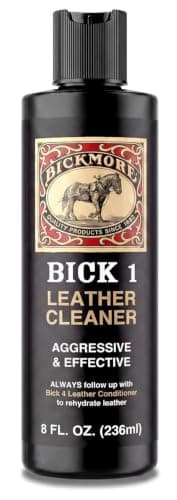
Bickmore Bick 1 Leather CleanerClearing salt and wax build-up before conditioning
Scores are ours and editorial. They are never published as review or rating markup, because we have not tested these products.
Almost nobody skips conditioning and almost everybody skips cleaning, which is the wrong way round: a conditioner applied over dirt and dried salt pushes both into the leather. The good news is that this is the cheapest category on the site, and three of the five makers here publish a proper method rather than an adjective.
We have not tested these. There is no lab, no soiled-boot rig and no before-and-after we could honestly show you. What we did is read what each maker publishes - what the product removes, whether it leaves anything behind, what it says must follow it - and rank on that.
How we judged them
What the maker says it removes. “Cleans leather” is not a specification. Dirt, grime, sweat and salt is. Two makers here name what comes off; the rest are vaguer.
Whether it contains conditioners - and what must follow. A real cleaner takes things off the leather, which means it leaves the leather drier than it found it. The best makers say so outright and name the product that has to come next.
Material range, including light colors. White and pale leather is where a cleaner either proves itself or ruins a boot, so a maker that addresses color explicitly scores well.
Published method. Spot test, dilution ratio, damp cloth versus rinse, how many passes. This is the detail that separates a product page from a product.
What it cannot do. Every cleaner here has a hard limit - grease, suede, or salt that has already bleached the dye - and the ranking reflects how honestly each maker handles that.
One note before the picks: we are ranking cleaners, not kits. If you would rather buy the cleaner, conditioner and brush in one box, the boot cleaning kit roundup covers those, and for napped leather you want the suede and nubuck cleaners instead - nothing on this page belongs on suede.
That combination is why it leads. A cleaner that admits it leaves leather needing rehydration is telling you the truth about what cleaning is, and it removes the guesswork about the second step. Bickmore also addresses the question most makers dodge: “Bick 1 is safe on all properly tanned leathers and colors including white.”
The published method is specific: check colorfastness in a hidden area, apply a small amount to a slightly damp textured cloth, rub gently in a circular motion, allow to dry, repeat if necessary. Note that it is a damp cloth rather than a wet boot - this is a wipe-on cleaner, not a wash.
The honest downside: “aggressive” is Bickmore’s word and it cuts both ways - this is not the product for a light freshen-up, and it commits you to conditioning afterward, so the real cost is two bottles. No ingredient list is published, only the 8 oz size is currently offered on Bickmore’s own store, and it is a finishing cleaner rather than a degreaser for work boots caked in oil.
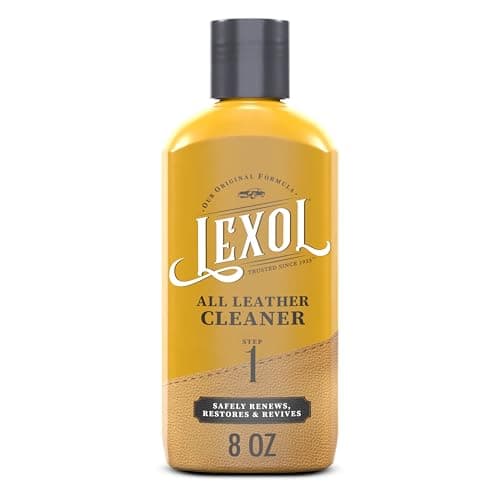
2. Lexol All Leather Cleaner - best pure cleaner
The most technically specific claim in the category, and the reason this is second rather than fourth. Lexol publishes that the formula “contains no silicones, alcohols, waxes, or additives that could interfere with cleaning or trap dirt in the leather”, and that its “pH-balanced formula matches the natural pH of leather, ensuring safe cleaning for both the leather surface and the stitching that holds it together”.
The stitching point is the one worth paying attention to on boots specifically. A welted boot is held together by thread, and thread is the part a harsh cleaner damages first - which is why a pH claim means more on footwear than it does on a car seat. Lexol describes a “gentle foaming action” that lifts dirt “without leaving any sticky residue”, and says the leather is then “perfectly prepared for conditioning” with its own conditioner - which is the rank-one pick in our conditioner roundup, so the pair is a genuinely coherent routine.
The honest downside: Lexol publishes no step-by-step directions on the product page we can read - the claims are about the formula rather than the technique. The size on the maker’s page (16.9 oz) is not the size on the listing we link (8 oz), so check what you are buying. And the six-month interval Lexol publishes is for ongoing care, not for boots that have just been through a salted winter.
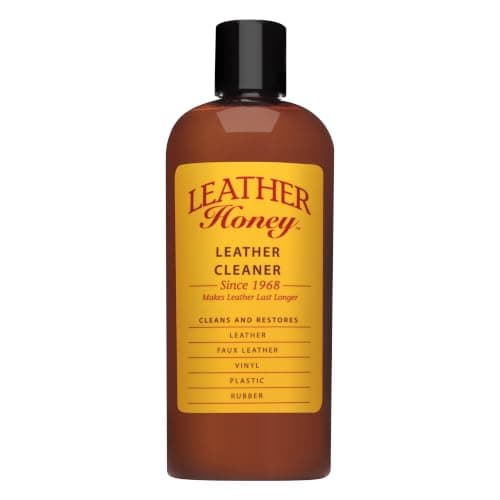
3. Leather Honey Leather Cleaner - best value diluted
The arithmetic here is the selling point. Leather Honey publishes that its 4 oz concentrate “makes 32 ounces once diluted with water” at “1oz of cleaner per 8oz of water” - a published dilution ratio, which nothing else in this category offers. There is also an 8 oz ready-to-use bottle if you would rather not mix anything.
It is the gentlest option here by its own description: “Gentle, non-toxic leather cleaner”, “fragrance-free, pH-balanced”, “100% non-toxic and safe for people, pets and the planet”, and free of nut and seed oils and animal products. Its material list is the widest on the page - all leather but suede, plus faux leather, vinyl, rubber and plastic - which matters if the boots have synthetic panels or a rubber foxing band.
The method is published and simple: moisten a lint-free cloth, spot test somewhere discreet, wipe the leather gently, and once dry follow with the conditioner. If you already own that conditioner - the one that publishes both coverage and a six-month interval, reviewed in our Leather Honey review - this is the matching first step.
The honest downside: gentle is a real limitation. Nothing about this product suggests it will shift ground-in grime or old wax from a work boot the way the Bickmore will, and the concentrate has to be mixed, which is one more thing to get wrong. No ingredient list is published - the transparency is a list of exclusions.
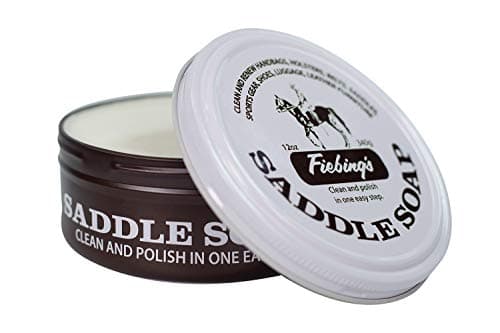
4. Fiebing’s Saddle Soap - best traditional
The cheapest way to clean a leather boot properly, and the only product here that cleans and puts something back at the same time. Glycerine saddle soap has been the default for tack and work leather for over a century, and Fiebing’s still publishes a product page for it, which is more than most of the soap sold in this category can say.
It is the pick for boots that are genuinely dirty rather than dusty - the lather lifts mud and salt together - and it is also the traditional answer for the welt and the sole edge, where a cloth-and-cleaner routine struggles to reach. It appears in the cowboy boot routine and the salt-stain method on this site for exactly those reasons.
The honest downside: saddle soap is soap, and over-use dries leather rather than feeding it - the glycerine content softens the blow but does not cancel it. It is not for suede or nubuck, it still needs a conditioner afterward, and the sponge-and-lather routine is messier and slower than wiping on a liquid. Use it on the boots that need it and something gentler on the boots that do not.
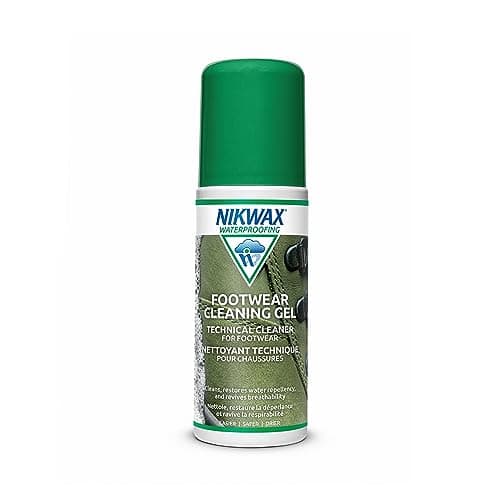
5. Nikwax Footwear Cleaning Gel - best before reproofing
A different job from the other four, and the right choice when cleaning is step one of two. Nikwax publishes a water-based, biodegradable, PFAS-free gel in 125 ml with a brush applicator, and a method that involves actual water: rinse the boot to dampen it, scrub with the applicator, rinse well, dry naturally.
The reason it earns a place is what comes next. A boot about to be reproofed has to be clean or the proofer sits on the dirt, and Nikwax’s own proofers go on to a damp boot - so cleaning and proofing run together as a single session rather than two evenings. Waterproofing leather boots is the second half of that job.
The honest downside: it wets the whole boot, which is exactly what you do not want if the boots are merely scuffed. 125 ml is a small bottle for the price, Nikwax says to test hidden areas first for color run, and it only makes economic sense if you are buying the proofer too. It is a system component rather than a general-purpose cleaner.
A damp cloth and a small amount of cleaner beats a wet boot and a lot of product, on every page these makers publish.
The 2-in-1 question, answered by the makers themselves
“Leather cleaner and conditioner” is one of the most-searched phrases in boot care, and it is worth knowing what the people who make both think about combining them.
All three brands on this page that sell a cleaner and a conditioner tell you to use them in sequence, not as one product. Bickmore says to ALWAYS follow Bick 1 with Bick 4. Leather Honey’s cleaner directions end with “once the leather is dry, moisturize the leather with our Leather Conditioner”. Lexol describes cleaning as what leaves leather “perfectly prepared for conditioning” with its conditioner. Three makers, three separate products, one order.
The reason is mechanical rather than commercial. Cleaning means lifting material off the leather and taking it away; conditioning means leaving material in the leather deliberately. A single product that does both has to do the second job while undoing the first, which is why the combined products that exist are generally light-duty maintenance rather than a proper clean.
That does not make them useless. A boot that gets wiped every fortnight and never gets properly dirty is a reasonable case for a one-step product - Bick 4 is sold as a conditioner that also cleans lightly, and it is the honest answer for maintenance between real cleans. But if the boots are salted, muddy or have not been touched in a year, buy two products and use them in the order all three makers publish.
How to actually clean a leather boot
01
Brush the dry dirt off first
Let mud dry, then brush it off. Wet mud rubbed with a cloth becomes a paste that goes into the grain and the welt stitching. A horsehair brush is the right tool, and this step alone handles most of what is on a boot.
02
Spot test somewhere hidden
Bickmore and Leather Honey both publish this instruction, and Nikwax warns about color run. The inside of the shaft or the tongue is the place. On light or white leather it is not optional.
03
Damp cloth, small amount, one panel at a time
The published methods agree: a slightly damp cloth with a small amount of cleaner, worked in circles, rather than a soaked boot. Do a whole panel rather than a spot, so it dries evenly and does not leave a tide line.
04
Let them dry naturally, away from heat
No radiators, no hair dryers. Heat is what hardens and cracks leather, and it is the same warning that governs drying a wet boot.
Cleaning removes the repellent along with the dirt. If the boots are winter boots, the proofer goes on after the conditioner has dried - the beading test tells you whether it is due.
How often, honestly
Only two makers connected to this page publish an interval. Lexol says to use its cleaner every six months for ongoing care, and Ariat - writing about cowboy boots rather than cleaners specifically - publishes cleaning every three months for daily use and every six for occasional wear. Everything else you will read is somebody’s habit. The useful trigger is condition rather than calendar: clean them when they are dirty, when they have been salted, and before you proof or condition them.
What none of these will fix
Oil and grease. A surfactant cleaner lifts what is on the surface. Oil that has soaked into leather is a different problem, and aggressive attempts to lift it usually leave a pale halo instead.
Salt that has already bleached the dye. You can remove the white residue; the faded patch underneath is often permanent. The method that limits the damage is in removing salt stains from leather boots.
Mold and mildew. Cleaning the visible growth off does not deal with what is in the lining - the mold and mildew roundup covers the products that do.
Suede and nubuck. Every liquid here mats a napped surface. Brush and eraser first, always.
+Built-in brush applicator, so it is one item not two
+Safe on Gore-Tex and eVent by the maker's own statement
+Biodegradable and PFAS-free
What it does not
−125 ml is small
−Nikwax says to test hidden areas first for color run
−Only makes sense as half of a two-product routine
Skip this one if
Your boots are plain smooth leather with a wax finish - saddle soap is cheaper and does the same job.
How it scores, by criterion
Documented use10.0
Material range9.0
Ease of use9.0
Published composition9.0
Coverage per bottle6.5
How these picks were chosen
Everyone in this category says they tested twenty dryers. We have not tested any, and we say so. What we did instead: read the manuals, compile the published specifications, compute the running cost from the manufacturer's own wattage figure, and show the arithmetic so you can check it.
Bickmore Bick 1 for most people: the maker names what it removes - surface dirt, grime, sweat and salt - publishes a method, states it is safe on all properly tanned leathers including white, and tells you plainly to follow it with a conditioner. Lexol’s cleaner is the better pick if you want a formula with no silicones, waxes or additives and a pH claim that covers the stitching.
Do you need to condition boots after cleaning them?
Yes, after a real clean. Bickmore says to ALWAYS follow Bick 1 with its conditioner, Leather Honey’s directions end with conditioning once the leather is dry, and Lexol describes cleaning as preparing leather for its conditioner. Cleaning takes material off the leather; conditioning puts something back.
Are 2-in-1 leather cleaner and conditioner products any good?
For light maintenance, yes. For a proper clean, no - and the evidence is that every maker here which sells both products tells you to use them in sequence. Cleaning lifts material away and conditioning leaves material behind, so one product doing both is always a compromise.
Can you use saddle soap on leather boots?
Yes, and it is the cheapest proper clean available - glycerine saddle soap lifts mud and salt together. It is soap, though: over-use dries leather, it is never for suede or nubuck, and it needs a conditioner afterward.
How often should you clean leather boots?
Lexol publishes every six months for ongoing care, and Ariat publishes every three months for daily-wear cowboy boots and six for occasional wear. Beyond that, clean them when they are visibly dirty, after any exposure to road salt, and always before conditioning or reproofing.
Will a leather cleaner remove waterproofing?
It will take some of it with the dirt, which is why reproofing follows cleaning rather than preceding it. Nikwax builds its whole two-step system around that order, and the beading test on a clean toe tells you whether the proofer needs renewing.
Is dish soap safe on leather boots?
We would not. Dish detergent is formulated to strip fats and oils, which is exactly what leather needs to keep, and none of the makers here suggest it. A dedicated cleaner costs a few dollars and one of them publishes a dilution ratio that makes 32 ounces from a 4 oz bottle.