The top pick is a fifty-fifty alcohol and water solution, because that is what a university extension service publishes for mildew on leather. The paid products here are what you reach for when it does not finish the job.
By Scooter M., Enthusiast. Published September 4, 2026.
We earn a commission if you buy through the links on this page, at no extra cost to you. It never changes a ranking, and we recommend products with no affiliate link behind them where those are the right answer. Full disclosure.
Quick picks
The shortlist, ranked
Ranked on published manufacturer specifications and, where a wattage figure exists, computed running cost. Tap any row for the full write-up, including who should skip it.
#
Product
Best for
Score
Price
01
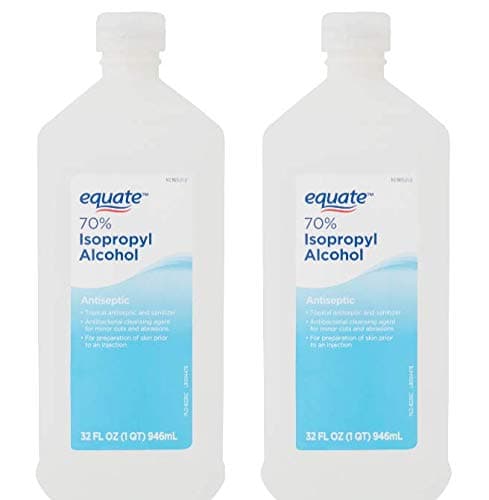
Vi-Jon 70% Isopropyl Alcohol, 32 oz (2-pack)Surface mold and mildew on smooth leather, caught before it spreads
Scores are ours and editorial. They are never published as review or rating markup, because we have not tested these products.
One cup of rubbing alcohol to one cup of water, wiped on with a cloth, then dried in a current of air. That is not a home remedy somebody invented for a blog. It is the method the University of Missouri Extension publishes for removing mildew from leather goods, and if the growth is on the surface and you caught it early, it is usually the whole job.
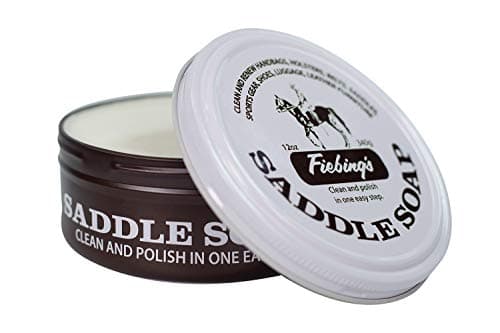
If it is still there afterwards, the same publication gives the next step: wash with thick suds made from a mild soap or detergent, saddle soap, or a soap containing a germicide or fungicide, then wipe with a damp cloth and dry in an airy place. After that, condition - because both of those steps take oil out of the leather along with the mold.
So the honest ranking on this page starts with something that costs about the same as a sandwich and is sold in every pharmacy in the country. We put it first for the same reason distilled white vinegar tops our salt stain remover roundup: it is the right answer, and you should be able to tell the difference between a site recommending something for you and a site recommending something for itself.
Why boots grow mold when other things in the closet do not
Mold is not attacking the boot at random. Leather is a protein, and protein is food. The National Park Service conservation guidance for museum collections - written by people whose job is stopping exactly this - lists leather among the proteinaceous materials “particularly susceptible to direct attack by microorganisms”. The dressings, waxes and conditioners you have been diligently applying are also food. So is the salt and sweat residue from the last time you wore them.
What the mold still needs is moisture and stillness, and a stored boot supplies both better than almost anything else you own. Missouri Extension describes the conditions plainly: molds that cause mildew “flourish wherever it is damp, warm, poorly lighted and/or where air is not circulated.” That is a description of a closet floor in August, holding a pair of boots that went in slightly damp in March.
The numbers are worth knowing, because they tell you what actually has to change. NPS guidance targets a relative humidity of 45 to 55 percent and says RH “should be kept below 65%.” The EPA, writing for homes rather than museums, says to keep indoor humidity below 60 percent, ideally between 30 and 50 percent, and states the principle in one line: “The key to mold control is moisture control.” The same page gives the number that matters most to anyone who has just come in soaked - if wet materials are dried within 24 to 48 hours, in most cases mold will not grow at all.
Still air, no light, and something that went in damp. The storage is the cause; the fuzz is only the symptom.
First, make sure it is actually mold
Two other things show up as a pale bloom on stored leather, and neither one is treated the way mold is treated.
Fatty acid spew is the common one, and it gets mistaken for mold constantly. It is the leather’s own dressing migrating to the surface: NPS conservation guidance attributes it to “the migration of free fatty acids that were not removed from the dressing during its manufacture”. The two are told apart by shape at close range. Mold growth “has a branched, soft or fuzzy appearance, sometimes with less defined edges,” while spew is “opaque with defined edges that looks similar to waxy frost, broccoli heads, or puffballs.” Spew is not alive and not a hygiene problem, and it comes off with a soft brush - though the same guidance is honest that it will likely return, because the fatty acids are in the leather rather than on it. Alcohol and saddle soap are the wrong tools for it.
A salt tideline is the other. It is hard, crusted and roughly horizontal, following the height of the slush you walked through, rather than a soft patch that ignores the shape of the boot. It responds to a dilute acid and not at all to alcohol, and the method for it is in removing salt stains from leather boots.
The practical test needs no equipment. Mold is fuzzy, smells musty, sits in patches wherever the air was stillest - inside the shaft, under the tongue, along the welt - and comes back if the storage does not change. Spew is waxy and even, and it appears on the parts of the boot with the most dressing on them. Salt is crusty and linear. If it is one of the last two, stop here: nothing else on this page applies to it.
What we ranked on
There is no lab here, and we have not grown mold on a boot to see what lifts it. What we can do is judge the options against four questions, and say openly which ones each option fails.
Is the method published by someone with nothing to sell? A dilution printed by a land-grant extension service or a national conservation body outranks a ratio that appears only in the marketing copy of the bottle recommending it.
Is it safe on the finish? Dye lift on aniline leather, matted nap on suede, and bleached stitching are all permanent. A product that removes mold and takes the color with it has not helped.
Does it deal with the moisture, or only the fuzz? Anything that wipes the growth off and leaves the conditions intact buys you a few weeks. Half this list is about the conditions.
What does it cost per pair? This category is unusual in that the best first move is close to free. We rank on that rather than around it.
One thing we deliberately did not rank: the aisle of products actually labeled “mold and mildew remover.” Almost all of them are sodium hypochlorite - bleach - formulated for boat vinyl, grout and siding. Bleach on leather removes the color, hardens the fibers and attacks the stitching, and the EPA does not recommend biocides as a routine part of mold cleanup in the first place. There is no widely sold, leather-specific mold remover with published footwear safety data that we could source. So this list is a method, and the products that carry the method out.
The six options, and when each one is right
Option
Use when
Materials
Published basis
Rubbing alcohol, 1:1 with water
Surface growth, caught early
Finished smooth leather
Missouri Extension GH5928
Fiebing’s Saddle Soap
Growth the alcohol did not finish
Smooth leather only
Named in GH5928 as the second step
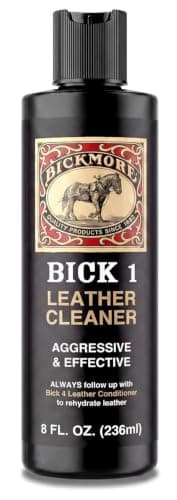
Bickmore Bick 1
Finished leather you would rather not soap
Finished leather
Maker’s catalog; no composition published
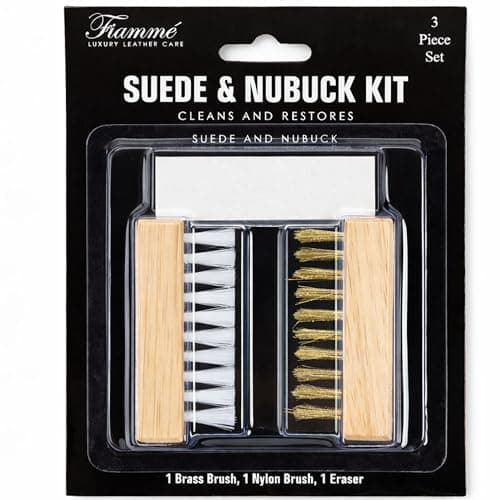
Suede brush and eraser block
Suede or nubuck, dry method only
Suede and nubuck
Mechanical - no chemistry involved
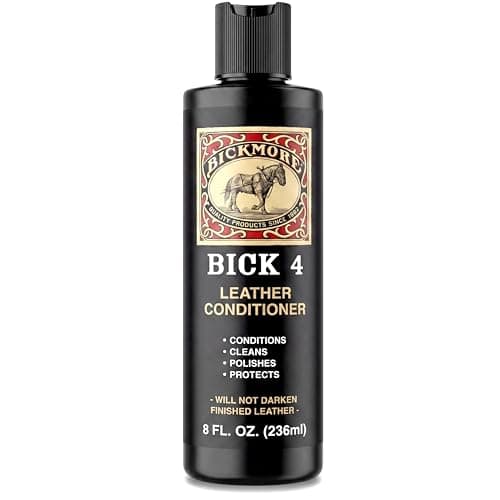
Bickmore Bick 4
After every one of the above
Most finished leathers
GH5928 ends with a dressing step
Cedar shoe trees
Between wears, permanently
Any boot that has been dried first
Moisture control, per EPA and NPS
The order of operations
The sequence matters more than the products. Doing step three before step two turns a dry, brushable growth into a smeared stain that has to be cleaned back out of the grain.
01
Take them outside
Everything up to the wipe releases spores. NPS guidance for a moldy object is to isolate it - bag it or sheet it in polyethylene - so the growth does not travel to everything else in the room. For a pair of boots, the practical version is: do this on the porch, not over the laundry basket.
02
Brush the surface growth off dry
A soft brush lifts the fuzz off a dry boot in seconds. On a damp one it smears. If the boots are still damp, dry them first and come back - the brushing is not the urgent part.
03
Wipe with one part alcohol to one part water
Missouri Extension’s figure is one cup of denatured or rubbing alcohol to one cup of water. Dampen a cloth - do not soak the boot - and wipe the affected area. Test a hidden spot first, low on the heel counter or under the tongue, because alcohol can lift dye on aniline and other unfinished leathers.
04
If it is still there, wash with thick suds
Saddle soap, a mild detergent, or a soap containing a germicide or fungicide, per the same publication. Work up the suds and apply the foam rather than the water. Then wipe with a clean damp cloth.
Alcohol and soap both strip oils. GH5928 finishes its leather section by telling you to polish shoes with a good wax dressing, and that ordering is right: feed the leather, then cover it. Our full method is in conditioning boots after they get wet.
07
Deal with the insoles separately
A removable insole is the most absorbent thing in the boot, and the place growth survives a surface clean. Pull it, treat it outside the boot, and if it is foam that has bloomed all the way through, replace it - the EPA notes that mold fills the crevices of porous materials and can be impossible to remove completely.
Dampen the cloth, not the boot. The point of alcohol over a wash is that it flashes off instead of soaking in.
Suede and nubuck: dry methods only
None of the above applies to a napped leather in the same way. Suede has no finish to protect it, water marks it, and soap mats the nap permanently. The honest answer for suede is mechanical: brush the growth off outdoors with a brass and nylon brush, work the crepe eraser block over what is left, and put the effort into the storage instead. If a wipe is unavoidable, keep the cloth barely damp with the alcohol solution, work in one direction, and re-nap the whole panel afterwards so you are not left with a clean patch in a dull field. The full treatment is in how to clean suede boots.
What will damage your boots
Bleach. The EPA says the use of a chemical or biocide that kills mold, chlorine bleach for example, is not recommended as a routine practice during mold cleanup. On leather it also removes color and attacks the stitching. Nothing on this page is bleach.
A radiator, a hair dryer or a hot car. The mold dies and the leather hardens permanently. Moving air at room temperature is faster than you expect and does no damage.
An airtight bin or a plastic bag for storage. Sealing a boot that is not bone dry builds the exact environment the growth wants. Isolation in a bag is for carrying a moldy boot outside, not for storing a clean one.
Stopping after the clean. A boot that has been alcohol-wiped and soaped is drier than it was before the mold arrived. Skipping the conditioner is how a mold problem turns into a cracking problem.
Stopping it from coming back
Everything above is remedial, and remedial work in this category is the part you should have to do once. The picks that follow are the ones that change the conditions.
Air movement first. NPS guidance is that adequate air circulation should be maintained, and that a fan will help increase it. Missouri Extension puts it more simply: air movement is excellent at removing moisture. Boots stored on an open rack with the door left ajar are in a different category of risk from boots in a sealed cupboard.
Then the humidity. If the room itself sits above 60 percent RH, no boot-level fix holds. A dehumidifier in the room does more than any product on this page. Missouri Extension also gives a usable dosing figure for desiccants: about one pound of silica gel crystals for every 100 cubic feet of air space, proportionately less for a small space - which is what a closet is.
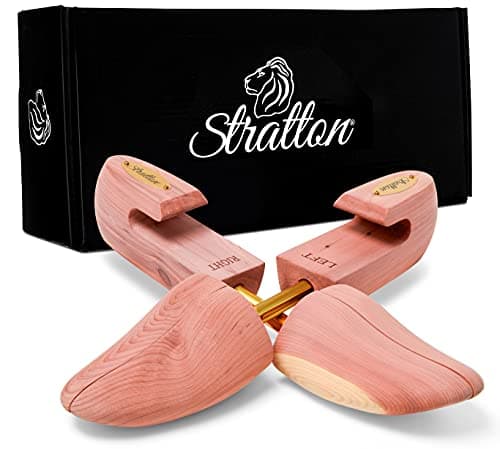
Then the boot itself. Unfinished cedar trees absorb residual moisture and hold the shape at the same time, which is why they are on this list at all; the detail is in the best cedar shoe trees for boots. They cannot rescue a soaking boot, though, and that limitation points straight at the root cause.
And underneath all of it, the drying. Boots grow mold because they were put away damp. The EPA 24 to 48 hour window is the same window that decides whether they will smell, which is why why wet boots start to smell and why boots grow mold are the same article with a different ending. Getting them genuinely dry between wears - see how to dry wet boots fast or, for the season-long version, the boot dryer roundup - removes the cause rather than the symptom.
Cedar in the boot and air around it. Prevention here is unglamorous, and it is the only part that lasts.
What this actually costs
A bottle of 70 percent isopropyl alcohol is a couple of dollars and will treat more pairs than you own. A tin of saddle soap lasts years. If that is where it ends for you, the total outlay on this page is small, and we would rather say so than pad the list.
The spend genuinely worth making is on the prevention side, because it is the only spend that stops you being back here next September. Cedar trees per pair, air movement in the space, and a reliable way of getting boots dry before they go away are three purchases that between them make the first half of this page unnecessary. The routine cleaning that removes the food source before it becomes a problem is in how to clean leather boots.
One avoidable route to the spew half of this page is worth naming, because the same National Park Service document is behind it: a cooking oil used as a leather dressing on kayaks went on to produce fatty acid spew and biological growth. If the reason you are reading this page is that you put coconut or olive oil on a boot, that case is set out in full here along with what to do about it.
The write-ups
Every pick, in full
01 / Best first attempt
Vi-Jon
8.4 / 10
Vi-Jon 70% Isopropyl Alcohol, 32 oz (2-pack)
The first thing to reach for on moldy leather, and the only method for it published by an institution with nothing to sell you: one cup of alcohol to one cup of water.
+The dilution is published by a land-grant extension service, not by the company selling the bottle
+Costs a couple of dollars and treats many pairs
+Flashes off fast, so it puts far less water into the leather than a wash does
What it does not
−Drying by design - the boots need conditioning afterwards, without exception
−Can lift dye on aniline and other unfinished leathers, so it needs a hidden-area test first
−Removes what is on the surface and nothing that has reached the lining or the insole
Skip this one if
The growth is deep in the lining or the insole rather than on the surface, or the leather is already dry and cracked - alcohol takes what oil is left with it.
How it scores, by criterion
Documented use9.5
Material range6.5
Ease of use9.0
Published composition9.5
Value per treatment10.0
02 / Best second pass
Fiebing's
8.0 / 10
Fiebing's Saddle Soap
A century-old glycerine soap that lifts salt and grime together, from a maker that still publishes a product page for it.
+Sanding them lightly once a year restores the aroma
+No power, no consumables
What it does not
−Useless on a genuinely wet boot
−Varnished trees do nothing - they must be unfinished
−One pair per pair of boots gets expensive
Skip this one if
The boots are soaking. A tree cannot move enough water out of a saturated boot; dry it first, then insert.
How it scores, by criterion
Documented use6.5
Moisture handling7.0
Shape retention9.5
Published composition6.0
Value per pair8.0
How these picks were chosen
Everyone in this category says they tested twenty dryers. We have not tested any, and we say so. What we did instead: read the manuals, compile the published specifications, compute the running cost from the manufacturer's own wattage figure, and show the arithmetic so you can check it.
Brush the surface growth off outdoors, then wipe with a cloth moistened in one cup of rubbing alcohol to one cup of water - the dilution published by the University of Missouri Extension - and dry in a current of air. If any remains, wash with thick suds of a mild soap, saddle soap, or a soap containing a germicide, then condition, because both steps strip oil out of the leather.
Can you use bleach on moldy boots?
No. The EPA does not recommend biocides such as chlorine bleach as a routine practice during mold cleanup, and on leather bleach also removes the dye, hardens the fibers and attacks the stitching. The published leather method is diluted alcohol followed by soap, not bleach.
Does vinegar kill mold on leather boots?
We do not recommend it here. Vinegar has a published use on boots for salt tidelines, where Timberland gives a 1:2 dilution, but the method published for mildew on leather goods is diluted alcohol. Acid on leather that is already dry makes the dryness worse, and there is no reason to reach for the less-documented option when the better-documented one costs the same.
Why did my boots get moldy in the closet?
They went in damp, and the closet supplied the rest. Mold needs moisture, still air and food; leather and the dressings on it are the food, so the only two variables you control are how dry the boots were and how much air moves around them. NPS conservation guidance keeps relative humidity below 65 percent and targets 45 to 55 percent.
What humidity stops mold growing on boots?
The EPA advises keeping indoor humidity below 60 percent, and ideally between 30 and 50 percent. Museum conservation guidance is stricter, targeting 45 to 55 percent and treating 65 percent as the ceiling. The lower you hold it, the less likely spore germination becomes.
How do you get mold off suede boots?
Dry methods only. Brush the growth off outdoors with a brass and nylon suede brush, then work the crepe eraser block over what is left. Soap mats the nap and water marks it, so if you have to use the alcohol solution at all, keep the cloth barely damp, work in one direction and re-nap the whole panel afterwards.
Are moldy boots ruined?
Usually not, if the growth is on the surface and you catch it. Leather that has been wiped, soaped and re-conditioned generally comes back. What often does not come back is a foam insole that has bloomed all the way through - the EPA notes that mold fills the crevices of porous materials and can be impossible to remove completely, so replacing the insole is the sensible call.