A boot is not a running shoe: deeper footbed, less width, and a wet one at the end of most days. These five are ranked on what their makers publish, not on how they felt to us.
By Scooter M., Enthusiast. Published September 21, 2026.
We earn a commission if you buy through the links on this page, at no extra cost to you. It never changes a ranking, and we recommend products with no affiliate link behind them where those are the right answer. Full disclosure.
Quick picks
The shortlist, ranked
Ranked on published manufacturer specifications and, where a wattage figure exists, computed running cost. Tap any row for the full write-up, including who should skip it.
#
Product
Best for
Score
Price
01
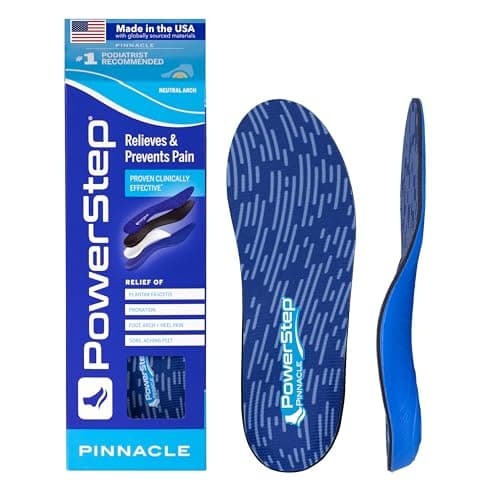
PowerStep Pinnacle InsolesStandard arches, in any boot whose factory footbed comes out
Scores are ours and editorial. They are never published as review or rating markup, because we have not tested these products.
The insole that came in your boots is a piece of flat foam whose job was to make the boot feel acceptable in a shop. Replacing it is the cheapest change you can make to how a boot feels at hour ten, and on this site it is also a drying and odor decision - a structured insole comes out at the end of the day and dries separately, which the factory footbed usually cannot.
We have not tested these. There is no gait lab here and no pressure plate, and any page claiming it wear-tested five insoles across a winter is asking you to take its word for something it cannot show you. What we did instead is read what each maker publishes, rank on that, and say plainly where a maker publishes nothing.
How we judged them
What the shell actually is. Arch support comes from a structured piece under the arch, not from soft foam. We looked for a maker that names the material - polypropylene shell, stabilizer cap - rather than saying “supportive”.
Whether it fits a boot at all. A boot has a deeper heel pocket and a narrower toe box than a sneaker. The insoles here are full-length and intended for footwear with a removable factory insole, which is the first thing to check on your own pair.
Arch profile, published. Neutral and high are different products for different feet, and a maker that tells you which one it built is saving you a return.
Service life. An insole is a consumable. Two of these five publish how long theirs is expected to last; the rest leave you guessing.
What it does when the boot is wet. This is the boot-specific criterion the insole roundups elsewhere skip. A footbed that holds water is a footbed that smells, and the top cover matters.
No medical claims of our own appear anywhere on this page. Where a maker states a clinical claim, it is quoted as the maker’s claim and attributed. If you have diagnosed foot pain, the person to ask is a podiatrist, not a website.
1. PowerStep Pinnacle - best overall
PowerStep publishes more about this insole than anyone else here publishes about theirs, and that is why it leads. The specification is itemized: a “firm but flexible polypropylene support shell”, dual-layer cushioning with a foam top layer over an EVA base, an odor-control polyester top fabric, and a “deep heel cradle”. It is a full-length insole in twelve sizes, and PowerStep says it is “Accepted by the American Podiatric Medical Association”.
The arch is neutral, which is the right default for most people and the reason this is the general recommendation rather than the specialist one. PowerStep also publishes a replacement guide - “PowerStep insoles should last 6 months or longer depending on wear usage and activity level” - which is a more honest answer than the silence you get elsewhere.
The honest downside: it is a firm insole, and firm is not the same as comfortable on day one. PowerStep describes the shell as firm but flexible, and people expecting a cushioned gel footbed frequently describe the first week as an adjustment. It is also the most expensive way to solve this problem on this page, and the intended footwear list PowerStep publishes - walking, work and casual dress shoes - leans general rather than boot-specific.
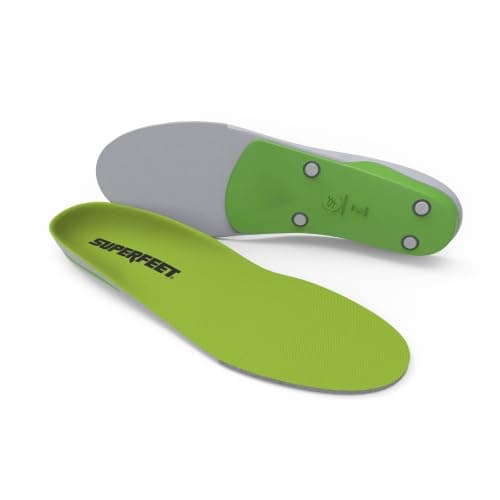
2. Superfeet All-Purpose Support High Arch - best for high arches
The one to buy if you know you have a high arch, because Superfeet publishes the profile as high rather than leaving you to guess. Superfeet describes a stabilizer cap that “provides structure & support”, “durable high density foam”, a “Sculpted Heel Cup” to “encapsulate and position the heel”, and a Moisturewick top cover that “helps reduce odors, keeping feet and footwear fresh”.
Two published figures make it easy to plan around: Superfeet says you get “reliable support and performance for 12 months”, and the product is covered by a “60-Day Comfort Guarantee”. For an item that is a consumable, a stated life and a return window are worth more than another adjective.
The honest downside: it is trim-to-fit, so you cut it yourself and a bad cut is not recoverable. Superfeet specifies “roomy to moderate fitting footwear with removable insoles”, which rules out a boot that is already snug. And a high arch profile in a foot that does not have one is uncomfortable in a way no break-in period fixes - if you are not sure, the neutral PowerStep is the safer buy.
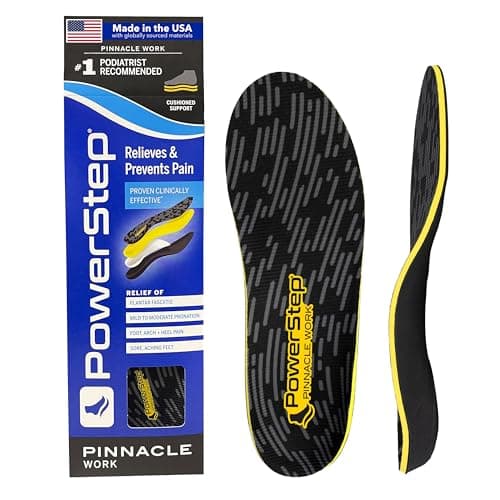
3. PowerStep Pinnacle Work - best for work boots
The same idea as the Pinnacle, specified for the footwear this site is about. PowerStep publishes the same firm-but-flexible polypropylene shell and deep heel cradle, with “ShockAbsorb™ Premium Foam” over an EVA base, and it names work shoes and work boots first in its intended footwear rather than as an afterthought.
If you stand on hard floors, this is the version to buy over the standard Pinnacle: same support structure, a cushioning layer chosen for impact, and an odor-control top fabric that matters more in a boot worn ten hours than in a trainer worn two.
The honest downside: PowerStep does not publish any comparison between this and the standard Pinnacle, so the difference in practice is the foam, not the support. Both are neutral-arch, so neither is the answer for a very high or very flat foot, and eleven sizes is one fewer than the standard model.
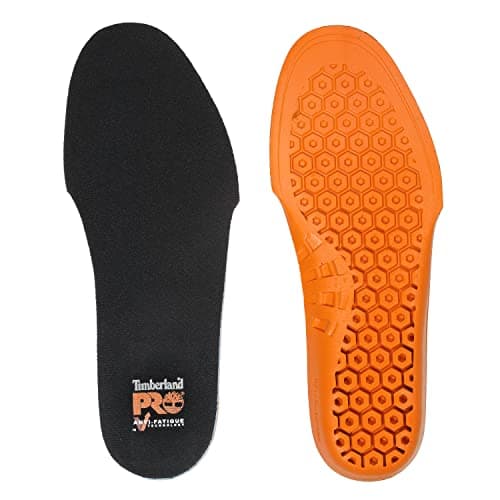
4. Timberland PRO Anti-Fatigue - best on concrete
The insole with a boot maker’s name on it, built for standing rather than walking. It is the pick for the reader whose complaint is not arch pain specifically but the general end-of-shift ache that comes from eight hours on a warehouse floor, and it is already the rank-one pick in our work boot insole roundup.
The honest downside: the published specification is thin. We could not source a maker’s page stating the shell material, the arch profile or a service life, which is why an insole from a respected boot brand sits fourth on a page that ranks on documentation. Anti-fatigue is a cushioning-and-rebound claim, not an arch support claim, and if what you need is structure under the arch, the first three are the ones built for it.
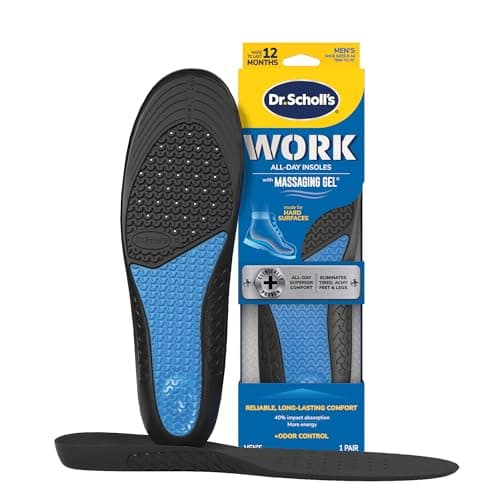
5. Dr. Scholl’s Work - best for rotating
The cheap one, and there is a real argument for cheap here that has nothing to do with budget: at this price you can buy two pairs and rotate them, so a damp footbed never goes back into a boot. A structured insole that costs five times as much cannot be bought twice as easily, and a dry insole beats a better wet one.
The honest downside: cushioning rather than structure. Dr. Scholl’s publishes very little specification for it, we found no stated arch profile or service life, and foam of this type flattens. Treat it as a consumable you replace often, which is exactly how the rotation argument works.
Eight hours on concrete is the case these are bought for. Structure under the arch does more than foam under the heel.
The boot-specific part: take them out
Whichever you buy, the single most useful habit is pulling the insole out at the end of a wet day and standing it beside the boot. Two reasons, both covered elsewhere on this site:
The boot dries faster. A footbed sitting in the boot traps moisture underneath it, which is why every drying method here starts with removing it.
The smell starts in the footbed. Odor is bacterial and the bacteria need moisture, so the wettest, most absorbent part of the boot is where it begins - why wet boots start to smell has the mechanism, and clean or replace your insoles covers what to do once it has started.
This is also the honest reason a structured insole outlasts a foam one in a wet boot: it holds its shape when it is soaked and dried repeatedly, and flat foam does not.
Fitting an insole into a boot without ruining the fit
01
Check the factory insole comes out
Every insole here is intended for footwear with a removable footbed. If yours is glued in, adding a second insole on top will make the boot tighter, not better.
02
Use the old one as the template
For a trim-to-fit insole, lay the factory footbed on top and cut to that outline rather than to the printed size lines. Cut long and trim again - you cannot put it back.
03
Expect the boot to feel tighter over the instep
A structured insole sits higher than flat foam. If the boot is snug to begin with, buy the thinner option or go up a lace hole before you decide the insole is wrong.
04
Give it the maker's break-in window
Superfeet publishes a 60-day comfort guarantee, which is effectively a stated adjustment period. Firm support feels strange before it feels better, and returning it on day two is a decision made too early.
What none of these will do
An insole will not fix a boot that is the wrong size, and it will not make a worn-out sole unit safe. It also will not cure a diagnosed foot condition - PowerStep quotes APMA acceptance and its own clinical claims for the Pinnacle, and those are the maker’s statements rather than ours. If your foot hurts in a specific, persistent way, see a podiatrist first and buy the insole second.
Which one, in one line each
Not sure what your arch is: PowerStep Pinnacle, neutral, best documented.
You know it is high: Superfeet All-Purpose Support High Arch.
Work boots on hard floors: PowerStep Pinnacle Work.
Standing all day, cushioning first: Timberland PRO Anti-Fatigue.
Wet boots every day: two pairs of Dr. Scholl’s Work, rotated, so one pair is always dry.
If the problem is sweat rather than support, the products change entirely - insoles for sweaty feet ranks for moisture handling instead. And if you want the head-to-head between the two brands that lead this page, it is in Superfeet vs PowerStep.
What we could not find out
Three things we went looking for and could not source from any maker on this page, listed so you know they are missing rather than overlooked: a measured arch height in millimeters for any model, a stack height or thickness figure that would tell you how much room the insole takes in a boot, and any published test of how quickly a footbed dries after a wet day.
The first two matter because “high” and “neutral” are relative terms and boots vary enormously in internal volume. The third matters on this site more than most, because a boot that goes back on damp is the start of every odor problem we cover. Until a maker publishes those numbers, the practical substitutes are the return window and your own hand inside the boot in the morning.
The write-ups
Every pick, in full
01 / Best overall
PowerStep
8.8 / 10
PowerStep Pinnacle Insoles
The best-documented insole here: a named polypropylene support shell, dual-layer cushioning and twelve published sizes, with no trimming to get wrong.
Everyone in this category says they tested twenty dryers. We have not tested any, and we say so. What we did instead: read the manuals, compile the published specifications, compute the running cost from the manufacturer's own wattage figure, and show the arithmetic so you can check it.
They fit if the factory insole comes out - every insole on this page is intended for footwear with a removable footbed. PowerStep names work boots in the intended footwear for its Pinnacle Work model specifically. If your boot has a glued-in footbed, an added insole makes the boot tighter rather than more supportive.
How long do insoles last?
Two makers here publish a figure: PowerStep says its insoles “should last 6 months or longer depending on wear usage and activity level”, and Superfeet says you get reliable support for 12 months. Nobody else on this page publishes one, so treat flattened foam as the signal.
Neutral or high arch - which should I buy?
Neutral suits most people, which is why the neutral PowerStep Pinnacle leads this page. Buy the high-arch Superfeet if you already know your arch is high, because a high profile under a foot that does not have one is uncomfortable in a way that does not wear in.
Will an insole help with boot odor?
Indirectly. A removable insole can be taken out and dried separately, which removes the moisture odor-causing bacteria need, and Superfeet publishes an odor-reducing top cover. An insole does not treat a smell that is already established - that needs cleaning or replacement.
Are expensive insoles worth it over supermarket ones?
For structure, generally yes: the cheap ones are foam and the expensive ones have a named support shell under the arch, which is the part that does the job. For a boot that gets soaked daily, two cheap pairs rotated so one is always dry can beat one expensive pair that is permanently damp.
Can insoles fix plantar fasciitis?
PowerStep publishes clinical claims for the Pinnacle and states it is accepted by the American Podiatric Medical Association. Those are the maker’s claims, not ours, and we have not tested them. A persistent, diagnosed foot problem is a question for a podiatrist.