We earn a commission if you buy through the links on this page, at no extra cost to you. It never changes a ranking, and we recommend products with no affiliate link behind them where those are the right answer. Full disclosure.
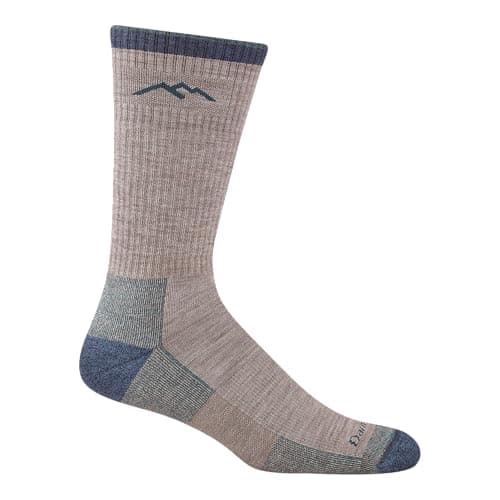
Buy the Darn Tough Hiker Boot if you want one pair that lasts - 64% merino, the highest wool content here, and the only one of the five whose maker publishes an unconditional lifetime replacement. If you need three or four pairs so you can rotate them, which is what sweaty feet actually need, buy the Wigwam Merino Comfort Hiker instead: it is the only sock on this page with “Odor Control” listed as a published feature, at roughly two-thirds the price. And whatever you buy, stop wearing cotton in boots.
We have not tested these. No treadmill, no humidity chamber, no weighing socks before and after. What we did instead is read what each maker publishes about fiber content, cushion, construction and odor, and rank on that - because fiber content is the one thing that genuinely determines how a sock handles sweat, and it is the one thing every maker is obliged to print.
Why the sock is the first thing to change
Our page on why wet boots smell lays out the mechanism in full: bacteria on the skin, warmth, darkness and moisture. Three of those four are fixed - a boot is always going to be warm and dark, and your feet are always going to have bacteria on them. Moisture is the only variable you can move.
Everything else this site sells for odor works after the sweat has arrived. A deodorizer treats the boot once it is already damp. An insole changes the footbed under your foot. A dryer fixes the boot overnight. A sock is the only item in the chain that sits between the sweat and everything else, which is why it is the cheapest intervention and the one to make first.
The one-line version of the fiber argument
Cotton holds water and keeps it against your skin. Merino wool moves moisture and keeps working when damp. Polypropylene absorbs almost nothing, which is why it is the standard liner fiber. Acrylic sits in between and is what the engineered synthetics are built from. If the label on the socks you wear in boots says “cotton” first, that is the thing to change before you buy anything else on this site.
How we judged them
- Published fiber content, first and loudest. Not the marketing copy - the percentages. A sock that publishes 64% merino is making a checkable statement; a sock sold as “moisture-wicking” with no blend listed is not.
- Whether the odor claim is about this sock or about the fiber. This separated the field more than anything else. Several makers write about merino’s odor resistance in general site copy and publish no odor claim for the specific style. Only one publishes it as a feature of the product.
- What is published about fit in a boot. Height, cushion level and placement. A sock is a volume decision as much as a fiber one, because a boot that was snug with a thin sock is tight with a full-cushion one.
- What the maker will stand behind. A published guarantee is a cost the maker has agreed to carry. One of these has a lifetime one, one has two years, and three publish nothing.
- Cost per pair, in the context of needing several. Sweaty feet want a rotation so each pair dries fully between wears. That makes the price of one pair less interesting than the price of four.
What we deliberately did not rank on: softness, warmth ratings, or anything we would have had to feel to assess.
The five, on published figures
| Sock | Published blend | Cushion | Odor claim | Guarantee |
|---|
| Darn Tough Hiker Boot (1403) | 64% merino / 33% nylon / 3% elastane | Midweight, cushion | Not published for this style | Lifetime, unconditional |
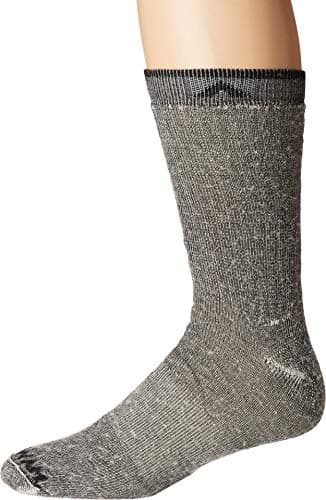
| Wigwam Merino Comfort Hiker (F2322) | 62% merino / 34% stretch nylon / 2% polyester / 2% spandex | Midweight, cushion throughout | “Odor Control” listed as a feature | Not published |
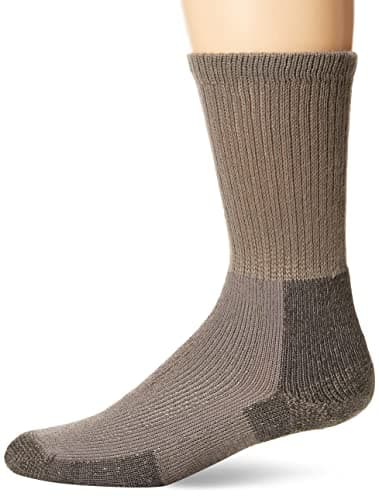
| Thorlos KX | 87% THOR•LON acrylic / 11% nylon / 2% elastic | Cushioned instep and arch | Not published | Not published |
| Fox River Wick Dry Alturas (4478) | 93% polypropylene / 6% nylon / 1% spandex | None - it is a liner | Not published | Not published |
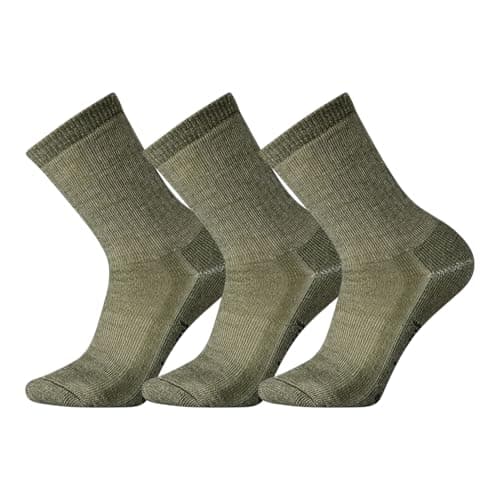
| Smartwool Hike Classic Edition | 65% merino / 34% nylon / 1% elastane | Full cushion | Not published for this style | Two years, satisfaction |
Two things are worth pointing out in that table. First, the four non-liner socks are all between 62% and 87% on their primary fiber with nylon making up most of the rest - the nylon is there for abrasion resistance, not moisture, and every one of these makers made the same engineering choice. Second, the odor column is almost empty. That is not an oversight on our part; it is what these makers publish.
1. Darn Tough Hiker Boot Midweight Cushion — best overall
Best for: one pair you wear in boots most days and expect to keep for years.
The highest published wool content of the five at 64%, and the only maker here that publishes a specific moisture claim for the style rather than for the fiber in general: merino “naturally moving moisture to keep feet fresh and dry in all weather”. It also publishes a thermoregulation claim - midweight socks that “thermoregulate to wrap feet in steady comfort when temperatures change” - which is the behavior that stops a boot sock being unwearable indoors.
The guarantee is the reason it wins. “Unconditionally Guaranteed for Life - if these aren’t the longest lasting socks you’ve ever owned, return them for another pair.” Nobody else on this page publishes anything close, and on a sock this is not a small claim: socks fail at the heel and the ball, both of which a boot accelerates.
Darn Tough is also the only maker that publishes a height: men’s boot socks average 11 inches heel to cuff and sit about 5 inches above a standard hiking boot. If you have ever bought a boot sock that ended exactly where the boot collar rubs, you will understand why that figure is worth having.
The honest downside: it is the most expensive single pair here, and the strategy sweaty feet actually need is several pairs rotating so each one dries fully. Buying one of these instead of four cheaper pairs leaves you washing it nightly, which is the opposite of a rotation. Darn Tough also publishes no odor claim for this style - its merino odor-resistance wording is general to the fiber - and admits the blend “may vary slightly”, so the 64% is nominal.
2. Wigwam Merino Comfort Hiker — best for buying a rotation
Best for: buying three or four merino pairs at once so each one gets a day off.
62% merino, within two points of the winner, and the only sock on this page where the maker lists “Odor Control” as a published special feature rather than as background copy about wool. Wigwam also states that merino “resists odor naturally” and publishes an elasticized arch, which is a fit feature rather than a moisture one but is the kind of detail that stops a sock creeping down inside a boot. Made in the USA, blend published in full.
It wins the rotation argument on price. If the honest advice is “own four pairs so each dries properly”, then the sock that gets you to four pairs is doing more for your feet than a single better one.
The honest downside: Wigwam’s own store showed every size and color sold out when we checked, so Amazon is the supply - a real availability risk worth knowing before you plan a rotation around it. And for a sock sold on odor control it publishes no moisture or wicking claim at all, which is an odd gap. No guarantee of any kind is published.
3. Thorlos KX Maximum Cushion Crew — best synthetic, most cushion
Best for: a long shift in a stiff boot, where padding under the foot matters as much as sweat does.
The only sock here built around a named synthetic rather than wool, and the only one whose moisture claim is attached to a specific fiber: “Constructed with THOR•LON® fibers for superior softness, resilience, durability, and moisture-wicking for drier, better feeling feet.” It also publishes a feature none of the others list at all - a “ventilation panel for extra moisture control and breathability”.
Thorlo is specific about where the padding is, rather than giving it a weight name: “cushioned instep and arch for a better fit, more support and less pressure on feet”. On a safety boot with a rigid shank, pressure is often the real complaint and sweat is the thing you notice second. Made in the USA of domestic and imported yarns.
The honest downside: there is no wool in it, so none of the wool arguments transfer - no odor resistance to borrow, and none of merino’s warm-when-damp behavior. Thorlo publishes no odor claim, and does not say where on the sock the ventilation panel actually sits. Our own observation, not a published figure: acrylic tends to hold a smell longer than wool once a sock has genuinely soured, which matters on a page about odor.
4. Fox River Wick Dry Alturas Liner — best liner for a two-sock system
Best for: wearing under a wool sock when one sock has not been enough.
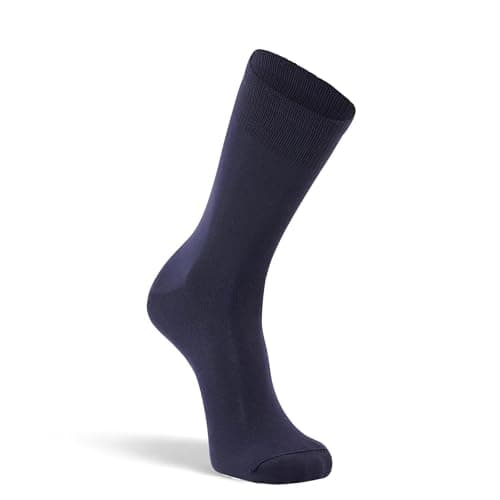
Not a sock so much as the first half of a system, and the cheapest item on the page. 93% polypropylene - the fiber that absorbs almost nothing, which is the entire point: it moves sweat off the skin and hands it to the sock above. Fox River publishes the claim plainly, that these liners “use our exclusive Wick Dry™ technology to keep feet dry and avoid the moisture build up that causes blisters”, and it publishes the construction details that matter against the skin - smooth flat-knit, flat comfort toe seam.
The two-sock system is old military and hiking practice and it is the answer when a single good sock has not solved it. The liner takes the moisture and the friction; the outer sock takes the cushioning and the abrasion.
The honest downside: on its own it is a thin sock with no cushioning whatsoever, so it is a purchase that only makes sense alongside something else. It adds volume, which means a snug boot may simply not take a liner plus a midweight sock - the same constraint we wrote up for insoles in a pull-on boot. Fox River does not publish where it is made.
5. Smartwool Hike Classic Edition Full Cushion — best full cushion
Best for: a roomy boot that rubs, bought as a rotation in one go.
The highest merino figure in the group at 65%, published as “Made in the USA of Imported Yarn: 65% Merino Wool, 34% Nylon, 1% Elastane”. Full cushion is published as “medium thickness with full sock cushioning” - cushioning everywhere rather than in zones - and the Virtually Seamless toe technology is a flat-knit toe seam, which is the detail that stops a thick sock creating a pressure point on the toenail.
Smartwool publishes a two-year guarantee in writing: under “go far. feel good.™”, if you are not completely happy within two years of purchase it replaces the gear. That is second only to Darn Tough’s lifetime terms.
The honest downside: the Amazon buy box for this style is a three-pack, so the entry price is the highest on the page even though the per-pair cost is reasonable. Full cushion is also actively the wrong answer in a boot that is already snug - the volume has to go somewhere. And like Darn Tough, Smartwool’s “stay dry from sweat, resistant to odors” line is site-wide copy about its merino rather than a claim about this style.
The rotation, which matters more than which sock you pick
The single highest-value thing on this page is not a product. A sock that is worn, sweated into and worn again the next morning has not dried out, and a damp sock in a damp boot is the warm, dark, moist environment the whole odor problem depends on.
Three or four pairs in rotation, washed and fully dried between wears, does more than upgrading one pair. It is also the argument for the second-place pick over the first: the sock that gets you to four pairs beats the better sock you only own one of. The same logic is why we keep saying two pairs of boots is the real fix for work-boot smell.
What a sock will not fix
Being straight about the limits, because this page is one link in a chain:
- A boot that is already soured. The smell lives in the footbed and the lining, not in the sock you put on this morning. New socks in a bad boot smell bad by lunchtime - deal with the boot first.
- A boot that never dries. If the boot is damp at the start of the day, the sock is fighting a losing battle. A dryer or a second pair of boots is the fix, not better socks.
- A worn-out footbed. A footbed that has been absorbing sweat for two years is a reservoir. Washing or replacing it is a separate decision.
- A medical cause. Feet that sweat heavily regardless of footwear are not a sock problem and we are not qualified to say anything useful about it. That is a conversation with a doctor, not a purchase.
Washing them, which is where merino socks get killed
Our own practice rather than a published instruction, except where noted: wash warm rather than hot, skip the fabric softener - it coats fibers, which is the opposite of what a wicking sock needs - and keep them out of a hot dryer. None of these five makers publishes a care instruction on the product pages we read, which is a real gap on products sold partly on durability. Superfeet, for its insoles, publishes air-drying away from heat; the same instinct applies here.
What we would actually buy
Four pairs of the Wigwam, if they are in stock in your size, because the rotation is worth more than the upgrade. One pair of the Darn Tough as well, if you want to find out what a lifetime-guaranteed sock feels like, and because it is the one with a published height so you can learn where a boot sock should end on your leg. Add the Fox River liners only if a good sock on its own has not solved it - and check your boots have room for two layers before you do.